Buyer decision guide
The 6 Hearing Aid Platforms to Know in Fall 2026: Which One Is Right for You?
Six hearing aid platforms for fall 2026: Sensia, Reveal, EON, MaX, Omega AI+ and Allure AI. Compare them in one table, then see which fits you.
Read time: 9 min read
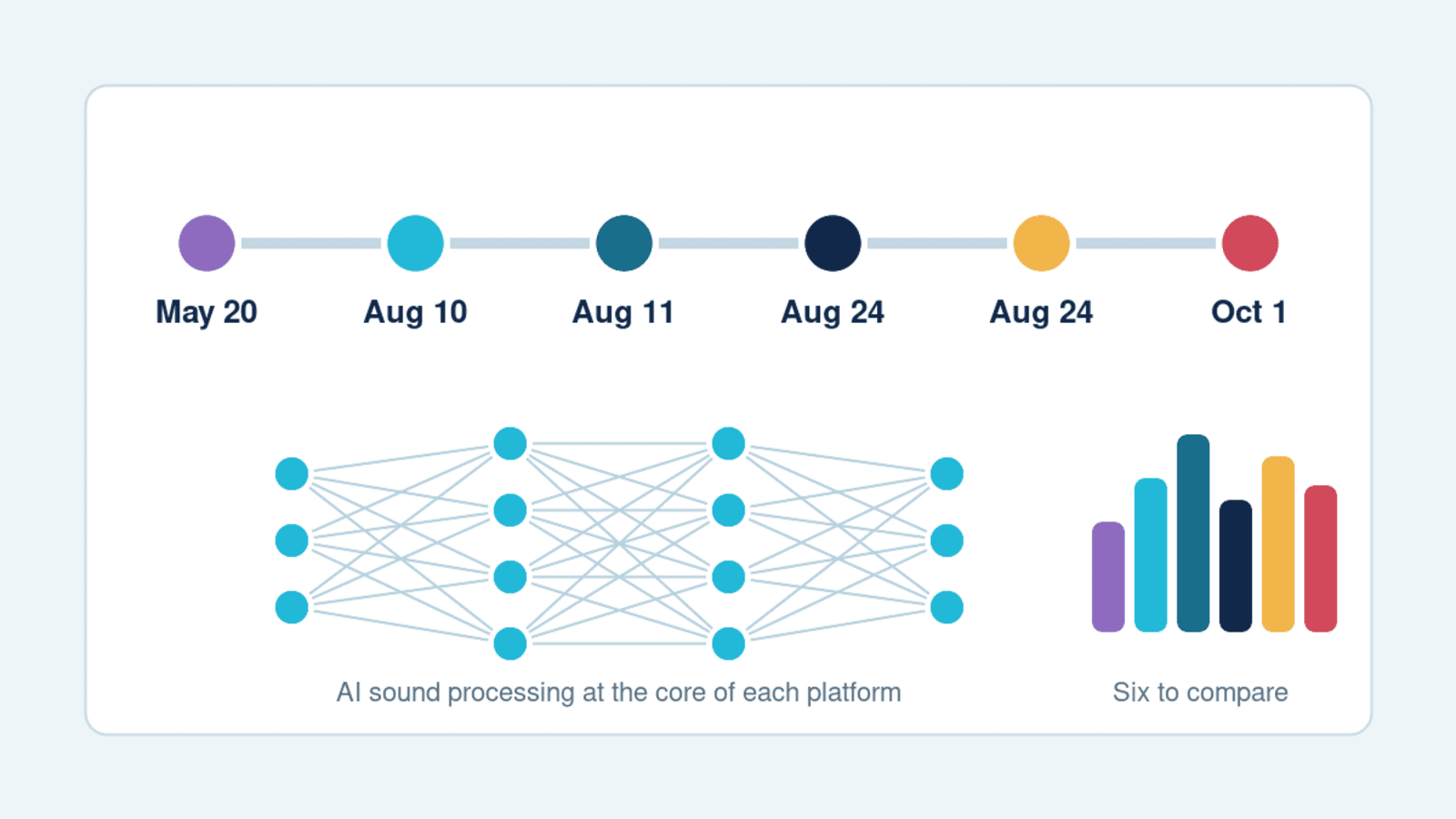
Between August 10 and October 1, 2026, five of the big hearing aid makers each introduced a new AI flagship: ReSound Sensia, Oticon Reveal, Phonak EON, Signia MaX and Starkey Omega AI+. Widex, the sixth, announced its Allure AI RIC earlier, on May 20, but does not reach the US until November 1, so it belongs on any fall shopping list. That is a lot of acronyms and a lot of marketing, and patients have started asking us by name which one to buy.
Here is our honest answer. As of October 8, 2026, no independent lab has published results for all six, so we crown no winner. We also do not recommend one brand over another before we know you. This page lays the platforms side by side using what the companies and trade press have published, marks performance figures as company claims, and writes 'not stated' wherever a source is silent. Then it explains why, in our experience, the fitting matters more than the chip.
“The chip decides what a hearing aid can do. The fitting decides what it does for you.”
The six platforms at a glance
Dates are announcement dates, and availability is what the sources state. Widex announced in May, earlier than the other five. 'Not stated' means we found no figure in the sources we checked. Battery figures are company claims for the rechargeable models and vary with use. The table is current as of October 8, 2026, and none of these companies has published a price in the launch material we reviewed.
| Hearing aid | Announced | US availability, per sources | Chip and AI, as described | Auracast and telecoil | Battery, company claim | HearAdvisor SoundScore |
|---|---|---|---|---|---|---|
| ReSound Sensia | Aug 10, 2026 | US launch Aug 20, per Hearing Review | Same chips as Vivia, plus AcoustIQ environment classification. DNN count not stated | Auracast on all models. Telecoil on two models | At least 24 hours, up to about 30 | Not yet tested, per HearingTracker |
| Oticon Reveal | Aug 11, 2026 (some reports say Aug 12) | Orders from Aug 24. HearingLife listed it in 42 states on Aug 27 | Dual AI: Speech AI and Context AI. Chip and DNN count not stated | Auracast supported. Telecoil: yes, per HearingTracker's listing | A full day, per Oticon. HearingTracker's review cites up to about 20 hours | 5.1 (Reveal 1) |
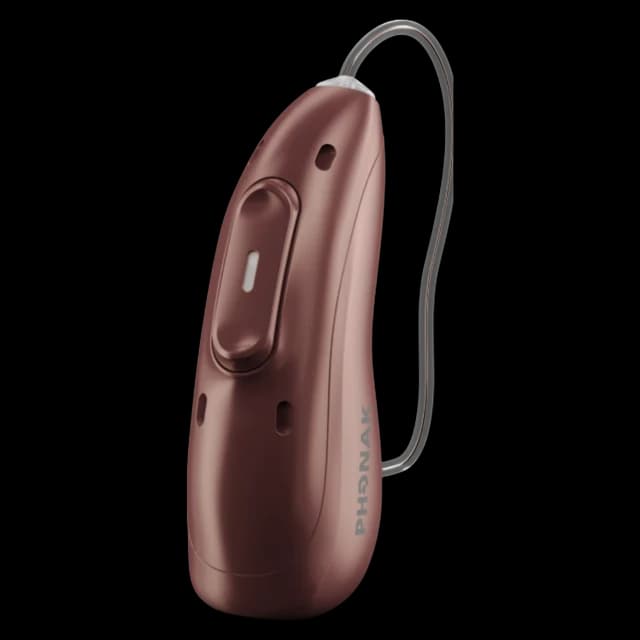
| Phonak EON | Aug 24, 2026 | Ordering through US hearing care professionals from Aug 24 | HYPERSONIC chip, deep neural network speech separation. DNN count not stated | Auracast supported. Telecoil: none, per HearingTracker | Up to 38 hours | 5.0 (EON Sphere 90) |
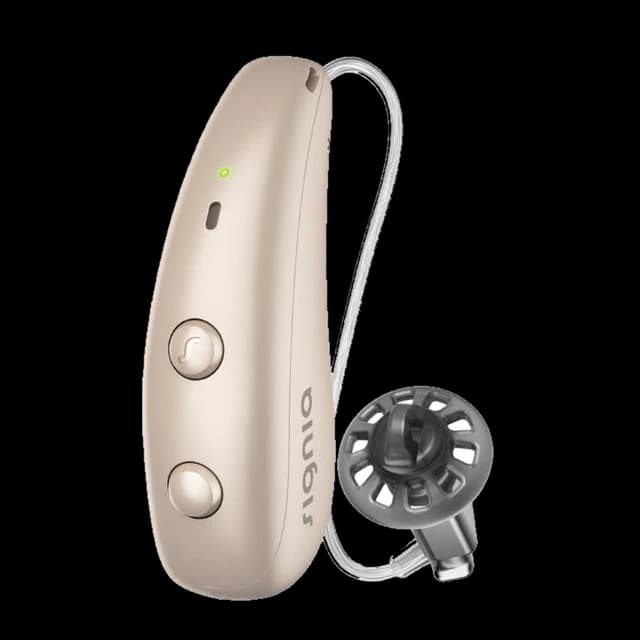
| Signia MaX | Aug 24, 2026 | US launch Aug 24. HearUSA reported nationwide availability Sept 1 | New MaX chip, four DNNs: speech, own voice, scene and noise | Auracast hardware-ready, firmware update planned by March 2027. Telecoil: yes | Up to about 30 hours, per HearingTracker | 4.3 (MaX 7) |
| Starkey Omega AI+ | Oct 1, 2026 | Not stated in the coverage we reviewed | G4 Gen AI Neuro Processor, four DNNs | Auracast supported. Telecoil not stated | Up to 51 hours (RIC RT), up to 42 hours (mRIC and custom rechargeable) | Not yet tested. HearAdvisor said it will test soon |
| Widex Allure AI RIC | May 20, 2026 (before the other five) | Five unnamed markets June 1. US and remaining markets Nov 1, 2026, per Widex's release | W1 chip plus a dedicated AI co-processor for Clarity Boost, which the wearer switches on. DNN count not stated | LE Audio and telecoil listed. Auracast: one trade report says Auracast-ready, Widex's release does not mention it | Up to 32 hours including 6 hours of AI use or streaming | No score for the AI model. Scores listed are for the earlier, non-AI Allure |
What the platforms have in common
Three things stand out. Every one now uses AI to separate speech from noise, through deep neural networks or a dual-AI design, although Widex's Clarity Boost runs only when the wearer switches it on. Five of the six list Auracast, although the public venues that broadcast it are still few, and Signia's waits on a firmware update. For Widex, one trade report calls the device Auracast-ready and the company's own release does not mention it. And none of the launch announcements we reviewed states a price. That last point matters: you cannot budget from a launch article, and anyone quoting a number is quoting a retailer or a practice. HearingTracker lists retail prices per pair for the top level of some of these, from $3,298 for Signia MaX 7 to $4,598 for Oticon Reveal 1 and Phonak EON Sphere 90. Those are retail listings, not manufacturer prices, and a clinic price also covers testing, fitting and follow-up care.
Reading the lab scores
HearAdvisor, a hearing aid lab that works with HearingTracker, has published scores for three of the six: Oticon Reveal 1 at 5.1, Phonak EON Sphere 90 at 5.0 and Signia MaX 7 at 4.3, against a prescription-category average of 4.19. All three earned an A grade. Three cautions apply. The scores cover each company's top technology level, not the lower ones. A gap of a tenth of a point is not something we would shop on. And a lab score describes sound quality in a standard test, not the benefit in your ears. HearingTracker says it has not yet tested ReSound Sensia, and HearAdvisor said it would test Starkey Omega AI+ soon. We found no score for Widex Allure AI. The scores HearingTracker lists for Widex are for the earlier, non-AI Allure, which is a different product.
How the six differ
ReSound Sensia, announced August 10 and launching August 20 in the US, runs on the same chips as Vivia. ReSound adds AcoustIQ, which classifies the environment, and says all Sensia models are Auracast-compatible with two models carrying a telecoil. Its brand page lists the family. Oticon Reveal pairs a Speech AI with a Context AI, and Oticon claims a stronger brain response than its previous generation, a company claim from its own research. See our pages on Oticon Reveal and Signia MaX against Oticon Reveal. Phonak EON moves the speech-separation network onto a new HYPERSONIC chip and adds a CROS model; our Phonak EON explainer follows its claims to their references. Signia MaX splits the work across four networks, and our Signia MaX explainer covers its Auracast caveat and what has been measured. Starkey Omega AI+, announced October 1, pairs a G4 processor with four networks, longer rechargeable battery claims and a US-only sleep-tracking feature that Starkey says is not a diagnostic tool; see our Starkey brand page. Widex Allure AI RIC, announced May 20 and due in the US on November 1, adds a dedicated AI co-processor to the W1 chip of the Allure platform. Its Clarity Boost program is switched on by the wearer rather than always running, and Widex claims up to 6 dB better output signal-to-noise ratio than competitors' AI products, a company claim with no named comparison. See our Widex brand page and Widex Allure page.
Why the fitting matters more than the chip
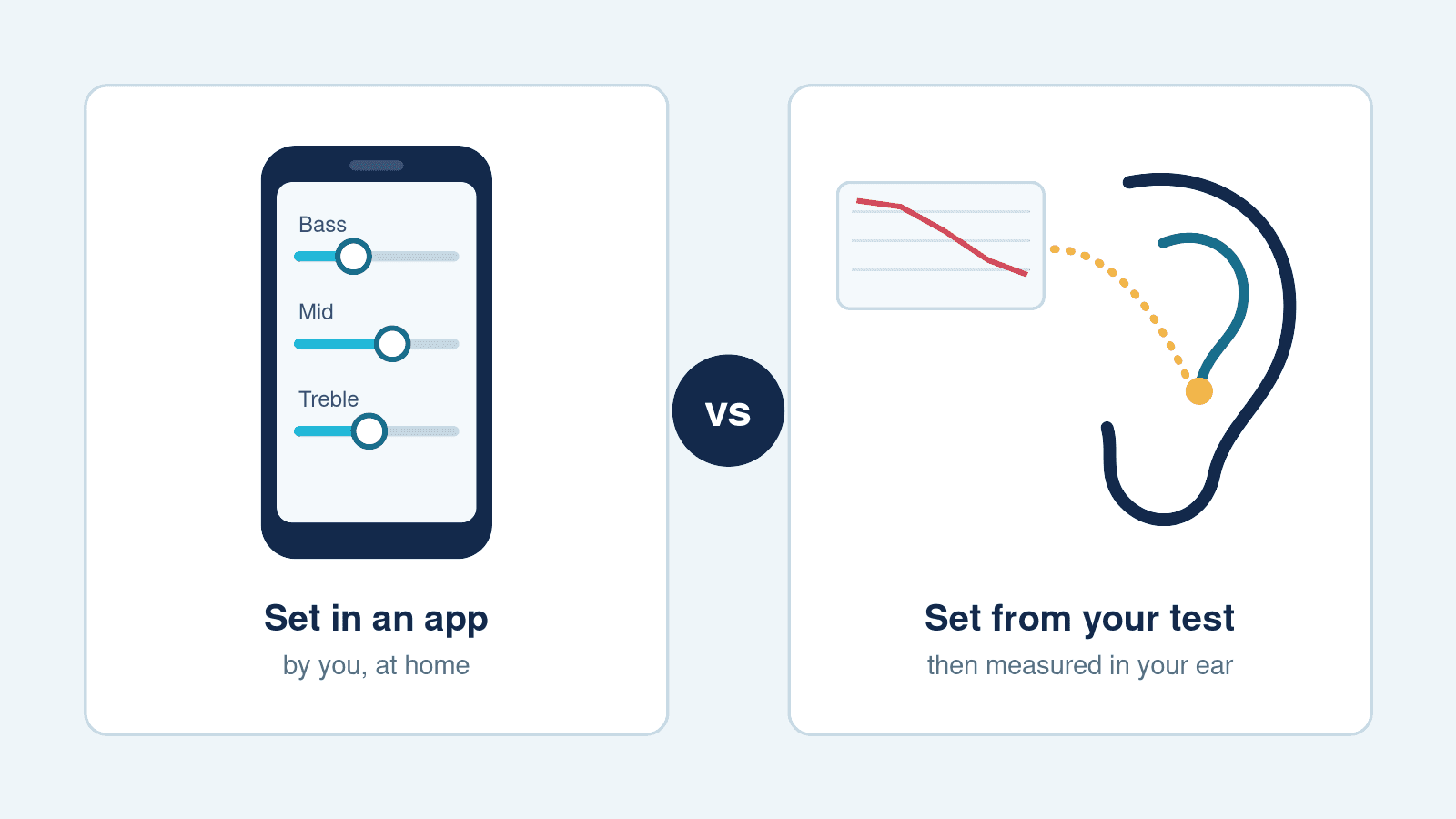
The chip decides what a hearing aid can do. The fitting decides what it does for you. A good hearing aid fitting programs the device to your audiogram, uses real-ear measurement to confirm what reaches your eardrum, and continues over follow-up visits as your brain adapts. That is also the brain-first reason to care. When sound arrives clearly, listening takes less effort, and listening fatigue eases. A June 2026 analysis in Cell Reports Medicine pooled 61,089 hearing-impaired adults aged 55 and older and found about 9 percent lower risk of probable dementia among hearing aid users than non-users, and about 14 percent lower among those who reported good hearing improvement. People who reported poor improvement saw no significant reduction. The study was observational, so it cannot prove cause, but the researchers' point is useful: the benefit is not about wearing a device, it is whether the device meaningfully improves hearing in daily life.
How to choose among them
We do not recommend a brand up front. The hearing test comes first. Then we learn about you: your days, your phone, your ears and what you want back. Only then does your audiologist narrow the options and recommend the device that serves you best, and that device may be one of these six or none of them. To prepare, start from your life, not the logo. Where does listening break down: restaurants, meetings, the car? Which phone do you use all day? Do you need a telecoil for looped venues? Is one ear much worse? Phonak lists a CROS EON R, Oticon announced a new CROS RE, and ReSound says Sensia Bimodal works with Cochlear Nucleus sound processors, so one-sided loss and cochlear implant support can shape the shortlist. Bring those answers to an evaluation, and ask for a demonstration in noise, not a quiet booth. Which models we can fit, and when, depends on stock and fitting software and changes week to week, so call before you plan around a model.
Your next step in Harrison or Somers
If you have a quote for one of these, or you wear hearing aids that no longer keep up, a hearing aid second opinion can compare the options against your own test. Our Harrison and Somers offices both fit the brands on our brands page. We recommend by fitting the person, not by brand. Our cost guide for Westchester County explains what to ask about any quote. California Hearing Center, our sister practice, covers Signia MaX in its own explainer.
Status and last update
Last updated October 8, 2026. Change note: this is the first version, built from launch coverage, HearingTracker's lab listings and the companies' own announcements. It includes Widex Allure AI RIC. We will update it when independent results arrive for ReSound Sensia, Starkey Omega AI+ and Widex Allure AI, when Widex reaches the US on November 1, when companies publish prices, or when Signia switches on Auracast. Sources are listed at the end of this page.
Medical information notice
This page is for information only and is not medical advice. Hearing aids do not suit everyone, and a hearing evaluation is the way to find out what suits you. Performance figures here are company claims or lab scores in standard tests, not promises about your hearing.
Common questions
Which of the six hearing aid platforms is best?
No independent test compares all six yet, so we cannot name a best. We do not recommend a brand before your hearing test and a real conversation about you. Then your audiologist chooses the device that suits your hearing, phone, ears and daily listening, and verifies it in your ear.
Do all six support Auracast?
Five of the six list Auracast in the launch coverage we reviewed. Signia MaX needs a firmware update planned by March 2027, and one trade report calls Widex Allure AI Auracast-ready while Widex's own release does not mention it. The venues that broadcast Auracast are still few, so ask where you would use it.
Are the new hearing aids available in the US now?
Per the sources we checked, ReSound said Sensia would launch in the US on August 20, Phonak and Signia reported US availability from August 24, HearingLife listed Oticon Reveal in 42 states on August 27, and Widex says Allure AI reaches the US on November 1. Starkey's announcement did not state an availability date. Availability at any one practice depends on stock and software, so call before you plan around a model.
Do the new hearing aids cost more?
None of the launch announcements we reviewed states a price. HearingTracker lists retail prices per pair for top levels from $3,298 to $4,598, and clinic prices vary by model, technology level and the care included. Our cost guide for Westchester County explains what to ask.
Should I upgrade if my current hearing aids work?
If your aids are verified and doing their job, a new platform is not an obligation. The clearest reasons to look are a change in your hearing, a feature you need such as a CROS option or a particular phone connection, or devices that no longer meet your listening needs. A second opinion can sort out which applies.
Can the new hearing aids slow dementia?
No hearing aid can promise that. An observational analysis of 61,089 adults found about 9 percent lower probable dementia risk among hearing aid users, with the benefit tied to reported hearing improvement, but observational work cannot prove cause. The practical goal is hearing well in daily life.
Get one email when independent results land.
We will send one email when independent labs publish results for the remaining hearing aids in this roundup, when Widex reaches the US, or when a company announces prices.
Sources and further reading
- Hearing Review: Lifting the voice you choose, ReSound Sensia hearing aids launch
- HearingTracker: ReSound Sensia launch
- HearingTracker: Oticon Reveal launches with Dual AI
- Hearing Health Matters: Oticon launches Reveal with Dual AI processing
- Hearing Review: HearingLife now offering Oticon Reveal
- Hearing Health Matters: Phonak introduces EON with HYPERSONIC chip
- HearingTracker: Phonak Audeo EON review and lab results
- Hearing Review: Signia debuts MaX AI hearing aid platform with 4 DNNs
- Audiology Worldnews: Signia introduces MaX, a 4DNN hearing aid platform
- HearingTracker: Signia Pure Charge&Go MaX review and lab results
- HearUSA: New Signia Pure C&G MaX hearing aids (HearingTracker press releases)
- Hearing Health Matters: Starkey unveils Omega AI+ with G4 Gen AI processor
- HearingTracker: Starkey launches Omega AI+ with Quad DNN
- HearingTracker: Oticon Reveal vs. Phonak Audeo EON
- HearingTracker: Oticon Reveal vs. Signia Pure Charge&Go MaX
- Hearing Review: Widex announces Allure AI RIC with Clarity Boost, Compass Cloud 2.0
- WSA: Widex introduces Allure AI RIC with Clarity Boost (press release)
- Hearing Health Matters: Widex Allure AI RIC with dual-chip AI processing
- HearingTracker: Widex Allure review
- HKUMed (HKU Lead): Effective hearing aid use and probable dementia, Cell Reports Medicine
- California Hearing Center: Signia MaX explained