Hearing aid decision guide
Listening Aids, OTC Hearing Aids and Prescription Hearing Aids: A Decision Guide
Listening aids, OTC and prescription hearing aids differ in rules, fitting and support. Use this guide to see which fits you, then book a hearing test.
Read time: 7 min read

A new product category arrived on October 20, 2026. ClearCast Hearing launched two AI wearables that it calls listening aids, not hearing aids: the AIR, a behind-the-ear device with an MSRP of $499, and the AI, a neckband with an MSRP of $299.99. Both are FDA-registered per ClearCast and meant for specific moments rather than all-day wear.
That makes three categories on the shelf: listening aids, over-the-counter hearing aids and prescription hearing aids. This guide sets them side by side so you can see which kind of help matches your situation. ClearCast's performance claims are the company's own, and we have seen no independent testing. Our point concerns the categories, not this product.
“The cheapest device that matches your actual loss is the right buy. The only way to know your loss is to measure it.”
The three categories on one table
The table lists what each category is, how it is regulated, who it suits and what support comes with it. The regulatory row matters most. FDA-registered, FDA-cleared and FDA-approved are three different statuses, and a registration is an administrative listing that does not mean the FDA reviewed the device for safety or effectiveness.
| Item | Listening aid (ClearCast AIR and AI) | OTC hearing aid | Prescription hearing aid |
|---|---|---|---|
| Regulatory status | Described as FDA-registered. Positioned outside the hearing aid category | Regulated as a hearing aid under the FDA's OTC rule | Regulated as a medical device and fitted by a licensed professional |
| Who it is for | Specific moments such as dinner, meetings and TV, per ClearCast | Adults with perceived mild-to-moderate loss | Mild to profound loss, any age |
| Set-up | Put it on and press a button. No tests or app, per ClearCast | Self-set in an app or by the device | Programmed from your audiogram |
| Wear pattern | Moments, not all day | Daily wear | Daily wear |
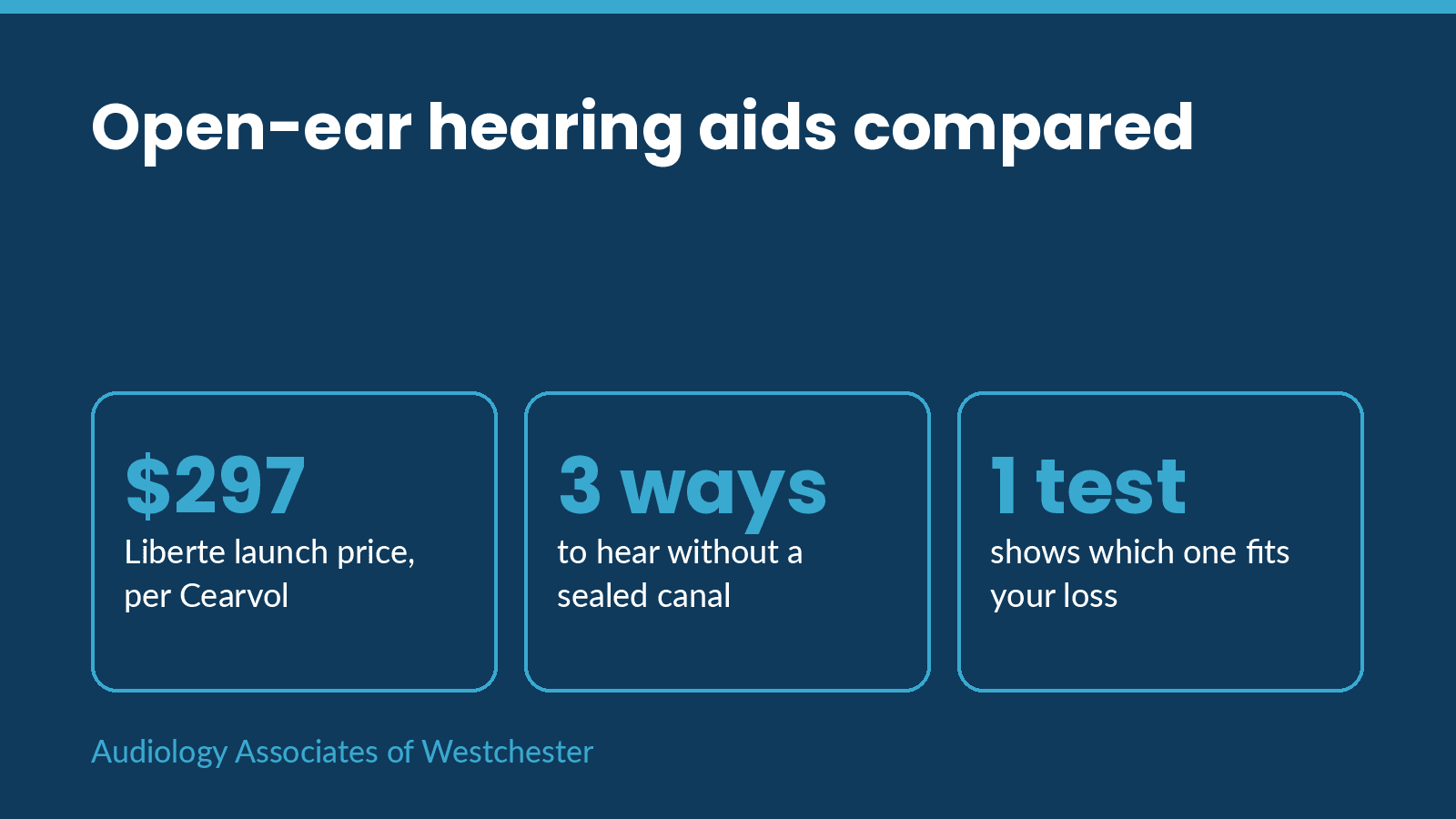
| Price band | $499 and $299.99 MSRP, per ClearCast | Examples we cover: Cearvol Liberte at a $297 launch price and Elehear Beyond 2 Pro at $799 a pair, per launch coverage | Higher. See our cost guide |
| Professional support | Company support only | Company support. Remote add-ons vary | Evaluation, real-ear verification, follow-up and medical screening |
Pick by the pattern of your trouble
If your trouble is one situation, such as a loud dinner or the television, and your hearing is otherwise fine, a situational device can be a reasonable thing to try. If you struggle in most settings, miss words in quiet rooms or notice a change over weeks, the pattern points to a hearing loss that needs measuring. If you have sudden loss, loss in one ear, ear pain or dizziness, see a doctor first. Our guide to OTC hearing aids in real life and our page on whether OTC aids are right for you go further.
What the prescription route adds
A prescription fitting starts with a hearing evaluation. You get an audiogram, a medical screen for signs that need a doctor and a device programmed from your numbers. Real-ear measurement then verifies the sound in your ear, which our page on why real-ear verification matters explains. Follow-up visits tune the aid as you adapt. Cost is higher, and our guide to hearing aid costs in Westchester County covers what to expect.
The honest middle: when OTC or a situational device is a fair first step
An audiologist would say a situational or OTC device is a reasonable first step when your loss is mild, you hear well in quiet rooms, nothing medical is present and you are willing to return for a test if things change. It becomes the wrong step when it delays an evaluation you need. The risk of a cheaper device is not the money. It is the months of untreated loss while you wait to see whether it works.
A note for patients
The categories exist because hearing problems differ. The cheapest device that matches your actual loss is the right buy, and the only way to know your loss is to measure it. Start there, and the device decision gets easy.
What to do next
Book a hearing-aid consultation at our Harrison or Somers office, or call (914) 949-0034. See how specific products fit these categories: open-ear OTC aids and Certus Max. Our page on hearing glasses covers another category.
Status and last update
Last updated October 28, 2026. Change note: this is the first version. We will revise the table as products and rules change. Sources are listed at the end of this page.
Medical information notice
This article explains product announcements and published research for general education. It is not medical advice, and it does not diagnose or treat any condition. Sudden hearing loss, hearing loss in one ear, ear pain and dizziness need prompt medical care. Call (914) 949-0034 to book at our Harrison or Somers office.
Common questions
Is a listening aid a hearing aid?
ClearCast says no. It calls its devices listening aids for specific moments, not hearing aids worn all day. Hearing aids are regulated as medical devices, and ClearCast positions its listening aids outside that category.
Does FDA-registered mean FDA-approved?
No. Registration is an administrative listing. Cleared means the FDA reviewed a 510(k) and found the device substantially equivalent to one on the market. Approved applies to higher-risk devices such as cochlear implants.
Do I need a prescription for hearing aids?
Not for adults with perceived mild-to-moderate loss. Over-the-counter hearing aids exist for that group. A hearing test still shows whether that description fits you and whether anything medical is involved.
When is a situational device enough?
It can be enough when your trouble is limited to one or two situations and your hearing is otherwise fine. If you need help in more places or in quiet rooms, get a test.
Can an audiologist help if I already bought an OTC aid?
Yes. We can test your hearing and tell you how your result compares with what the device is built for. We do not sell or fit ClearCast.