Technology explained
Natural sound or AI all day? How Widex Clarity Boost lets you choose
Widex Allure AI RIC runs AI only when you tap Clarity Boost. See the claims, their limits and the questions to ask at your fitting.
Read time: 5 min read
Here is a real choice in hearing aids right now. Some designs run AI noise reduction all the time. Widex has built an aid that does the opposite. It aims for natural sound most of the day, and it runs its AI only when you ask.
Widex announced on October 14, 2026 that the Allure AI RIC is launching in 15 more countries, including the United States. This page helps you decide whether on-demand AI sounds right for you, and what to ask at a fitting. Widex says US availability begins in October 2026 and has announced no price.
“Some people want AI running all day. Others want natural sound, and a boost only when the room gets hard.”
The choice: AI all the time, or AI when you ask
Hearing aid makers now take different roads. Some run AI noise reduction constantly. Widex keeps its AI on a dedicated second chip, separate from the W1 chip that handles everyday sound, and you start it yourself with a single tap. Widex calls the mode Clarity Boost. You switch it on in a complex room and off afterward. Neither road is right for everyone. The question is which one fits how you listen.
Always-on AI and on-demand AI across the six platforms
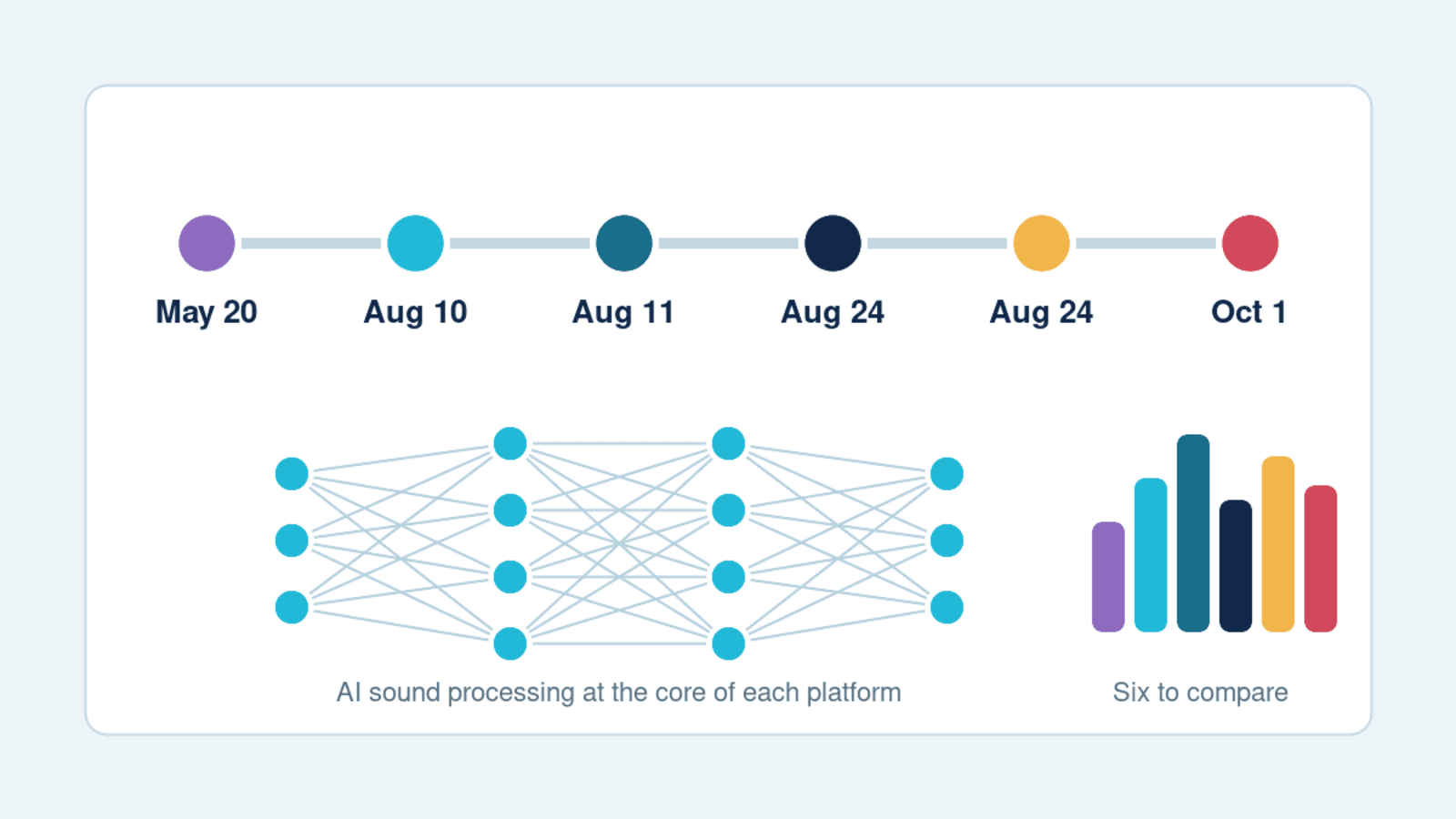
The table sets Widex beside the five other 2026 flagships. Every cell restates what our own pages on each platform already say, and none of it is independent testing. Automatic means the sources we read describe AI that works as sound changes, with no wearer switch. Starkey is a partial exception, because its Edge Mode hard-room program can now stay on from the moment you switch the aids on. Not stated means the sources are silent. We left out a column on who each aid is best for, because we do not recommend a brand before your hearing test. For dates, availability and lab scores, see our roundup of the six platforms for fall 2026.
| Hearing aid | How the maker describes its AI | When the AI runs, per the sources we reviewed | Tinnitus tools, per the sources we reviewed |
|---|---|---|---|
| Widex Allure AI RIC | W1 chip for everyday sound, plus a dedicated AI co-processor for Clarity Boost | When you switch Clarity Boost on with a single tap | Zen Therapy: Zen listening programs, app support and online counseling tools, per Widex |
| Signia MaX | Four deep neural networks (speech, own voice, scene and noise) that share information | Works automatically as sound changes. No wearer switch is described | Not mentioned in the launch material. Signia's earlier IX has tinnitus therapy as standard |
| Phonak EON | HYPERSONIC chip with deep neural network speech separation | Works automatically as sound changes. No wearer switch is described | Not mentioned in the launch material we reviewed |
| ReSound Sensia | Deep neural network noise reduction and a 4-microphone beamformer, plus AcoustIQ, which classifies the sound environment in real time | Works automatically as sound changes. No wearer switch is described | Not stated in the sources we reviewed |
| Oticon Reveal | Dual AI: a Speech AI and a Context AI working together in real time | Works automatically as sound changes. No wearer switch is described | Oticon confirms tinnitus sound therapy at every performance level |
| Starkey Omega AI+ | G4 Gen AI Neuro Processor with four neural networks that run together | Networks run together. Edge Mode, the hard-room program, can now stay on from switch-on (Level 24, per HearingTracker) | Not stated in the sources we reviewed |
Who may like on-demand AI
People who say that aggressive noise reduction makes sound feel flat or artificial may like the idea. So may people whose hard rooms are few and clear, such as one loud restaurant or a weekly meeting, and who are happy to tap when they need to. People who want help in every changing room, with no action on their part, may prefer a design that works all the time. We say this as a pattern to think about, not a rule.
Who may prefer AI that is always on
People who move through many rooms in a day, who do not want to think about a setting, or who may forget to tap at the moment a room turns hard may prefer AI that works automatically. Some people also like the idea that the aid decides for them. Others find automatic noise reduction flat. Neither group is wrong. You can only learn which you are by hearing both in your own hardest room, so ask for a demonstration in noise, not in a quiet booth. Our page on why restaurants are hard with hearing loss explains why those rooms are the real test.
What Widex says the AI does
Widex describes the neural network as audio-specific. It says it reduces noise while keeping you aware of the sounds around you and preserving sound quality. Widex also says the W1 chip gives natural sound with very little delay, which it calls Allure PureSound with ZeroDelay. The aid is a receiver-in-canal style with the same size and form as the earlier Allure RIC, in 10 colors.
The claims, and what is missing
From one study (Bianchi et al. 2026, WidexPress 65), Widex says wearers preferred the aid at five times the rate of key AI competitors, and that speech understanding improved by up to 20% and listening effort fell by up to 13% in a two-talker conversation. The competitors were two premium hearing aids. Widex has not named them or published sample sizes, the exact speech measure or the full protocol. Widex also claims up to 6 dB higher output signal-to-noise ratio than competitor AI products, with no named test. The numbers are encouraging. They are the maker's numbers.
Tinnitus programs in the same system
Widex says the newest Compass Cloud fitting software brings back integrated Zen Therapy. Widex Tinnitus Solutions combine Zen listening programs, support in the Widex Allure app and online counseling tools. Sound therapy aims to make tinnitus less intrusive. It is not a cure. If tinnitus is part of your hearing story, see our pages on tinnitus management and tinnitus therapy.
Daily life: battery, charging and connections
Widex says the battery lasts up to 32 hours, including 6 hours of AI use or streaming. The charger choices are standard, Charge & Clean and a portable Qi-enabled charger. Widex lists Made for iPhone, ASHA, LE Audio, telecoil and hands-free calls, and calls the aid Auracast-ready. Ask how each feature works with your phone before you buy.
Questions to ask at your fitting
When will I switch Clarity Boost on, and how will I know it helped? How is the tap programmed, and can I change it? How long does a charge last when I use the AI every day? Is my phone supported for streaming and calls? What does a trial look like, and what happens if I return the aids? What does it cost, and what is included in follow-up care? Widex has not announced a price, so ask for your own written quote.
What is still unknown
No price has come from Widex yet. Launch coverage in May gave November 1 for the US, while Widex's October 14 release says US availability begins in October 2026. It tells clinics to contact their sales manager for exact US dates. Its release does not name competitors or give study sample sizes. No independent test of Clarity Boost exists yet, as far as we have found. We will update this page as facts arrive.
Why the evaluation matters more than the chip
The chip decides what a hearing aid can do. The fitting decides what it does for you. A good hearing aid fitting sets the aid to your audiogram, checks the result at your eardrum with real-ear measurement, and continues over follow-up visits as you adapt. That matters for more than comfort. When sound arrives clearly, listening takes less effort, and the effort of listening is something your brain pays for. Read about hearing loss and listening fatigue. No AI style removes the need for that care, and our guide to what AI in hearing aids actually does lists five questions to ask any maker or practice.
How we would approach it at Audiology Associates of Westchester
We do not start with a brand. We start with your hearing test and your hardest rooms, and we choose the aid that serves you. A Widex aid may be on that list, or it may not. See our pages on Widex hearing aids and Widex Allure, and our roundup of the best AI hearing aids for fall 2026. Book a hearing test at our Harrison or Somers office. Two other launches landed the same day: Roger On Sphere and Integro. Our sister practice in California takes a claim-by-claim view: California Hearing Center.
What this means for you
There is no single best AI hearing aid. There is a best match for your hearing loss, your listening life, and how much control you want. That is what a hearing test and a fitting conversation are for: we test your hearing, talk through where you struggle, and then choose the technology to fit you. If you are not sure where to start, book a hearing test at our Harrison or Somers office, or call (914) 949-0034. Want news on the Allure AI RIC first? Use the box under the questions below.
Status and last update
Last updated October 20, 2026. Change note: added a side-by-side table of the six AI platforms, a section on who may prefer each approach, and a section on why the evaluation matters more than the chip. The first version appeared on October 14, 2026. We will revise this page once Widex confirms US dates and a price, or once someone tests Clarity Boost independently. Sources are listed at the end of this page.
Medical information notice
This article explains new product announcements for general education. It is not medical advice, and it does not diagnose or treat any condition. Product claims come from the makers. Talk with a licensed professional about your own situation. Call (914) 949-0034 to book at our Harrison or Somers office.
Common questions
What is Clarity Boost?
It is the on-demand AI setting of the Widex Allure AI RIC. One tap turns it on, and a second chip does the work. Widex says it reduces noise while keeping you aware of your surroundings.
Is on-demand AI better than AI that is always on?
Not in general. In the sources we read, Signia, Phonak, ReSound, Oticon and Starkey describe AI that works automatically, while Widex's Clarity Boost is switched on by the wearer. On-demand AI suits people who want natural sound most of the day and help in a few hard rooms, and people who want automatic help everywhere may prefer another design.
When can I get it in the US?
Widex says the US launch starts in October 2026. Clinics have to ask their sales manager for dates. Use the notify box and we will write when we know more.
What does it cost?
Widex has not announced a price. We give a written quote after your hearing test, so you see the full cost and what follow-up care includes.
Can it help with tinnitus?
Widex offers Zen listening programs, app support and online counseling tools. Sound therapy tries to make tinnitus fade into the background. It does not cure it, and results differ.
Which hearing aid is best for restaurants?
No brand wins on its own. It depends on your audiogram, how the aid is fitted and which sounds trouble you. Ask for a demonstration in a noisy room, and see our guide to why restaurants are hard with hearing loss.
Get one email when we know more about the Allure AI RIC.
We will write once when Widex confirms US dates and price, or when independent testing appears. We will send nothing else.
Sources and further reading
- Widex press release, October 14, 2026 (PR Newswire)
- The Hearing Review: Widex announces Allure AI RIC with Clarity Boost and Compass Cloud 2.0
- Hearing Health & Technology Matters: Widex introduces Allure AI RIC with dual-chip AI processing
- Hearing Review: Signia debuts MaX AI hearing aid platform with 4 DNNs
- Hearing Health Matters: Phonak introduces EON with HYPERSONIC chip
- Hearing Review: ReSound Sensia hearing aids launch
- HearingTracker: Oticon Reveal launches with Dual AI
- HearingTracker: Starkey launches Omega AI+ with Quad DNN