The evidence
Do Hearing Aids Help? A Plain Guide to the 2026 Cochrane Review
What a 2026 Cochrane review says about hearing aids for mild to moderate loss: clear listening gains, unclear on memory. Call our audiologists.
Read time: 6 min read
Patients at our Harrison and Somers offices often ask whether hearing aids are worth it. Here is the best evidence we have, in plain words.
It comes from a Cochrane review, updated in 2026. We tell you what it found, what it did not find, and what that means at your own visit.
“Research tells us what works on average. Your visit decides what works for you.”
The review in one paragraph
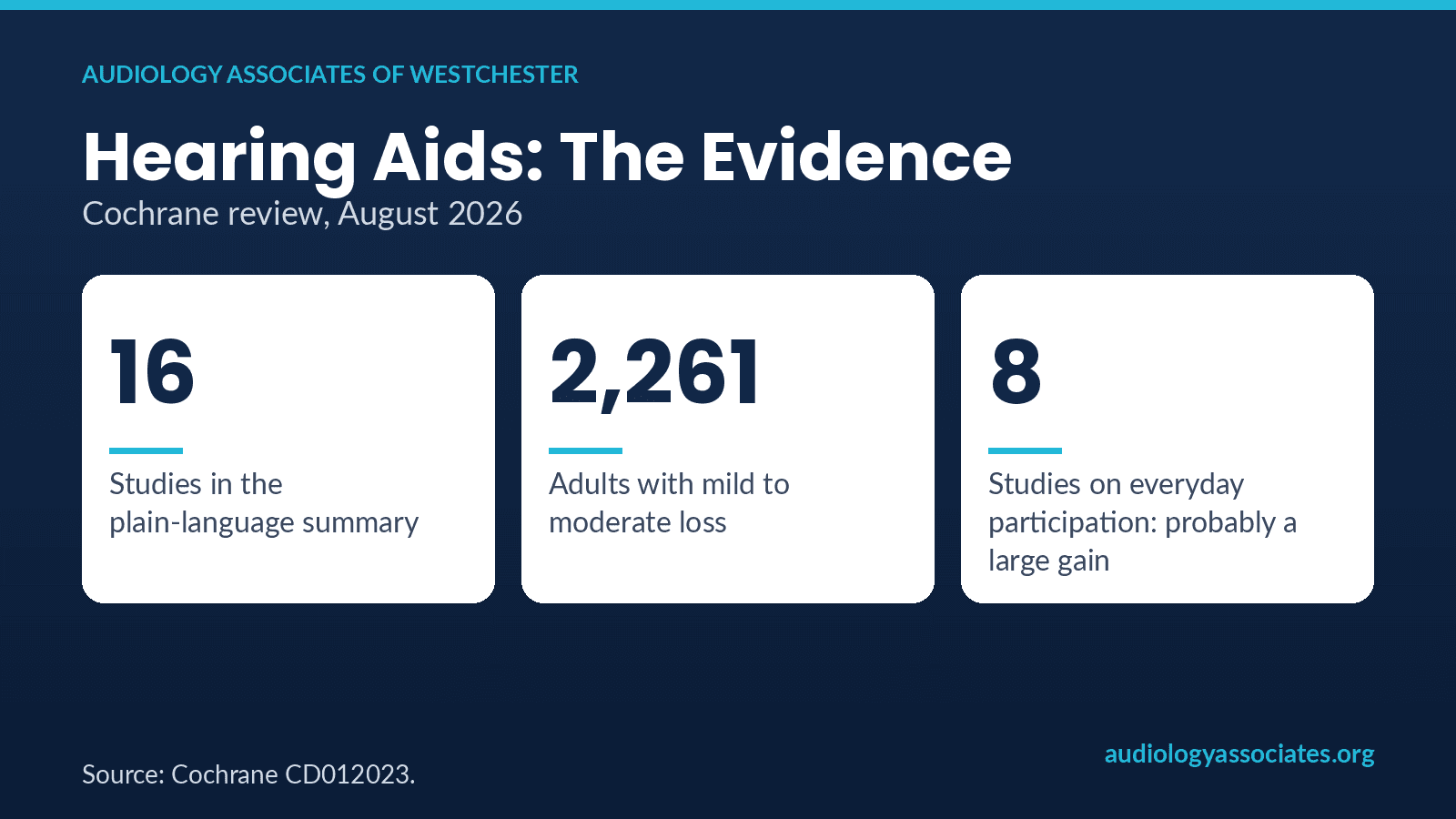
Ferguson and colleagues updated the Cochrane review of hearing aids for adults with mild to moderate hearing loss in August 2026. Cochrane's plain-language summary reports 16 studies with 2,261 adults, with average ages from 58 to 83. Studies ran from four weeks to three years in the USA, Europe, Brazil, Hong Kong and Australia.
The clear wins
Hearing aids probably greatly improve how well adults listen to others, based on five studies with 622 people. They probably greatly improve taking part in everyday life, based on eight studies with 1,683 people. Cochrane says the evidence supports the usual practice of offering hearing aids to adults with mild to moderate loss who seek help.
What is still uncertain
On loneliness, hearing aids may make little or no difference, based on two studies. On working memory, the effect is unclear. Harms are also unclear, with one study reporting two cases of pain or discomfort. Hearing aids are visible, so people know if they wear one, and short studies can miss long-term effects.
| Outcome | Finding | Evidence |
|---|---|---|
| Listening to others | Probably a large improvement | 5 studies, 622 people |
| Everyday participation | Probably a large improvement | 8 studies, 1,683 people |
| Loneliness | May make little or no difference | 2 studies, 907 people |
| Working memory | Unclear | 3 studies, 910 people |
| Dementia | Not addressed | Not studied |
Careful words about dementia
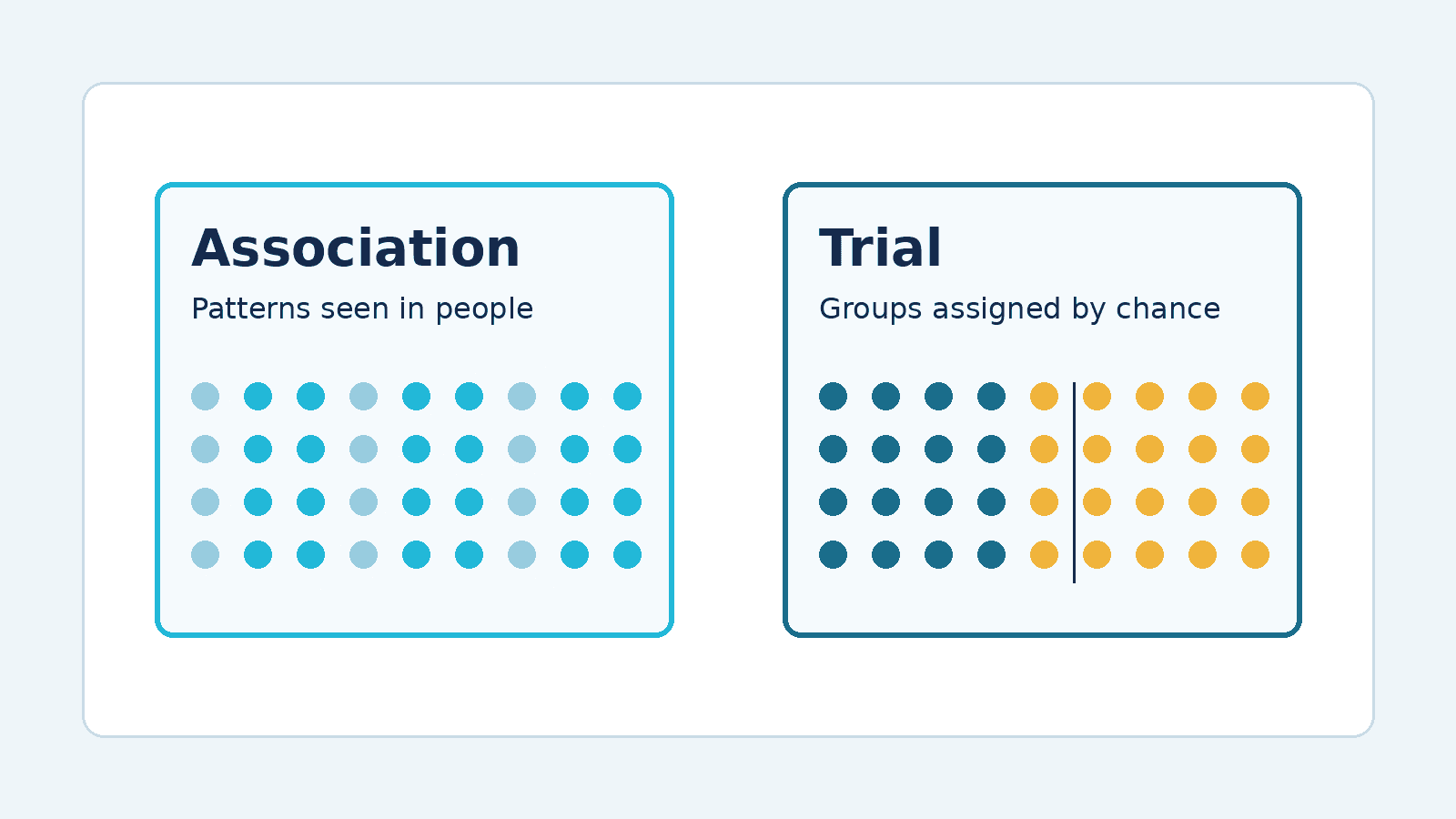
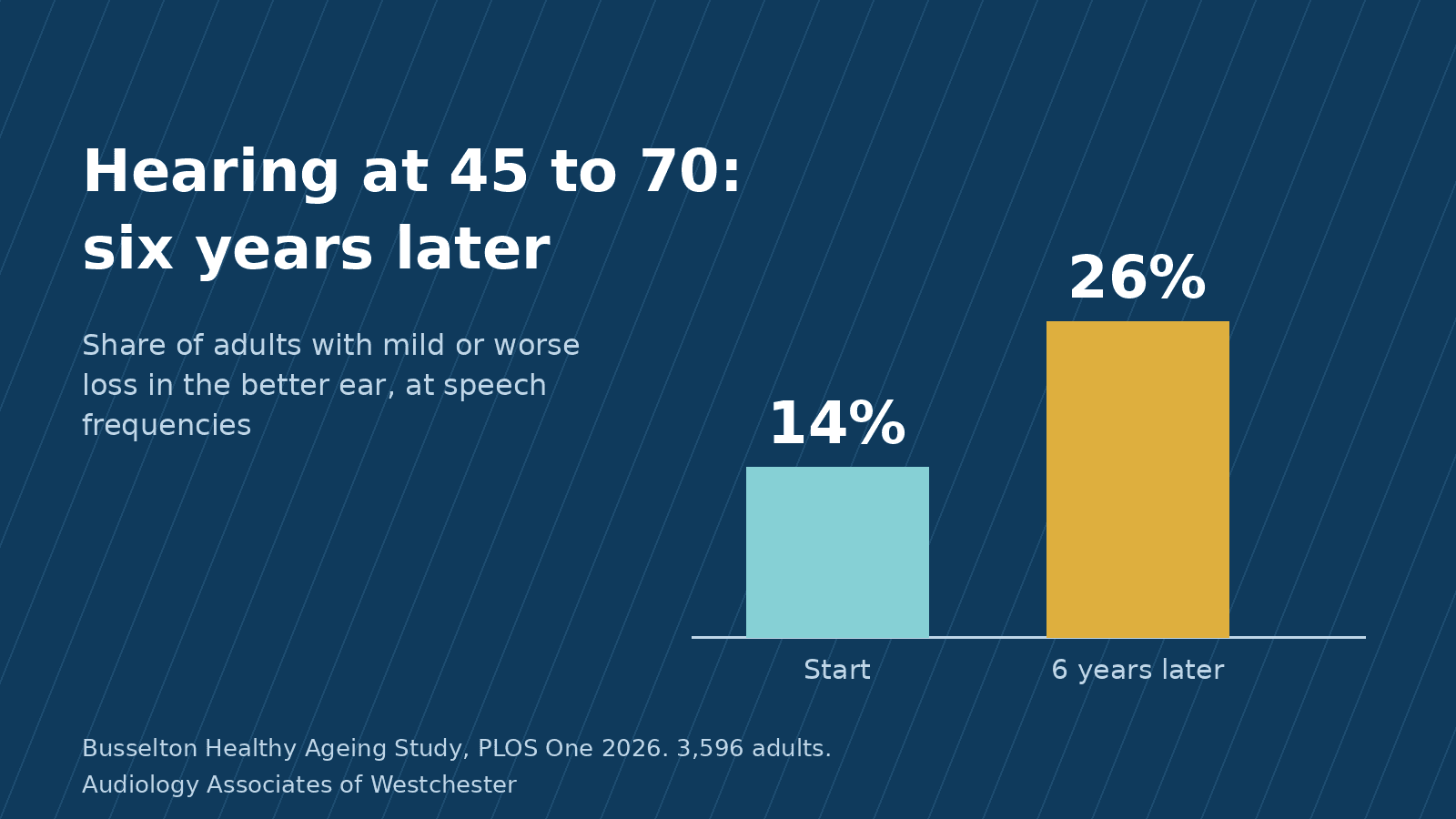
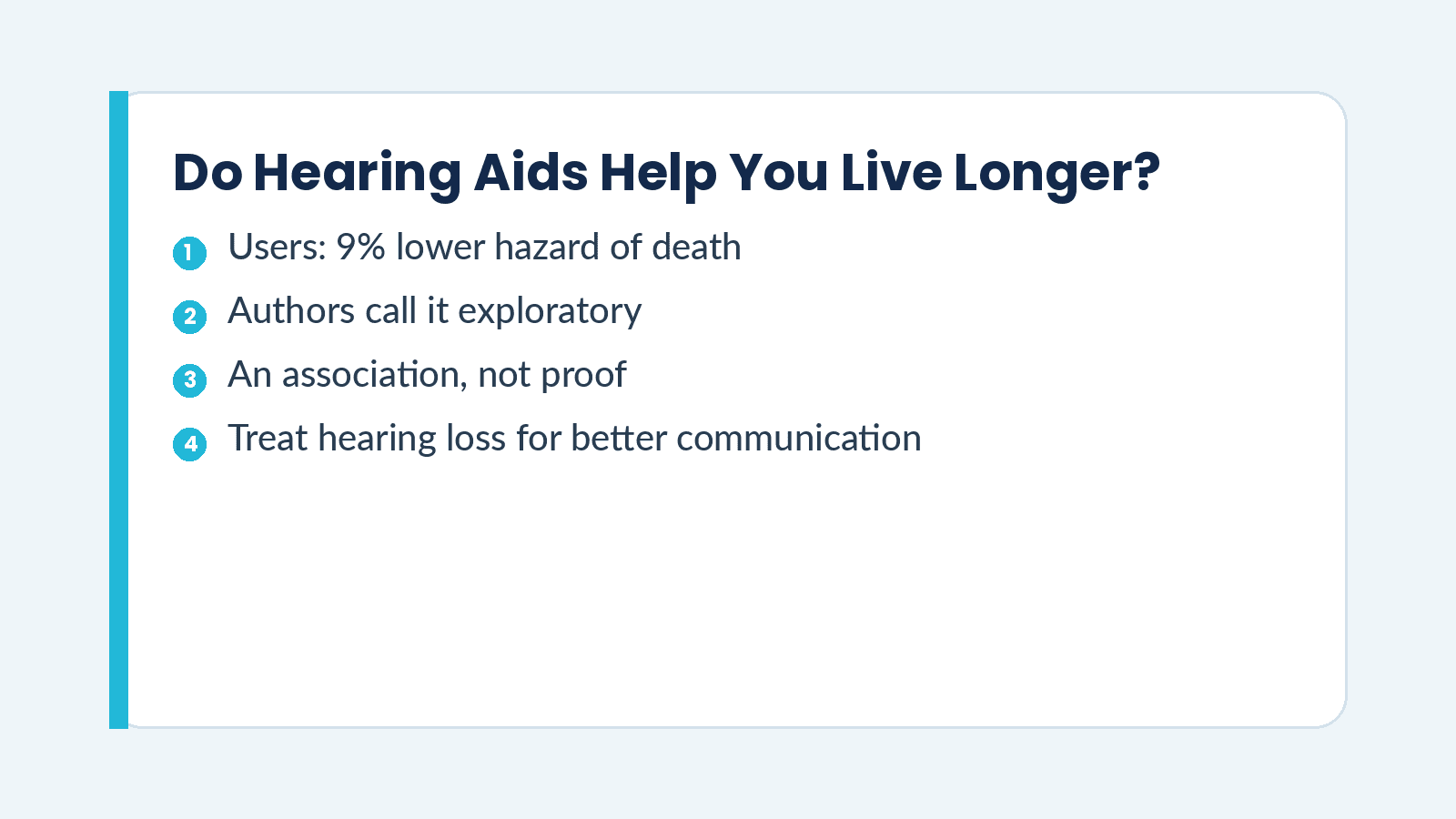
This review does not address dementia. Observational research links hearing loss with higher dementia risk, which is an association and not proof of cause. See our pages on whether hearing aids prevent dementia and the midlife hearing health research. Also read about hearing aids and longevity.
From evidence to your visit
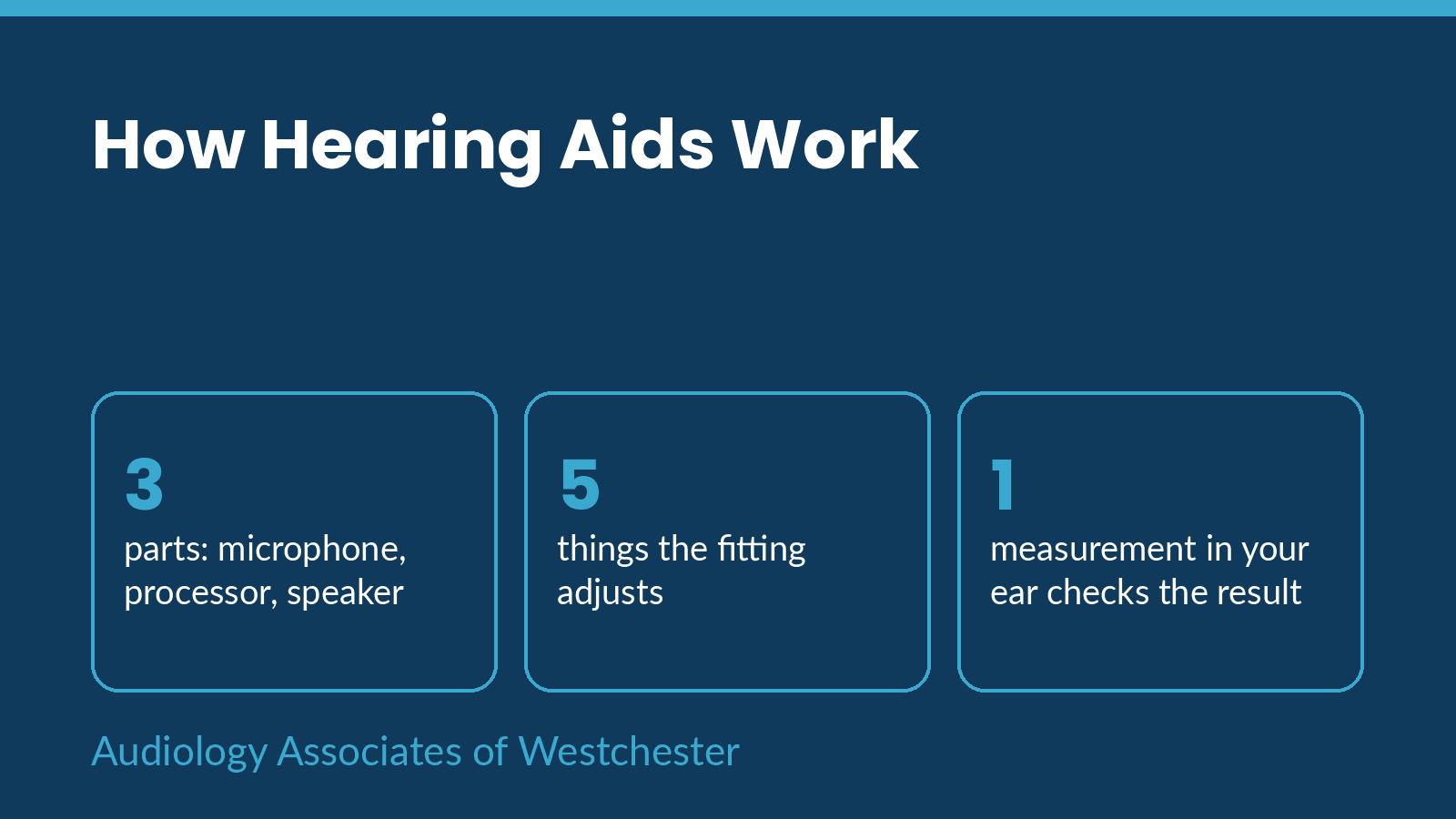
Research tells us what works on average. Your visit decides what works for you. We start with a hearing test, fit with real-ear checks and follow up. Next, read one hearing aid or two, the first month plan and hearing loss and falls.
Last updated and sources
Last updated November 24, 2026. What changed: this is the first version. We will update this page when new evidence or rules change the picture. Sources are listed at the end of the article. This page offers general information. It is not a diagnosis or treatment plan.
Common questions
How strong is the evidence for hearing aids?
A Cochrane review is among the strongest kinds. It found large improvements in listening and everyday participation for mild to moderate loss.
Do hearing aids help memory?
The effect on working memory is unclear in this review.
Do hearing aids prevent dementia?
This review does not address dementia. Hearing loss is associated with higher dementia risk, but that is not proof aids prevent it.
Does this apply to severe loss?
The review covers mild to moderate loss. Other options are covered on our pages for severe loss.
What should I do with this information?
Start with a hearing test. It shows where you stand and what to do next.