Healthy aging
Hearing Aids and Fewer Falls? What Westchester Families Should Know
A study found hearing aid users reported fewer falls. What it means, what it does not, and a simple home checklist for families. Call our offices.
Read time: 5 min read
Adult children across Westchester ask us about fall prevention, often before they ask about hearing. Hearing belongs in that talk.
The best-known study is from 2023. We explain it plainly, say where it stops, and give a checklist you can use this week.
“Hearing belongs on the fall prevention list.”
The study in plain words
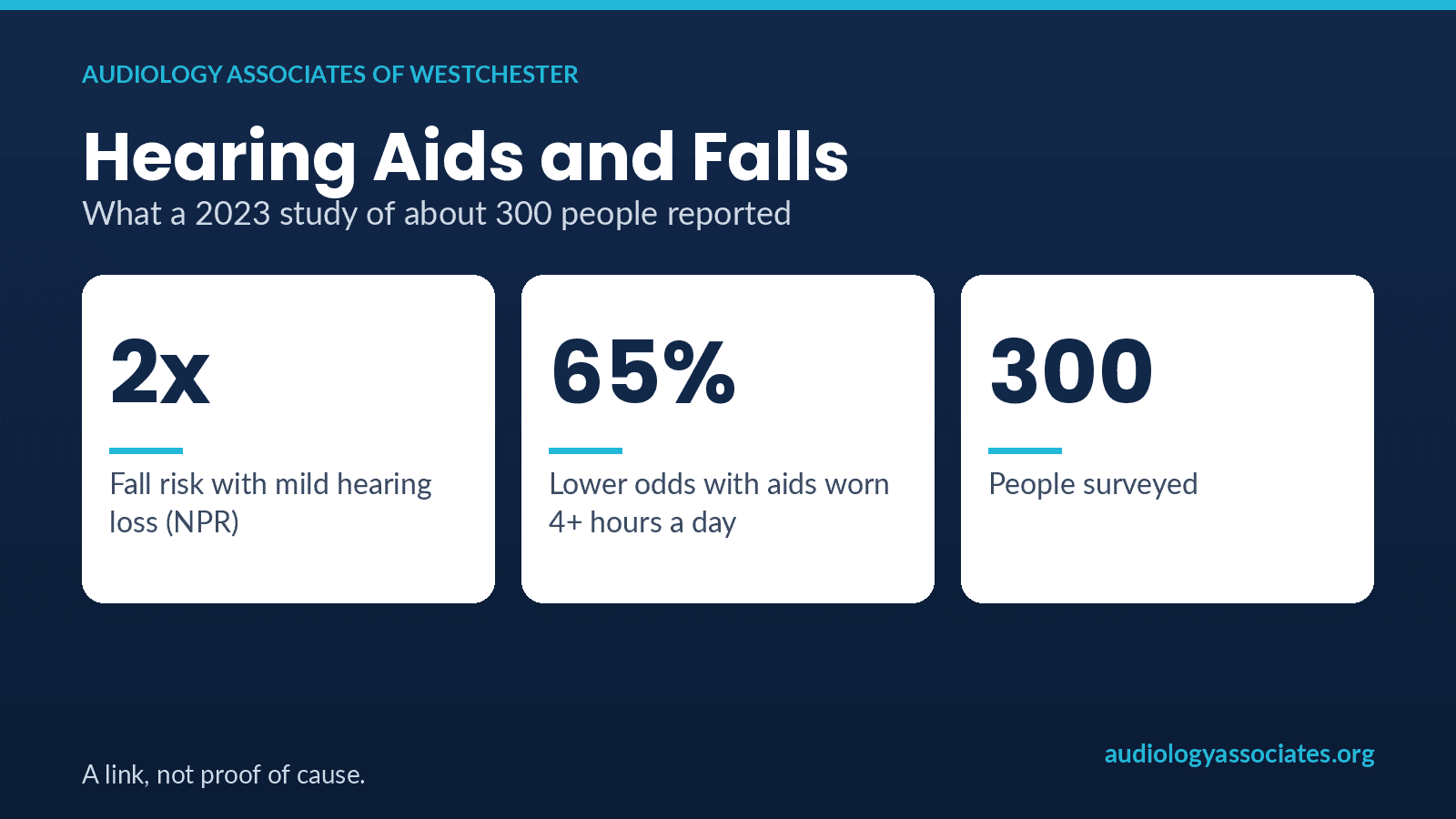
Researchers led by audiologist Laura Campos surveyed about 300 people with hearing loss. They asked about hearing aid use and past falls. The results, published in the Journal of the American Geriatrics Society in 2023 and reported by NPR, showed fewer reported falls among hearing aid users. Those who wore aids at least four hours a day had up to 65% lower odds of falling.
The background risk
NPR reports that older adults with mild hearing loss are at more than double the risk of falling, and that falls are the top cause of death from injury for people 65 and older. Scientists do not yet know how hearing loss raises the risk. Ideas include hearing's role in sensing space, and a link to the inner ear's balance system.
What the study cannot say
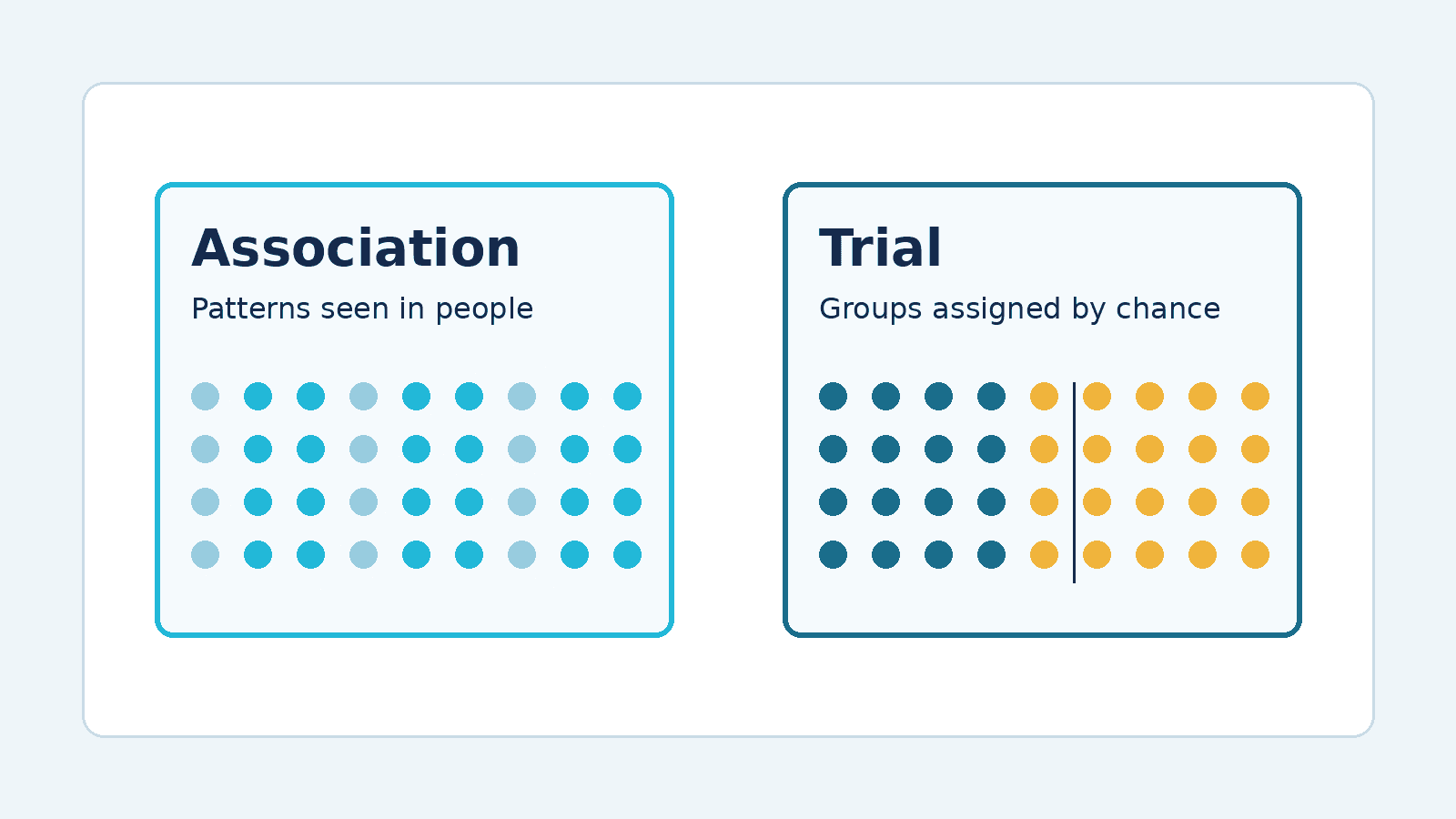
The study relied on memory of past falls. It found a link, not a cause. Daily aid wearers may also be more active or healthier in other ways. We will update this page when we can.
A checklist for your family
Start with a hearing test. If aids are advised, help your parent wear them every day, and book a fine-tuning visit if they are uncomfortable. Next, check vision, ask the doctor to review medicines that cause dizziness, and walk through the home for loose rugs, poor light and stairs. Our page for seniors and our signs you may need hearing aids help you start the conversation.
| Finding | Detail | Source |
|---|---|---|
| Fall risk with mild hearing loss | More than double, per NPR | NPR, Nov 13, 2023 |
| Hearing aid users | Reported fewer falls than non-users | Campos et al., JAGS 2023 |
| Aids worn 4 or more hours a day | Up to 65% lower odds of falling | Campos et al., JAGS 2023 |
| Sample | About 300 people with hearing loss; survey | NPR, Nov 13, 2023 |
Balance, memory and other links
If dizziness is part of the picture, ask us about balance care at either office. For thinking and memory, see our page on hearing tests and cognitive screening and read what we say about whether hearing aids prevent dementia. For how well aids work, read the Cochrane evidence summary and the first month plan.
Last updated and sources
Last updated November 24, 2026. What changed: this is the first version. We will update this page when new evidence or rules change the picture. Sources are listed at the end of the article. This page offers general information. It is not a diagnosis or treatment plan.
Common questions
Do hearing aids prevent falls?
One survey found fewer reported falls among users. It does not prove aids prevent falls.
How many hours a day matter?
In that study, at least four hours a day had the lowest odds of falling.
Should my parent's hearing be tested after a fall?
A test is a sensible addition to the doctor's review.
What else helps?
NPR notes strength and balance exercise. Vision, medicines and the home also matter.
Can you help with dizziness?
Call either office and describe the symptoms. We will tell you what we can do and when to see a doctor.