Plain-language guide
Do Hearing Aids Help You Live Longer? A Careful Read of the 2026 Study
A Lancet Healthy Longevity study links hearing aid use to lower mortality, but proves no cause. What it found and what to do. Book a hearing test.
Read time: 6 min read
Families ask us whether hearing aids help people live longer. A large study published in The Lancet Healthy Longevity this month put the question in headlines. Our answer is careful, because the study cannot prove a cause. It does give a good reason to treat hearing loss, and it shows how to read health news. This page comes from Audiology Associates of Westchester.
What the study did
“The study links hearing aid use to lower mortality. It cannot show that hearing aids caused it.”
HearingTracker reported on October 15, 2026 that researchers pooled data from 13,851 adults in Australia, Iceland and the United States, then checked their findings in 50,277 adults in Norway. Each person had a measured hearing test, and people were followed for 10 to 16 years. The team adjusted for age, sex, education, smoking, body mass index, heart disease, diabetes, stroke and noise exposure. We have not read the full paper, so we rely on this report and the journal citation.
What it found
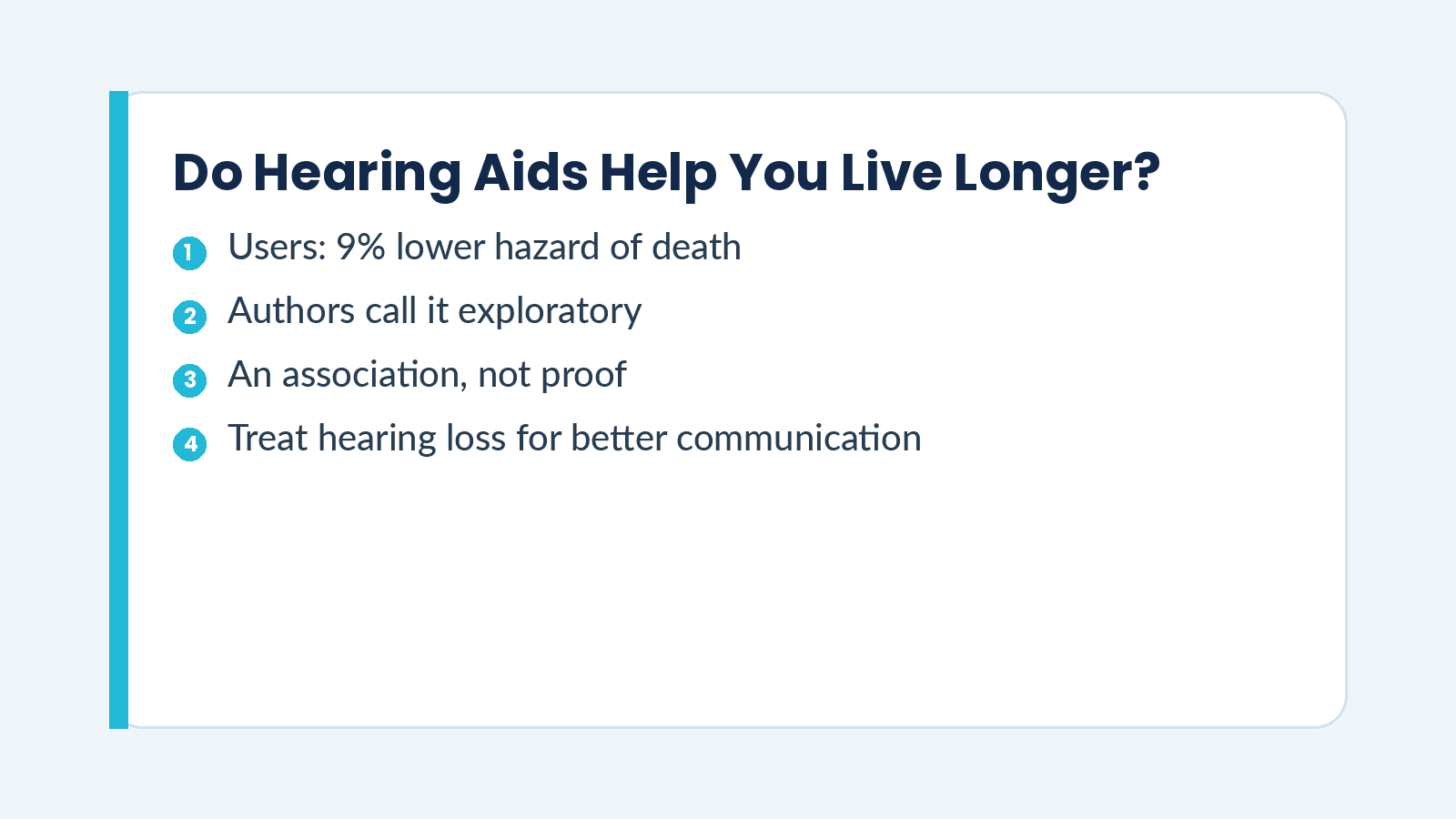
Compared with normal hearing, the risk of death during follow-up was 19 percent higher with mild hearing loss and 55 to 56 percent higher with moderate or worse loss. Among people with hearing loss, current hearing aid users had a 9 percent lower pooled risk of death than non-users, with a hazard ratio of 0.91. The confidence interval ran from 0.83 to 0.99, which is close to no difference. The authors called the hearing aid analysis exploratory.
The study findings at a glance
People who wear hearing aids may differ from people who do not in many ways, such as income, access to care, thinking skills, social life and willingness to act on a health problem. Any of these can affect lifespan. The study also relied on survey answers about hearing aid use, so it could not capture how many hours a day people wore them or how well they worked. In a commentary in the same journal, Janet S. Choi, MD, praised the study's size but warned against telling patients that hearing aids prolong life on this evidence alone. We agree.
What we can say with confidence
Treating hearing loss makes communication easier and reduces everyday strain. That benefit does not depend on any lifespan figure. Hearing care also fits into a bigger picture of health. See our pages on [whether hearing aids prevent dementia](/do-hearing-aids-prevent-dementia) and on [hearing tests and cognitive screening](/hearing-test-and-cognitive-screening). The same careful reading applies to the dementia research. It shows links, and it does not promise prevention.
What to do if you or a parent struggles to hear
You do not need to wait for researchers to settle the question. A hearing test shows whether you have hearing loss, which ear is affected and by how much. If you are unsure about devices, a [hearing aid second opinion](/hearing-aid-second-opinion) gives you an independent look. If you already wear aids and still struggle, a [hearing aid fitting](/hearing-aid-fitting) check with real-ear measurement can show whether they are set correctly. Start with [hearing testing](/hearing-testing), at our [Harrison office](/harrison-ny) or our [Somers office](/Somers-NY).
More news this week
We also covered [Sony's exit from OTC hearing aids](/sony-exits-otc-hearing-aids), [two fully implantable cochlear implants](/fully-implantable-cochlear-implants-tici-unico-envoy-acclaim) and [the SPI-1005 data](/spi-1005-menieres-sudden-hearing-loss).
Status and last update
Last updated October 19, 2026. This is the first version. We will revise it if the authors publish more detail on hearing aid use.
Medical information notice
Common questions
Do hearing aids help you live longer?
That has not been shown. A large 2026 study found a lower rate of death among hearing aid users, but the authors called the analysis exploratory and the journal's commentary warns against claiming that aids prolong life.
What does a 9 percent lower risk mean?
It is a relative difference in the rate of death over follow-up, with a hazard ratio of 0.91. It does not mean 9 fewer deaths in 100 people.
Does untreated hearing loss cause earlier death?
The study does not show that. It found an association after adjusting for several factors, and other differences between people could explain part of it.
Why can't the study prove a cause?
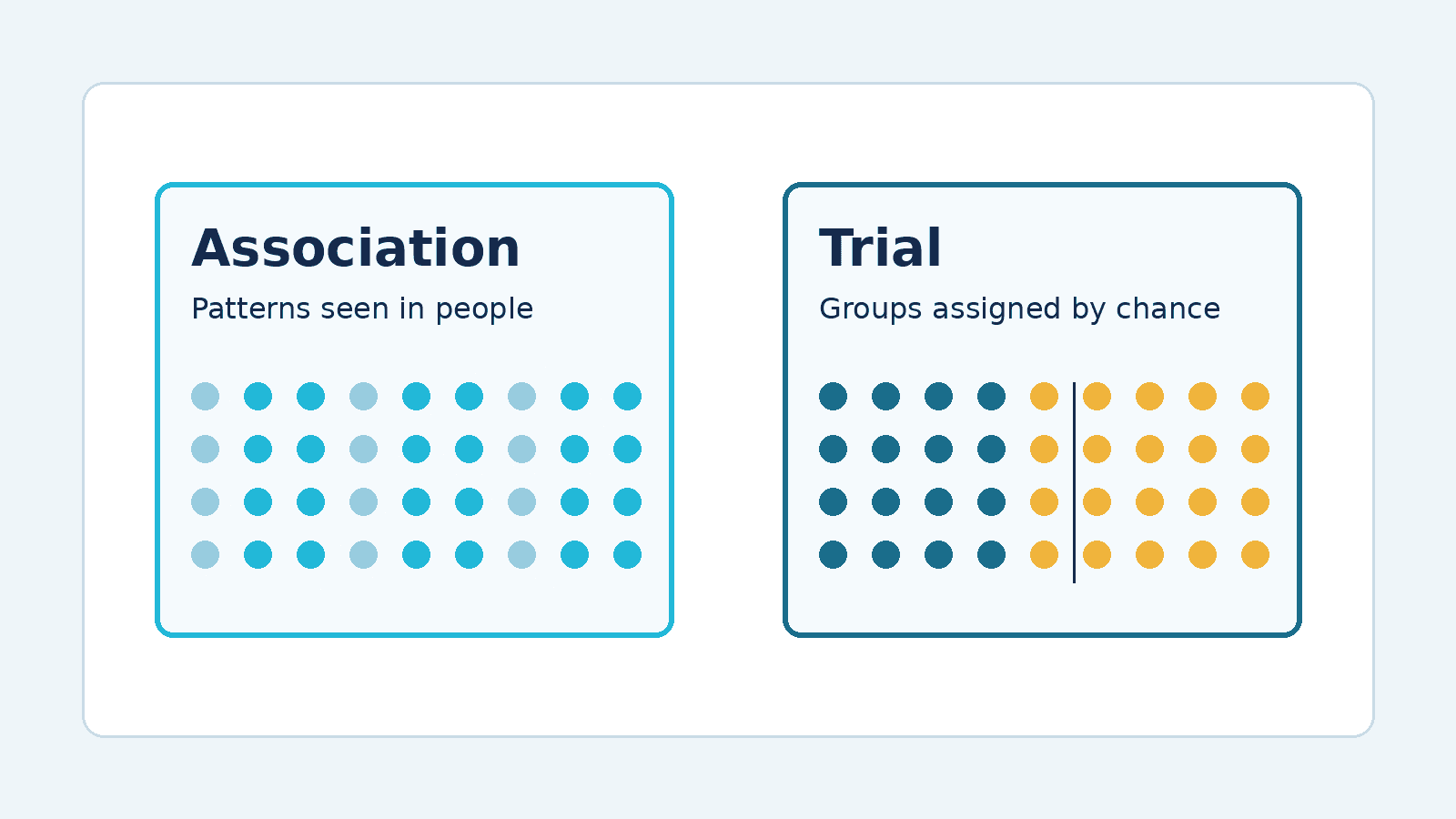
It observed people and did not assign hearing aids at random. Hearing aid users may differ in health, income, social life and care access.
Should I get hearing aids because of this study?
Get a hearing test if conversation has become harder. Treating hearing loss helps communication, whatever future studies show about lifespan.
Does Audiology Associates of Westchester promise health outcomes from hearing aids?
No. We aim to help you hear and communicate better. We do not promise a longer life or a lower dementia risk.