New wearers
New Hearing Aids: What the First Month Should Look Like
A week-by-week guide for new hearing aid wearers, with what to expect, when to call and how follow-up visits shape your result. Westchester audiologists.
Read time: 5 min read
Many new wearers expect to walk out sounding perfect. A better picture is a month of small steps, with your audiologist adjusting the aids as you learn.
This is the plan we share with new patients in Harrison and Somers. It is our practice's guidance and not a research finding.
“A first fitting is a starting point, and the visits after it matter.”
Before you leave the fitting
Ask four things. How do I clean and charge the aids? How do I change volume or program? When is my follow-up visit? Who do I call if something is wrong? Write the answers down. A first fitting is a starting point, and the visits after it matter. Read about what we check at a fitting.
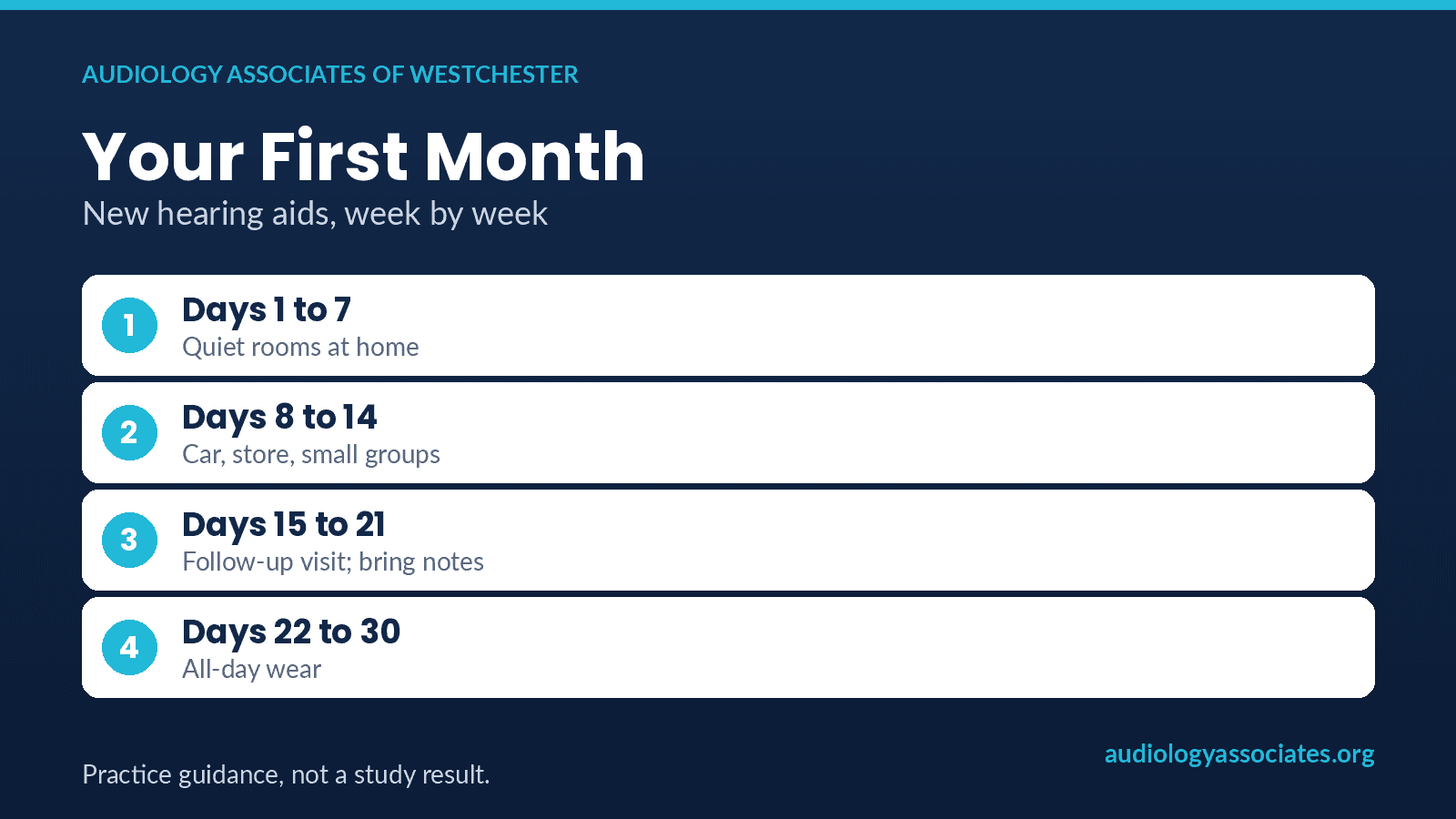
Days 1 to 7: gentle start
Wear the aids at home, in quiet rooms. Talk with one person and read aloud, so your own voice becomes familiar. Take breaks when you are tired. Write down any sound that bothers you, such as dishes or paper.
Days 8 to 14: widen the circle
Go out. Wear the aids in the car, a store and a small gathering. Try the app or controls. If a sound is harsh, call us rather than waiting. Our page on hearing aid adjustments explains what we can change.
Days 15 to 21: the follow-up visit
Bring your notes. We adjust the sound and check the fit. For rooms that stay hard, read hearing in noise with a normal audiogram and holiday dinner hearing tips.
| Days | Goal | Action |
|---|---|---|
| 1 to 7 | Gentle start | Quiet rooms; read aloud; note bothersome sounds |
| 8 to 14 | Widen the circle | Car, store, small group; learn the controls |
| 15 to 21 | Follow-up visit | Bring notes; sound and fit adjusted |
| 22 to 30 | All-day wear | Keep cleaning; note what is still hard |
Days 22 to 30: all-day wear
By now most people wear their aids all day. Keep cleaning them. Note what is still hard. If something is not working, ask about the trial terms for your fitting before you wait too long. For tough cases, a second opinion can help.
Keep reading
See do I need one hearing aid or two, rechargeable hearing aids and the Cochrane evidence summary.
Last updated and sources
Last updated November 24, 2026. What changed: this is the first version. We will update this page when new evidence or rules change the picture. Sources are listed at the end of the article. This page offers general information. It is not a diagnosis or treatment plan.
Common questions
Is it normal for new aids to sound strange?
Yes. Your brain needs time to adapt. Tell us what you notice, and we will adjust.
When should I call the office?
Call if a sound is painful, an aid is uncomfortable, or something stops working. Do not wait for the follow-up visit.
How many follow-up visits will I need?
It varies. We plan visits around your needs.
Should I wear aids all day right away?
Build up as comfort allows, with the goal of wearing them when you are awake.
What if it is still hard after a month?
Book a visit. Settings, fit or the type of aid may need to change.