Hearing tips
Hearing at the Holiday Table: Tips for Westchester Families
Noisy tables are hard for most hearing aid users. Seating, host tips and a fine-tuning visit can help. Westchester audiologists share what works. Call us.
Read time: 5 min read
Thanksgiving and the holidays bring families together, often in loud rooms. If you wear hearing aids and still miss the stories, you are not doing anything wrong.
A new analysis of national survey data helps explain why. It also points to what can help. Below are steps for hosts, guests and anyone who wants to enjoy the table again.
“If you still miss stories at the table, you are not doing anything wrong.”
What the new survey data shows
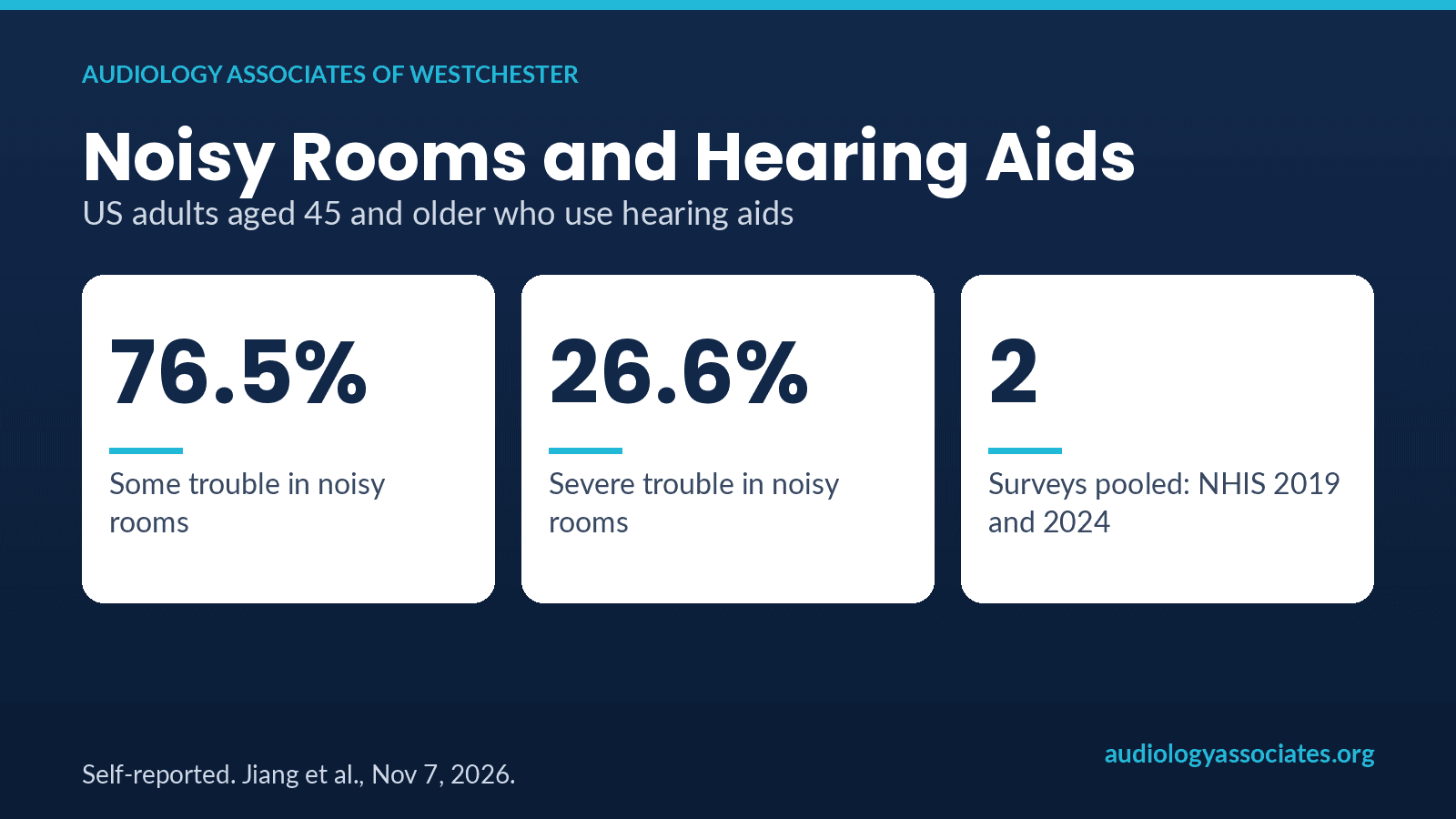
A study published November 7, 2026 in Patient Preference and Adherence looked at US adults aged 45 and older who use hearing aids. It used National Health Interview Survey data from 2019 and 2024. About 76.5% reported some trouble in noisy rooms, and about 26.6% reported severe trouble. These figures come from what people said in a survey. They tell us noisy rooms are hard for most hearing aid users, which makes the problem normal and worth solving.
For guests: three habits
Arrive early and choose your seat, with a wall behind you and the person you most want to hear nearby. Tell one person at the table that you hear best when people take turns. Step out of a noisy room for a few minutes if you tire, because listening in noise is hard work.
For hosts: make the table easier
Turn music off or low during the meal. Light faces from the front, with a lamp or candles that do not glare. Keep one conversation going at a time, and repeat questions from the far end. If a guest wears hearing aids, ask what helps. Our guide to helping a loved one has more ways to support someone with hearing loss.
| Who | Action | Result |
|---|---|---|
| Guest | Choose a wall seat near your main talker | Fewer noise directions |
| Host | Turn music low; one conversation at a time | Less competing sound |
| Host | Light faces from the front | Guests can see expression |
| Guest | Take short quiet breaks | Less listening fatigue |
| Audiologist | Adjust noise settings; consider a remote microphone | Better fit to your life |
Restaurants in Westchester and the Hudson Valley
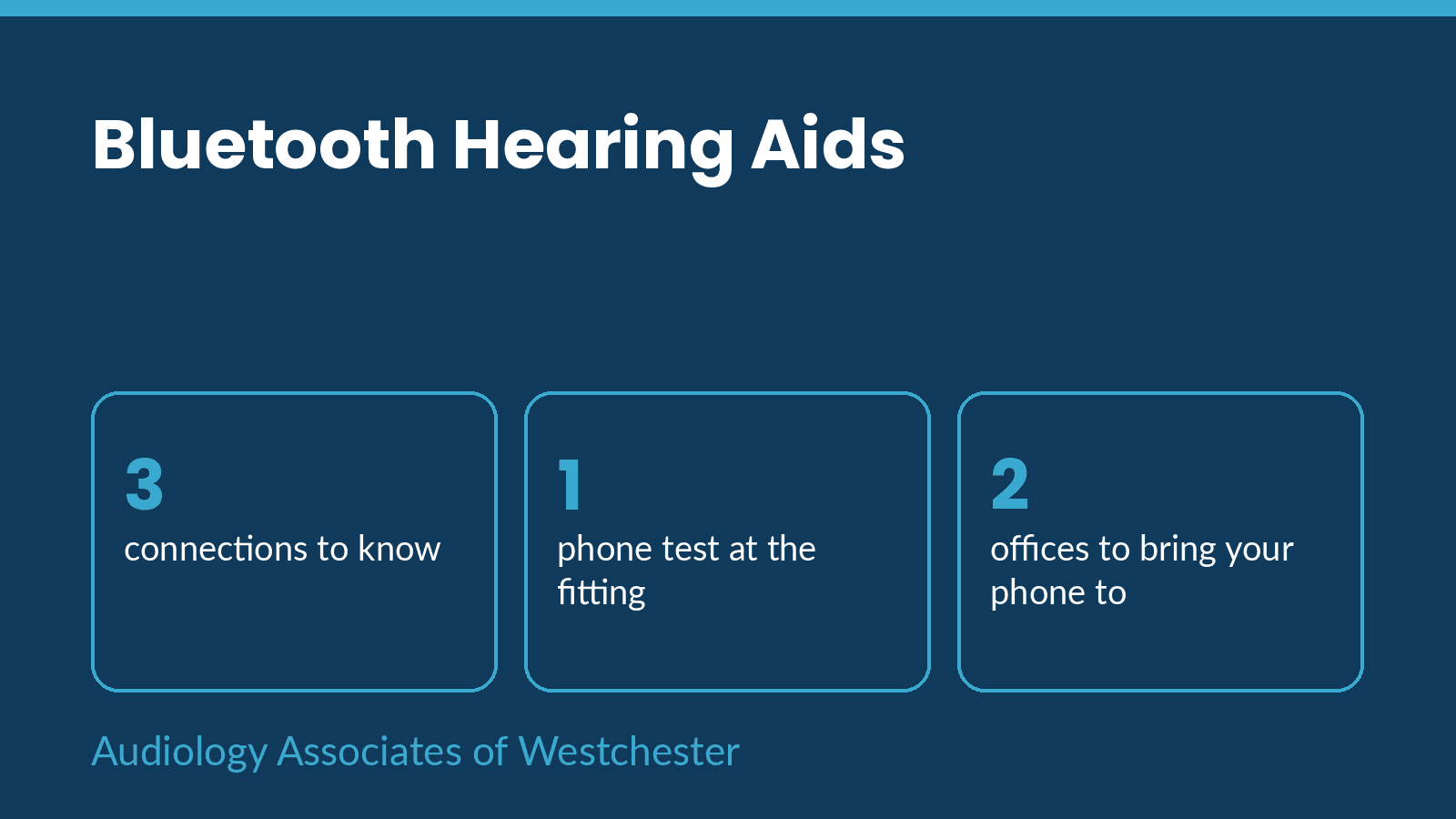
Ask for a quiet table when you book, away from the kitchen, bar and speakers. Early evening is often quieter. Booths and corners can help. If you wear aids with a restaurant program, ask us to check it. Our Bluetooth hearing aids guide covers phone and app control, and what AI in hearing aids does explains noise handling.
Help from your audiologist
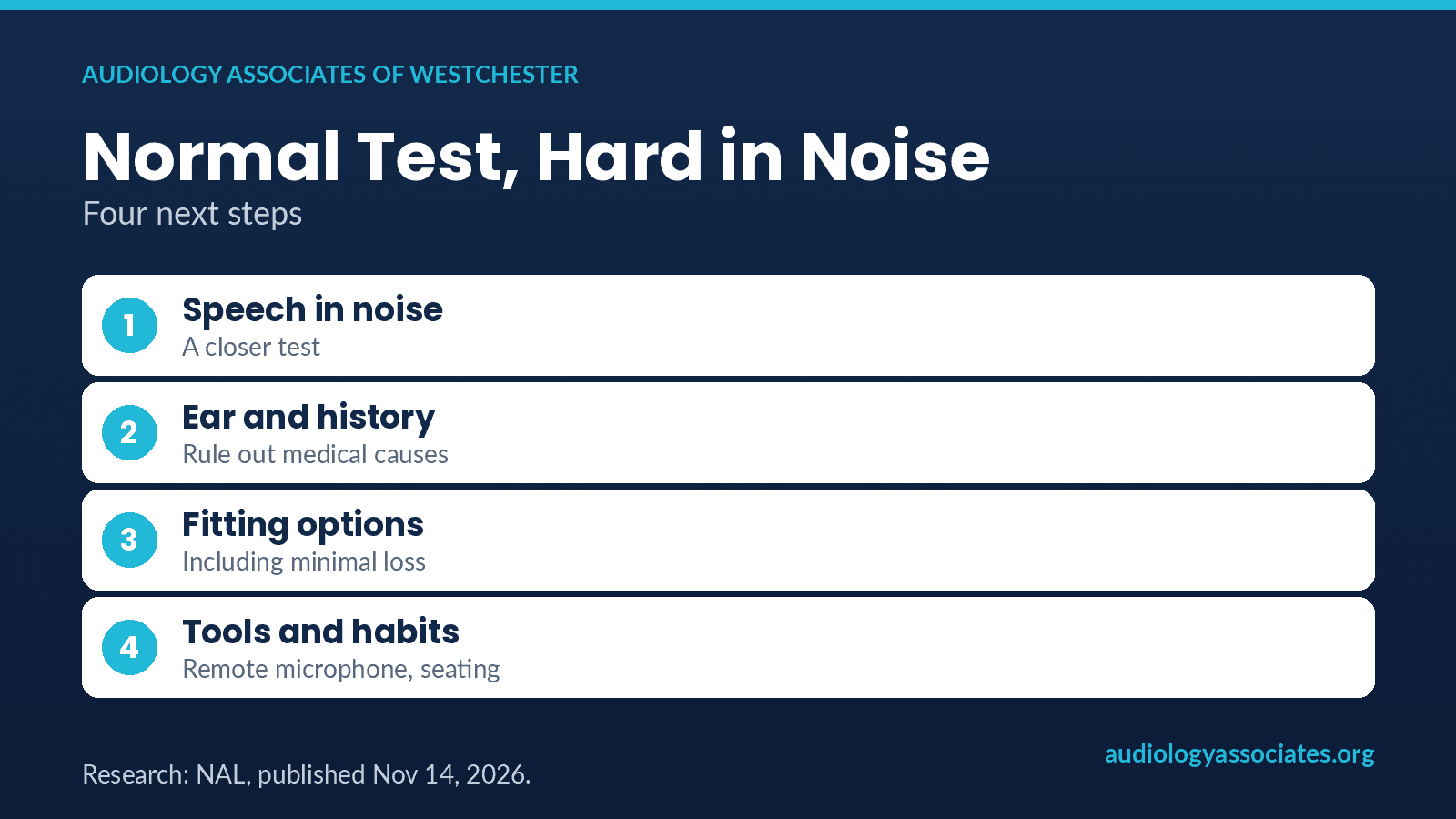
A hearing aid adjustment can change how your aids treat noise. A remote microphone may help at a long table. If a test shows your hearing is normal but noise is still hard, read about hearing in noise with a normal audiogram. Book through our Harrison or Somers office.
Last updated and sources
Last updated November 24, 2026. What changed: this is the first version. We will update this page when new evidence or rules change the picture. Sources are listed at the end of the article. This page offers general information. It is not a diagnosis or treatment plan.
Common questions
Is it normal to struggle in noise with hearing aids?
Yes. About 76.5% of US hearing aid users aged 45 and older report some trouble in noisy rooms, according to a survey analysis published November 7, 2026.
How can I help a guest with hearing loss?
Turn music down, light faces, speak one at a time and ask what helps.
Can my hearing aids be adjusted for noise?
Often, yes. A visit lets us review your settings and your hardest situations.
What is a remote microphone?
A small microphone that sends a talker's voice to your aids. Ask us if one suits you.
Do you have appointments before the holidays?
Call the Harrison or Somers office to ask for the next open visit.