Hearing loss signs for families
Signs You Need Hearing Aids, or That Someone You Love Does
What to look for if a spouse or parent may need hearing aids, which signs need a doctor first, and how to raise it kindly. Westchester audiologists.
Read time: 7 min read
You may need hearing aids if you often ask people to repeat themselves, find that voices sound muffled, or turn the TV up past what your family can bear. The same signs, seen from the outside, tell you that a spouse or parent may need them. Only a hearing test can confirm it, and most people who are told they should have one are relieved to find out.
Hearing loss comes on slowly, so the person living with it is often the last to notice. Husbands, wives, adult children and close friends usually spot the pattern first. This page is written for both sides of that conversation. It lists what to look for, explains what each sign can mean, and offers a way to raise the subject that keeps the peace.
“Hearing loss is gradual, so the people around you usually notice first. A kind, specific conversation is the best first step.”
Start here: signs that need a doctor first
Some changes call for a doctor before any hearing aid. These are hearing that drops suddenly in one or both ears, over a few hours or days; hearing loss in only one ear; ear pain; drainage from the ear; and dizziness or a spinning feeling. The National Institute on Deafness and Other Communication Disorders says sudden deafness is a medical emergency, because treatment works best when it starts quickly. If the person you are worried about has any of these, ask them to call their doctor or urgent care today. The rest of this page is about gradual changes.
What you may notice, and what it can mean
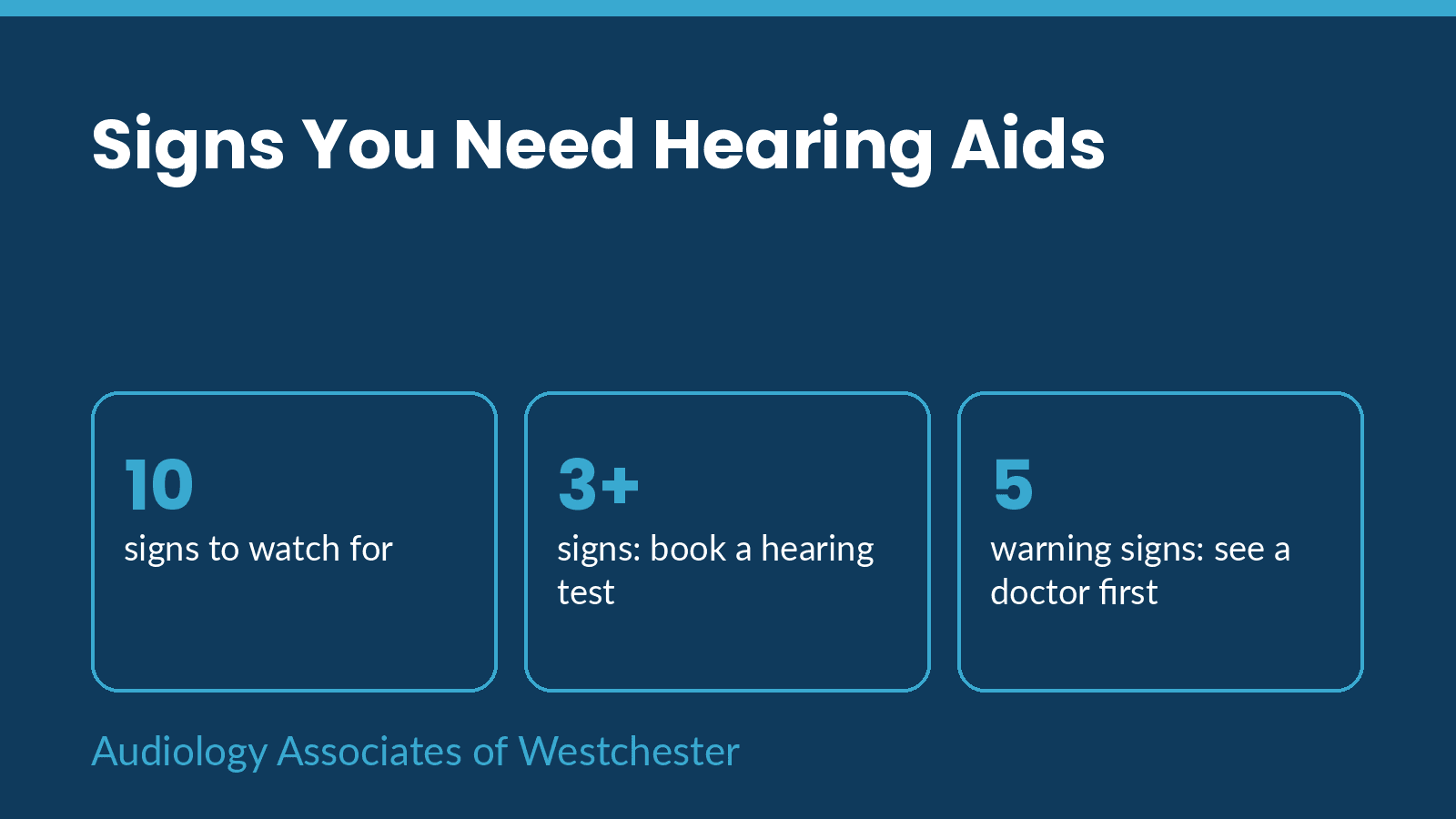
The table lists ten things people notice in a spouse or parent. Each is common, and none proves hearing loss on its own. Together they make a pattern worth a test.
| What you notice | What it can mean | What to do |
|---|---|---|
| Asks you to repeat things | High-pitched speech sounds are getting lost | Note how often, then suggest a test |
| Says people mumble | Consonants are blurring even though voices are heard | Suggest a test, not a louder voice |
| Turns the TV up | Speech is competing with music and effects | Try captions as a stopgap, and suggest a test |
| Struggles in restaurants | Background noise is hiding speech | Book a test, and sit where they can see faces |
| Misses the doorbell, timer or phone | High-pitched alerts fade first | Book a test |
| Avoids phone calls | No lip reading or facial cues on a call | Book a test |
| Seems drained after gatherings | Listening takes extra effort | Book a test |
| Withdraws from social events | Hearing is shaping daily life | Raise it kindly, and offer to go along |
| Mentions ringing or buzzing | Tinnitus often goes with hearing loss | Book a test. See a doctor if it is sudden or one-sided |
| Sudden change, one ear, pain, drainage or dizziness | May be a medical problem | See a doctor or urgent care promptly |
What you hear them say
Listen for the words. Someone with hearing loss often says what, sorry or pardon, or answers a question slightly off target. They may say that people mumble, that the restaurant was too loud, or that they did not catch your call. They may accuse the TV of being badly mixed. Many people with high-pitched hearing loss hear that others are talking but cannot make out consonants like s, f and th, which is why they blame the speaker. These comments are easy to wave away, which is why they repeat for years.
What you see them do
Watch the behavior. A person may lean in toward your face, turn one ear toward a speaker, watch lips closely, or sit with their back to a wall in a restaurant. They may raise the TV volume a step at a time, let calls go to voicemail, miss the doorbell or the oven timer, or stop going to places that used to be a pleasure. After a long dinner or meeting they may seem drained or short-tempered, because listening with reduced hearing takes extra effort. Some people go quiet in groups, and others talk more to control the conversation.
What a pattern means
Count the signs you see. Zero to two, and no worry about sudden change, means keep watching and suggest a baseline hearing test if they are over fifty or have been around loud noise. Three to five means it is time to book a test. Six or more means book soon. Any single sign that is sudden, one-sided, painful or dizzying means see a doctor first. This count is a guide to what to do next. It is not a measure of hearing loss.
How to raise it without a fight
Choose a calm, private moment, not a noisy restaurant or the middle of an argument. Start with what you have noticed and how it affects you both, for example that you have been missing parts of conversations together. Avoid labels like deaf or stubborn. Ask a question instead of making a diagnosis, such as whether they would be willing to have a hearing check just to know. Offer to go along, and offer to book it. Be ready to let the first talk be short, because many people need a few days to take it in.
If they say no
A no is common, and it rarely means never. People worry about cost, about looking old, and about what a test might show. Try a different angle: the test is quick and painless, and it gives a baseline for the future even if the result is normal. Remind them of a specific moment, such as a missed grandchild's story, and say what you would like to be able to share. Give them time, then ask again. If the signs are getting worse, bring it up again with care.
What happens at a first visit
A first visit begins with a conversation about what you or your loved one notices. The audiologist looks in the ears, then tests how well each ear hears tones and speech. The results are explained in plain language. If hearing aids would help, we talk through the styles, the technology and the way fitting works, including programming to the hearing test and real-ear measurement. Family members are welcome to come along, and often it helps.
Hearing and memory
Large studies link untreated hearing loss with faster declines in memory and thinking, and many families ask whether hearing aids can protect the brain. The honest answer is nuanced. The ACHIEVE trial, published in The Lancet in 2023, found no overall difference in cognitive decline over three years, and found slower decline in a subgroup at higher risk. No study has shown that hearing aids prevent dementia. Our guide to the news on hearing aids and dementia explains what each kind of study can and cannot show.
Medical information
This page offers general information and a screening guide. It is not a diagnosis or a treatment plan. Sudden hearing loss, hearing loss in one ear, ear pain, drainage and dizziness need prompt medical care. To book a hearing evaluation, call our Harrison office at (914) 949-0034 or our Somers office at (914) 556-6720. Harrison is at 550 Mamaroneck Avenue, Suite 407. Somers is at 325 NY-100.
Common questions
How do I know if my husband, wife or parent needs hearing aids?
Look for a pattern: repeats, a loud TV, trouble in restaurants, missed alerts and avoiding gatherings. If you see three or more, suggest a hearing test. Only a test can show whether hearing aids would help.
Can a person need hearing aids even if they say they hear fine?
Yes. Hearing loss is gradual, and the brain fills in gaps, so people often do not notice how much they miss. A hearing test measures what they hear and how well they understand speech, which is more reliable than a feeling.
What if my parent refuses to get tested?
Stay calm and try again later with a specific example and an offer to go along. Many people say no at first. A short, painless baseline test is an easier ask than a decision about hearing aids.
Is ringing in the ears a sign of hearing loss?
It can be. Tinnitus often comes with hearing loss, but it has other causes too. If it began suddenly, is in one ear only, or comes with dizziness, see a doctor promptly.
Will wearing hearing aids make hearing worse?
No. Hearing aids do not weaken the ears. They give the brain clearer sound. Hearing loss itself may change over time, which is why regular checks matter.
Should my spouse come to my hearing appointment?
Often it helps. A partner can describe what they notice, hear the results and help with practice at home. It is your choice, and we are glad to have family come along.