Care guide
Cold Weather and Hearing Aids: Moisture, Batteries and Care Through a Westchester Winter
Moisture, condensation and battery life in a Westchester winter, a daily and weekly care routine, and when to call about a repair. Book a clean and check.
Read time: 6 min read

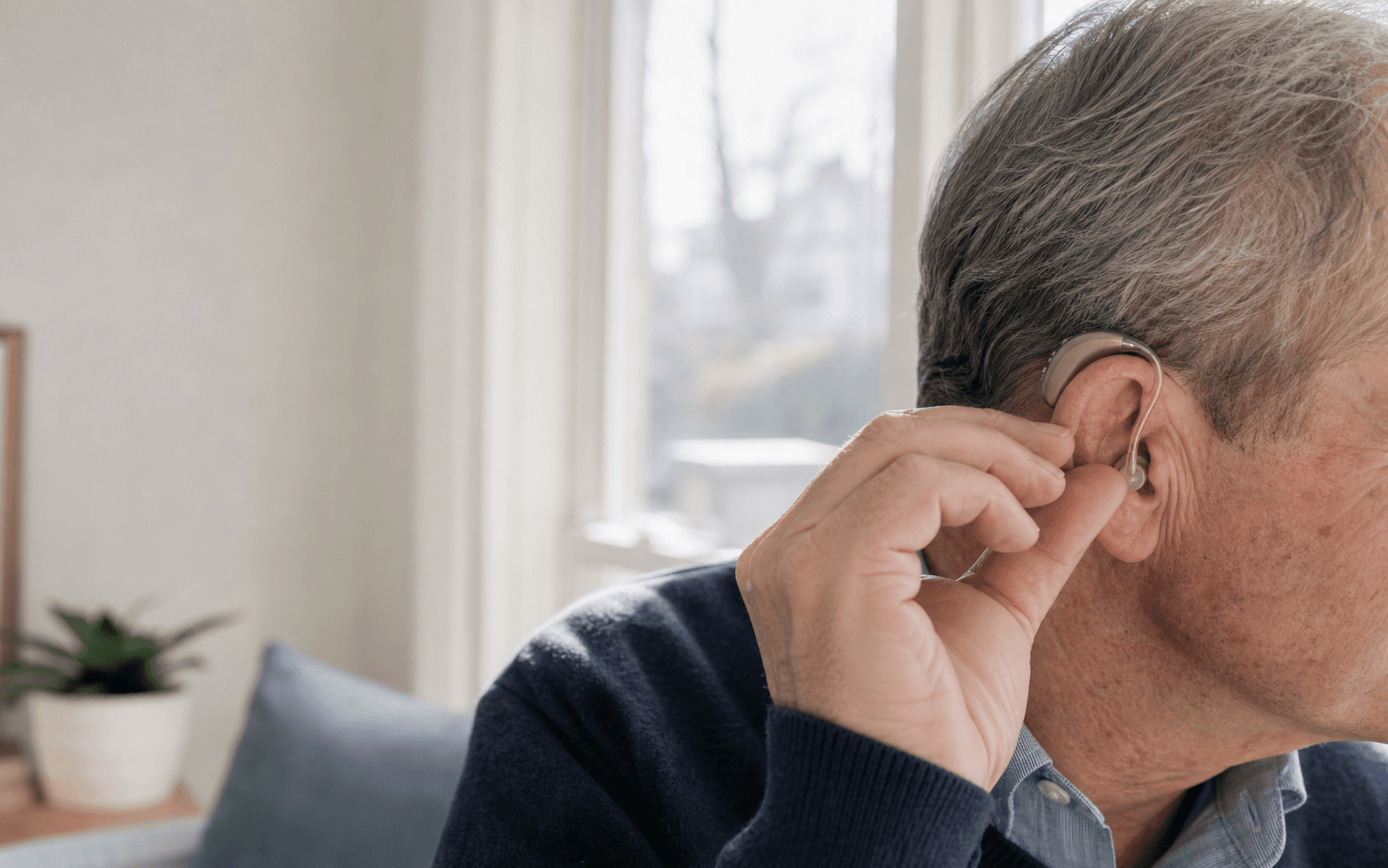
A winter day in Westchester can run from a frozen train platform to a heated car, an overheated office and a snowy walk home. Hearing aids ride along through every change, tucked under hats, scarves and hoods. According to the makers' guidance, cold itself is not the main problem. Moisture is, along with how the batteries behave. This page follows a day in the cold and gives a care routine for it.
The advice comes from hearing aid makers' care guidance and one audiology reference on batteries. Your own aid's user guide has the final word, because models differ.
“In winter the main threat to a hearing aid is moisture and condensation, more than the cold itself.”
Why moisture matters more than cold
Oticon's winter care guide puts it plainly: the real enemy to hearing aids in winter is moisture and condensation. A cold aid moving into a warm room can collect condensation, and a hat, a scarf or damp hair can add more. Oticon lists the warning signs: distorted or faded sound, static, an aid that turns itself on and off, and batteries that drain faster than usual. Moisture is also why a few habits matter. Oticon advises airing the aids overnight by opening the battery drawer, and using a dehumidifier or drying box. It says never to dry hearing aids with a hair dryer. Phonak's care guidance gives the same direction on the battery: remove it at night and leave the compartment open, and ask your hearing care professional about drying systems.
Batteries in the cold
For aids that use zinc-air batteries, an audiology reference explains that battery voltage falls as the temperature falls, so the battery reaches its end point sooner and runs for less time. The same source notes that a hearing aid worn close to the body is warmed by it, which moderates the effect of the outside air. Oticon also says cold weakens batteries and shortens their life, and advises keeping spares at room temperature and warm when you are out. Heated indoor air can matter too. The audiology reference says that if humidity stays low for a prolonged period, batteries dry out and their typical service life falls, and that high humidity also shortens life. Rechargeable aids have their own limits. Your user guide lists the temperature range for use and charging, so check it for your model. We have not found a source that gives a single cold-weather battery figure we would trust for every aid, and so we give none.
A day in the cold, step by step
Before you leave, check the aids for wax and moisture and wipe them with a soft, dry cloth. Keep spare batteries warm in an inner pocket. Cover your ears with a hat or earmuffs. Oticon notes that these also shield the aids from rain, snow and moisture, and that an umbrella helps in snow. A safety clip can keep a behind-the-ear aid from dropping into the snow. On the platform and on the street, pull hats and scarves off slowly and check that the aids are still in place. In a heated train car or office, the temperature change is the cue to check for condensation. If the sound fades or crackles, take the aids out and let them dry before wearing them again. At home, take the aids out and let them dry before you put them away. ReSound advises storing aids in a cool, dry place with the battery door open, and keeping them away from direct heat and sunlight. It also advises taking the aids out before you use cosmetics, perfume or hair spray.
A care routine for winter
The table below sets out a daily and a weekly routine drawn from the makers' guidance. It does not replace the user guide that came with your aids.
| When | What to do | Why it matters in winter |
|---|---|---|
| Daily, before you go out | Check the aids for wax and moisture. Wipe with a soft, dry cloth. Put spare batteries in an inner pocket | Oticon lists moisture as the main winter threat, and says cold weakens batteries |
| Daily, outdoors | Cover ears with a hat or earmuffs. Use an umbrella in snow or rain. Check the aids after removing a hat or scarf | Hats and earmuffs shield the aids from snow and moisture, per Oticon |
| Daily, if sound fades indoors | Take the aids out and let them dry before wearing them again | Condensation can form when a cold aid warms up |
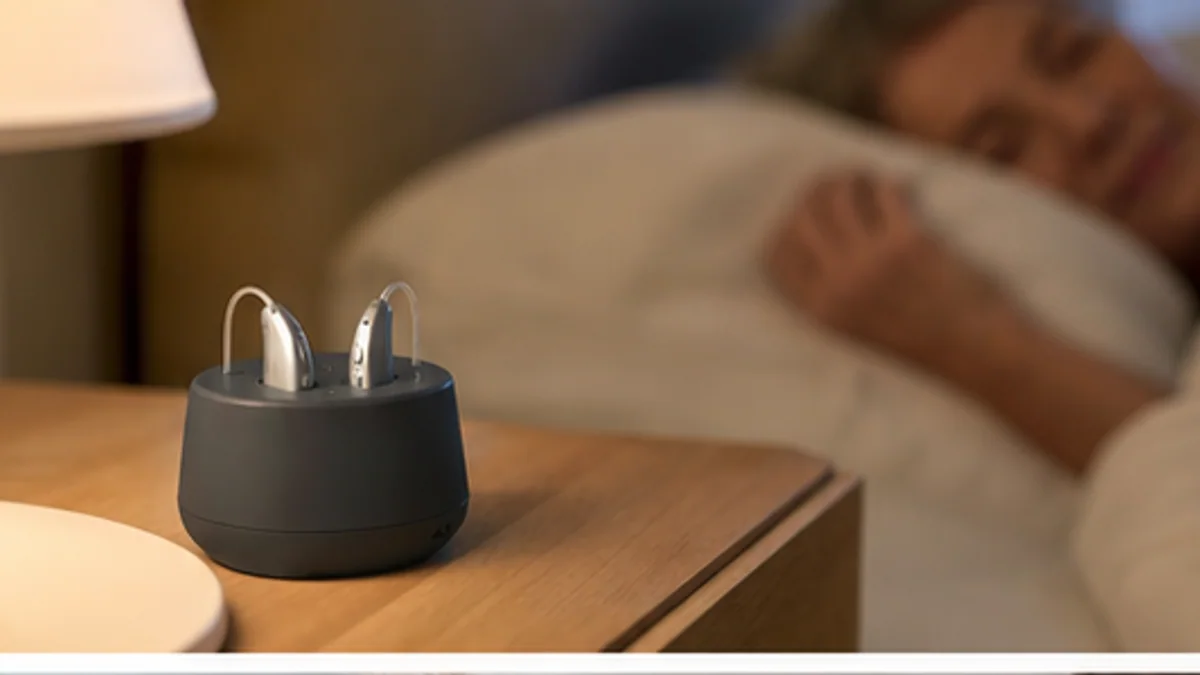
| Nightly | Remove the battery or open the battery door. Use a drying box or dehumidifier. Never use a hair dryer | Overnight drying clears the moisture a day in the cold can leave, per Oticon and Phonak |
| Weekly | Clean earpieces and domes thoroughly. For behind-the-ear tubing, use an air puffer, not your breath. Look at wax guards | Phonak advises cleaning the earpiece at least once a week and drying tubes fully before reconnecting |
| Weekly, if the aid is rechargeable | Check the charger contacts and cable. Read the temperature range in your user guide | Our tune-up and repair page lists charging problems among the reasons for a repair visit |
| At the interval set at your fitting, or sooner | Book a clean and check at the office if sound changes or an aid acts oddly | A professional clean reaches parts home care cannot |
What you can do at home, and what needs a visit
At home you can wipe the aids with a soft, dry cloth, check and replace the battery or charge the aid, and air the aids overnight. Phonak advises against alcohol, solvents or cleaning products, because they cause damage, and it says not to attempt repairs yourself. ReSound says never to immerse hearing aids in water. If an aid gets wet, ReSound advises leaving it out with the battery removed and the door open, or placing the aid and battery in a sealed container with a drying agent overnight, and not using it until it is completely dry. Leave wax filters and tubing to an appointment unless your audiologist showed you how. ReSound says that if a wax filter is blocked, you should consult your hearing professional and change it yourself only if instructed. Replacement parts that become stiff, brittle or discolored also need a professional. A visit is the right step when the sound is weak, distorted or intermittent after you have cleaned and dried the aids, or when an aid will not charge. At our Harrison and Somers offices, the audiologist inspects the devices, checks the ears for wax, and decides whether the answer is maintenance, an adjustment, an in-office repair or manufacturer service. Bring both aids, the charger and cable, spare batteries and any filters or domes. Many cleaning and part issues can be handled in the office. Severe damage or internal failure may need manufacturer service, and a loaner may be available while that happens, so ask. Our page on tune-up versus repair explains how to tell the two apart.
When to call
Call us if the sound is faded, distorted or crackling after the aids have dried, if an aid cuts in and out, if the battery drains much faster than usual, if an aid will not charge, or if the aid got wet and does not work after drying. ReSound also advises contacting your hearing care professional for persistent feedback, low volume or unclear sound that home steps do not fix. An aid that tests well can still sound wrong if the ear is blocked by wax, so a check of the ear is part of the visit. If you notice a sudden drop in hearing, call a doctor rather than waiting for a hearing aid visit. Sudden hearing loss is a medical matter, not a device fault.
Status and last update
Last updated October 16, 2026. Change note: this is the first version. We will revise it if a maker updates its care guidance or if a source gives a reliable cold-weather figure for rechargeable batteries. Sources are listed at the end of this page.
Medical information notice
This page is general education and is not medical advice. Care steps differ by model, so follow the user guide for your aid. If you have a sudden change in hearing, ear pain or drainage, contact a doctor. To book a clean and check at our Harrison or Somers office, call (914) 949-0034.
Common questions
Can cold weather damage my hearing aids?
Moisture and condensation are the larger risk, according to Oticon's winter guide. Cold also weakens batteries and shortens their life. Check your user guide for the temperature range for your model.
Why does my hearing aid crackle after I come inside?
Moving from cold air into a warm room can leave condensation in an aid. Oticon lists distorted or faded sound, static and an aid switching on and off as signs of moisture. Take it out and let it dry before you wear it again.
How do I dry a wet hearing aid?
ReSound advises leaving it out with the battery removed and the battery door open, or sealing it with the battery and a drying agent overnight. Do not use it until it is completely dry. Oticon says never to use a hair dryer.
Do batteries run down faster in the cold?
For zinc-air batteries, voltage falls as temperature falls, so the battery runs for less time. A hearing aid worn close to the body is warmed by it, which eases the effect. Keep spares at room temperature.
Can I clean my hearing aids with alcohol wipes?
Phonak says alcohol, solvents and cleaning products cause damage and advises a soft dry cloth or its own cleaning cloths. Keep to what your maker recommends.
When should I book a repair visit?
Book when sound stays weak, distorted or intermittent after cleaning and drying, when an aid will not charge, or after it gets wet and does not work. Bring both aids and the charger to our Harrison or Somers office.