OTC hearing aids
OTC Hearing Aids With App Coaching: Where an In-Person Fitting Still Wins
OTC aids add video tuning and AI coaches. We compare them with a Westchester audiologist fitting and show how to verify FDA status. Book a check-up.
Read time: 6 min read
Holiday sales bring a new pitch: buy an OTC aid, then get a video fine-tuning session or an AI coach in an app. If you live in Westchester or the Hudson Valley, you may wonder if that is enough.
For some people it is. This page gives the fair case for OTC, then four things only a visit can do, and a way to check any product with the FDA.
“We would rather you hear better than have a pair in a drawer.”
The fair case for OTC
OTC aids are made for adults with perceived mild to moderate hearing loss. They cost less than many prescription aids, and you can try them at home. Some people with mild loss do well. If you want to try one, keep the return policy and read the fine print. We would rather you hear better than have a pair in a drawer.
Four things a video session cannot do
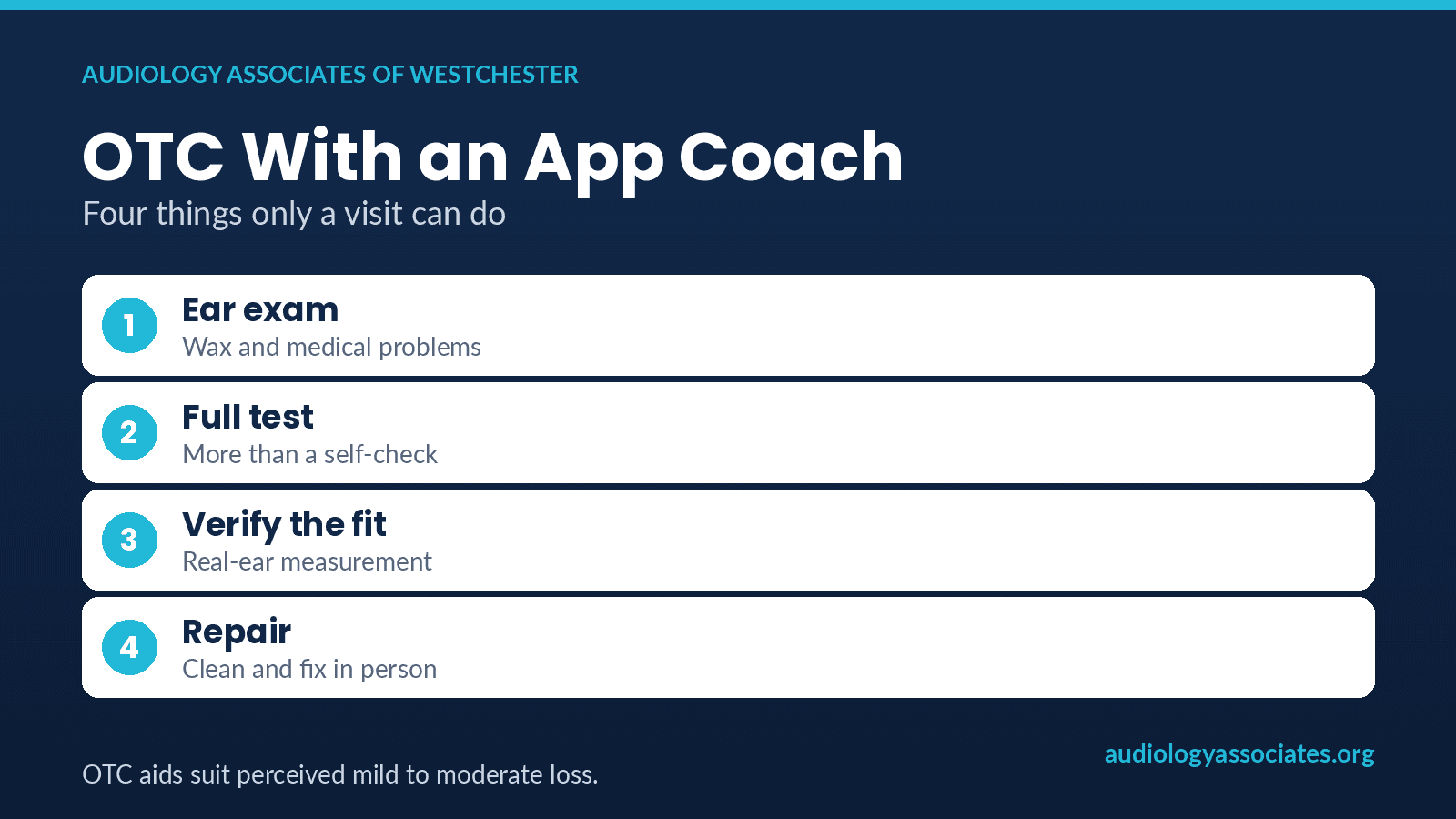
First, look in your ear: it cannot see wax, a blockage or an eardrum problem. Second, run a full test: a booth test measures far more than a self-check. Third, verify the fit: real-ear measurement shows what reaches your eardrum. Fourth, repair or clean the device in person. Our tune-up versus repair page explains what that service involves.
Red flags that mean see a professional first
Hearing that is worse in one ear, a sudden change, ear pain, drainage, dizziness or ringing in one ear are not OTC problems. They need an exam. See our page on signs you need hearing aids and book a hearing test.
How to check an OTC product with the FDA
The FDA says wording like 'FDA Registered' on a package may mislead, since registering a company is not approval. Look for a clear 'OTC hearing aid' label. Then search the FDA Establishment Registration and Device Listing database and the Devices@FDA database, as the Hearing Industry Association explains. A product called a 'hearing amplifier' may not be regulated as a hearing aid. For a local comparison, see Elehear Beyond 2 Pro versus prescription aids.
| Need | App or video coach | Westchester audiologist visit |
|---|---|---|
| Ear exam | No | Yes |
| Full hearing test | Self-check | Yes |
| Real-ear verification | No | Yes |
| Medical red-flag screening | Questions only | History and exam |
| Repair and cleaning | By mail or steps | In person |
Our OTC check-up visit
Bring the OTC aid you own, or the one you plan to buy. We test your hearing, look in your ears, and tell you honestly whether the aid fits your loss. Read listening aids versus OTC versus prescription and OTC versus prescription hearing aids. If a brand closes, see what Eargo and Lexie owners can do.
Last updated and sources
Last updated November 24, 2026. What changed: this is the first version. We will update this page when new evidence or rules change the picture. Sources are listed at the end of the article. This page offers general information. It is not a diagnosis or treatment plan.
Common questions
Can an app coach replace an audiologist?
It can help with settings. It cannot examine your ear or verify the fit at your eardrum.
How do I know an OTC aid is FDA-regulated?
Look for the OTC hearing aid label, then check the FDA databases. Registered does not mean approved.
Who should see an audiologist first?
Anyone with loss worse on one side, sudden change, pain, drainage, dizziness or more than mild loss.
Will you look at my OTC aid?
Yes. Book a check-up and bring it. We will tell you plainly what we find.
Are OTC aids ever a good choice?
For some adults with perceived mild loss, yes. A hearing test helps you decide.