Patient questions
Samsung Galaxy Buds Are Becoming Hearing Aids: What Patients Ask Us
Samsung's Galaxy Buds are getting an FDA-cleared hearing aid feature. Patient questions, a buying checklist and a safe trial plan. Ask us first.
Read time: 6 min read
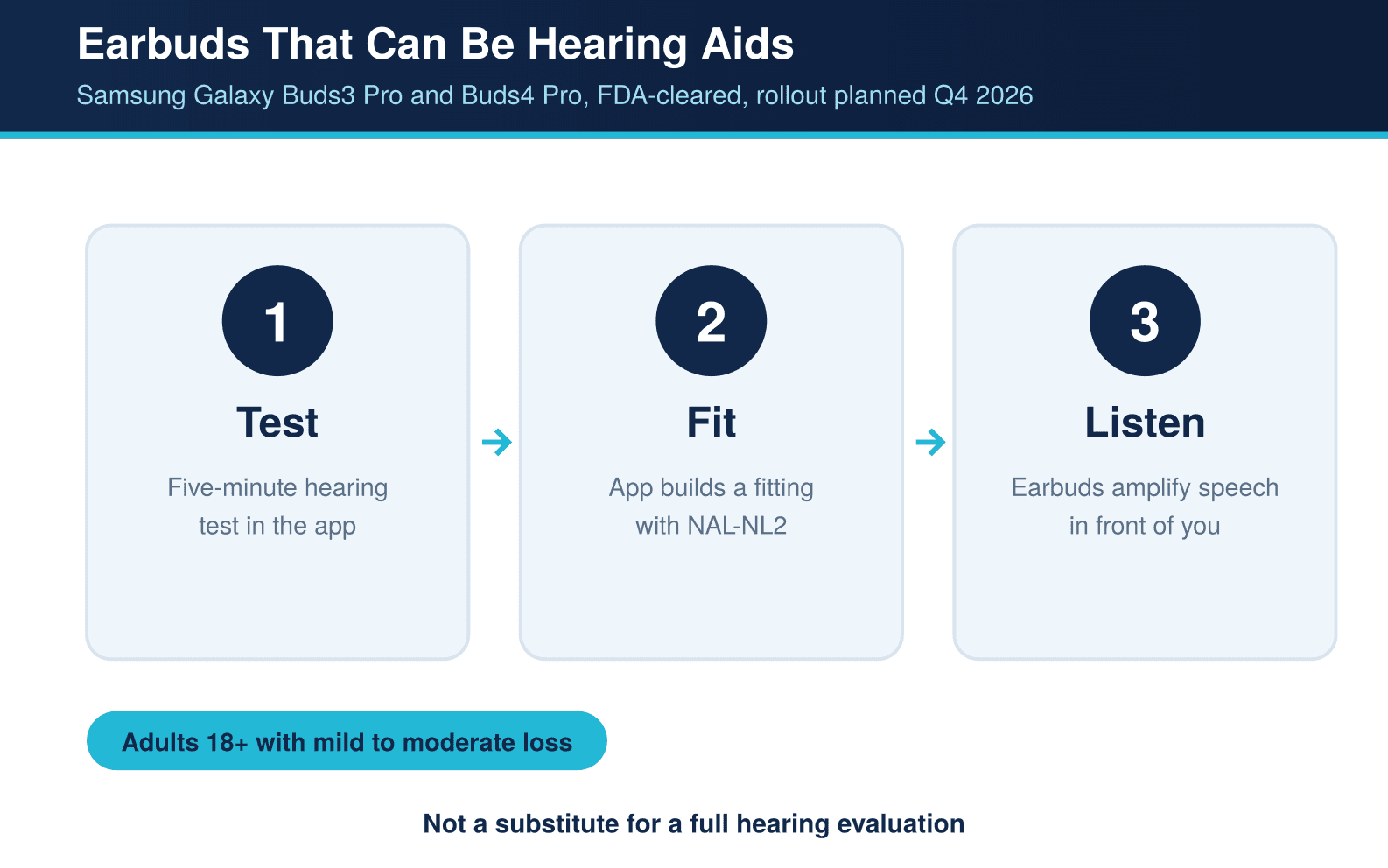
Ever since Samsung's August 11, 2026 announcement, patients have asked us one thing: can my earbuds now do a hearing aid's job? Per Samsung, the FDA has cleared two features for the Galaxy Buds3 Pro and Buds4 Pro, a hearing test and a hearing aid mode. A software update is planned for the last three months of 2026 in the U.S. and other approved markets.
As of September 30, 2026, we cannot confirm that the update has reached phones. Ask Samsung for the current timing before you build plans around it. Below you will find the questions we hear most, a checklist for before you spend money, and a way to try the feature without putting your hearing at risk.
“The earbuds may be a good first step for mild loss. A five-minute app test is not a hearing evaluation.”
Is this a real hearing aid?
The clearance covers two features. The Hearing Test runs about five minutes, checks one ear at a time with pure tones, and ends in an audiogram. It is registered as Software as a Medical Device. The Hearing Aid feature uses that result to shape amplification, and it was cleared through the FDA's over-the-counter route, the same route as OTC hearing aids in stores. Samsung positions it for adults 18 and older who notice mild to moderate loss, and says it is no stand-in for professional diagnosis.
What do I need to use it?
To use it you need Galaxy Buds3 Pro or Buds4 Pro, a Galaxy phone that qualifies, and the update itself. Samsung's announcement lists One UI 9 or later, though some outlets wrote One UI 8. Samsung's footnote for your region is the tiebreaker. Samsung adds that availability shifts with market, model and paired device.
How does it decide what I hear?
Once the test is done, the app files your result as normal or as one of four loss stages. NAL-NL2 then sets the amplification. That is the formula from Australia's National Acoustic Laboratories that many clinics apply to prescription aids. Beamforming microphones favor what is in front of you, and noise reduction targets speech. Wareable says the audiogram is saved in Samsung Health.
Are the published numbers good?
audioXpress, quoting Samsung, gives a maximum output of about 111.9 dB SPL, full-on gain of about 31.5 dB, a range of roughly 100 to 9,000 Hz and about 2.7 milliseconds of delay. Samsung's 30-day study of 103 adults with mild to moderate loss found that people who fit it themselves reported benefit that was not worse than clinic-fitted users. A separate 367-person check put the app test a median of 3.75 dB from clinic audiometry. All of this is Samsung's data, relayed by others, and no independent bench tests have reached us.
Where will earbuds fall short?
A living-room test of five minutes cannot spot earwax, a middle-ear problem, or an imbalance between the ears that calls for a doctor. The output also tops out. We read gain near 31.5 dB as a hint that people at the upper end of moderate loss could run short of power at some pitches. Tips that seal the canal can alter how your own voice sounds. And no one measures what reaches your eardrum or retunes the fit afterward. HearingTracker's roundup of recent studies found that real-world gain can fall short of targets.
Earbuds or prescription hearing aids: which fits whom?
Neither wins for everyone. The table lays out the main differences, based only on what this page reports.
| Question | OTC earbuds (Galaxy Buds) | Prescription hearing aids |
|---|---|---|
| Who it suits | Adults who perceive mild to moderate loss | Mild through profound loss, including one-sided loss and complex cases |
| How it is fitted | Self-fitted from an app test | Programmed from the results of a complete evaluation |
| Verification | No one verifies what reaches your eardrum | Checked with real-ear measurement |
| Follow-up care | You adjust settings yourself | The clinic fine-tunes, cleans and repairs |
| Extras | Music and calls. The Buds4 line also adds Bluetooth LE Audio and Auracast, says audioXpress | Not compared here. Ask your audiologist which features fit your needs |
What about AirPods Pro?
Apple authorized its AirPods Pro hearing aid feature in September 2024, with a similar recipe: test, self-fit, amplify in the earbuds. Samsung's version serves Android users. No independent head-to-head test has come to our attention, so the simplest tiebreaker is the phone in your pocket.
A checklist before you spend money
Check 1: Confirm that you own, or plan to buy, Galaxy Buds3 Pro or Buds4 Pro, plus a Galaxy phone that qualifies. Check 2: Read Samsung's note for your region and confirm the update is live. Check 3: Rule out the red flags. Sudden hearing loss, one ear much worse than the other, dizziness, ear pain or drainage, ringing in one ear only, and trouble with words that are loud enough all call for an evaluation first. Check 4: If your current hearing aids are working, talk to us before you set them aside. Check 5: Keep in mind that the earbud price covers a product, not hearing care.
A try-before-you-rely plan
Step 1: Book a hearing evaluation so you have a complete baseline. The app's audiogram is welcome, yet we will run our own testing. Step 2: Start with the setting that frustrates you most, such as conversation at home. Step 3: If words still slip away in quiet rooms, or your own voice sounds blocked, stop leaning on the earbuds and call us. Your needs may go beyond what an OTC device is built for. Step 4: Keep your evaluation results. They stay useful whichever device you pick.
Does Medicare cover it?
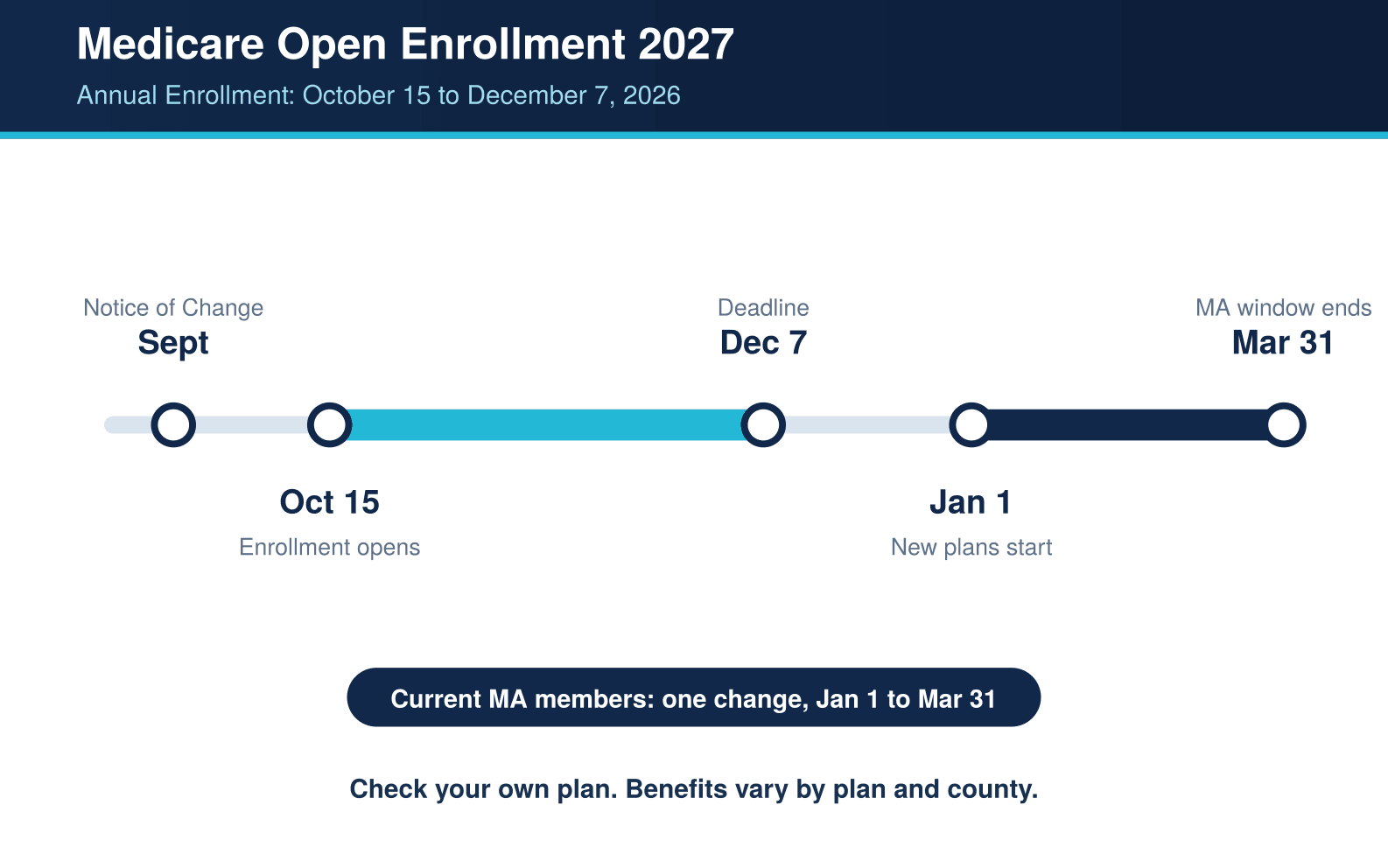
As a rule, Original Medicare pays for neither hearing aids nor OTC earbuds. Some Medicare Advantage plans add a hearing or OTC allowance, with rules that differ by plan. Open enrollment ends December 7, so look at our Medicare open enrollment page before you buy.
Status and last update
Last updated September 30, 2026. This is the page's first version. We will revise it once Samsung's rollout is live or independent test results appear.
Medical information notice
This page is general information, not medical advice. The price of earbuds is the price of a product, not of hearing care. Not sure an OTC device will be enough? Book a hearing evaluation.
Common questions
Can the Galaxy Buds hearing test replace a hearing evaluation?
No. A five-minute app test cannot detect earwax, a middle-ear problem or an imbalance between your ears that a doctor should see. A full evaluation examines your hearing far more completely.
I already wear hearing aids. Should I switch to the earbuds?
Not without talking to us first. Prescription aids are programmed from a complete evaluation and checked with real-ear measurement. The earbuds are built for loss that people perceive as mild to moderate.
How accurate is the app's hearing test?
In Samsung's 367-person validation, the app's results sat a median of 3.75 dB from clinic audiometry. Samsung supplied that figure and others relayed it. Independent testing has not come to our attention.
Why might my own voice sound odd with earbuds in?
Tips that seal the ear canal can change how your own voice sounds. If that bothers you, let us know.
What if I hear worse in just one ear?
Get evaluated before you rely on an app. Prescription hearing aids cover one-sided loss and complex cases, while the earbuds target perceived mild to moderate loss.
Will Medicare or my plan pay for Galaxy Buds?
Usually not under Original Medicare, which covers neither hearing aids nor OTC earbuds. Certain Medicare Advantage plans add a hearing or OTC allowance, and the rules vary. Ask your plan before you buy.
Get one email when Samsung's update goes live.
Leave your email and we will send one message when the rollout is confirmed.