Plan walkthrough
Medicare Open Enrollment 2027: How to Read Your Plan for Hearing Benefits
Holding your Annual Notice of Change? Five hearing checks to make before December 7, and what to ask your plan and us. Call us with your plan name.
Read time: 6 min read
Is your plan's Annual Notice of Change on the kitchen table? This page takes you through its hearing lines, with readers in Westchester and the Hudson Valley in mind. You will see what to put to your plan and what to put to us.
Nobody outside your plan can say exactly what it pays. Benefits differ from county to county, and your plan's own paperwork has the final word. Treat this page as general background, not insurance advice. The five checks below help you read that paperwork before open enrollment closes on December 7, 2026.
“Your own plan documents have the final say on hearing coverage. Read the notice before December 7.”
Where Medicare stands on hearing
Parts A and B of Original Medicare leave out hearing aids, fittings and routine hearing exams. Medicare Advantage plans stand in for Original Medicare and may add benefits, and hearing is among the most frequent additions. Cochlear implants are the one exception. Medicare can pay for an implant once Medicare's criteria are met, a very different situation from hearing aids. Our cochlear implant page describes the evaluation.
Original Medicare and Medicare Advantage side by side
Here is how the two routes compare for hearing, limited to what this page says. Your plan's documents settle the details.
| Hearing item | Original Medicare (Parts A and B) | Medicare Advantage |
|---|---|---|
| Hearing aids and fittings | Not covered | Many plans include some coverage. Your plan sets the amount and the rules |
| Routine hearing exams | Not covered | Often included, though some plans want a referral or cap visits |
| Diagnostic hearing or balance exams | Covered in general when a doctor orders it as part of treatment planning. You typically pay a share | Depends on your plan. Ask member services |
| Extras | None added. Benefits are added by Medicare Advantage plans | Plans can add benefits, such as a spending card or over-the-counter benefit. Rules vary by plan |
The dates, in one place
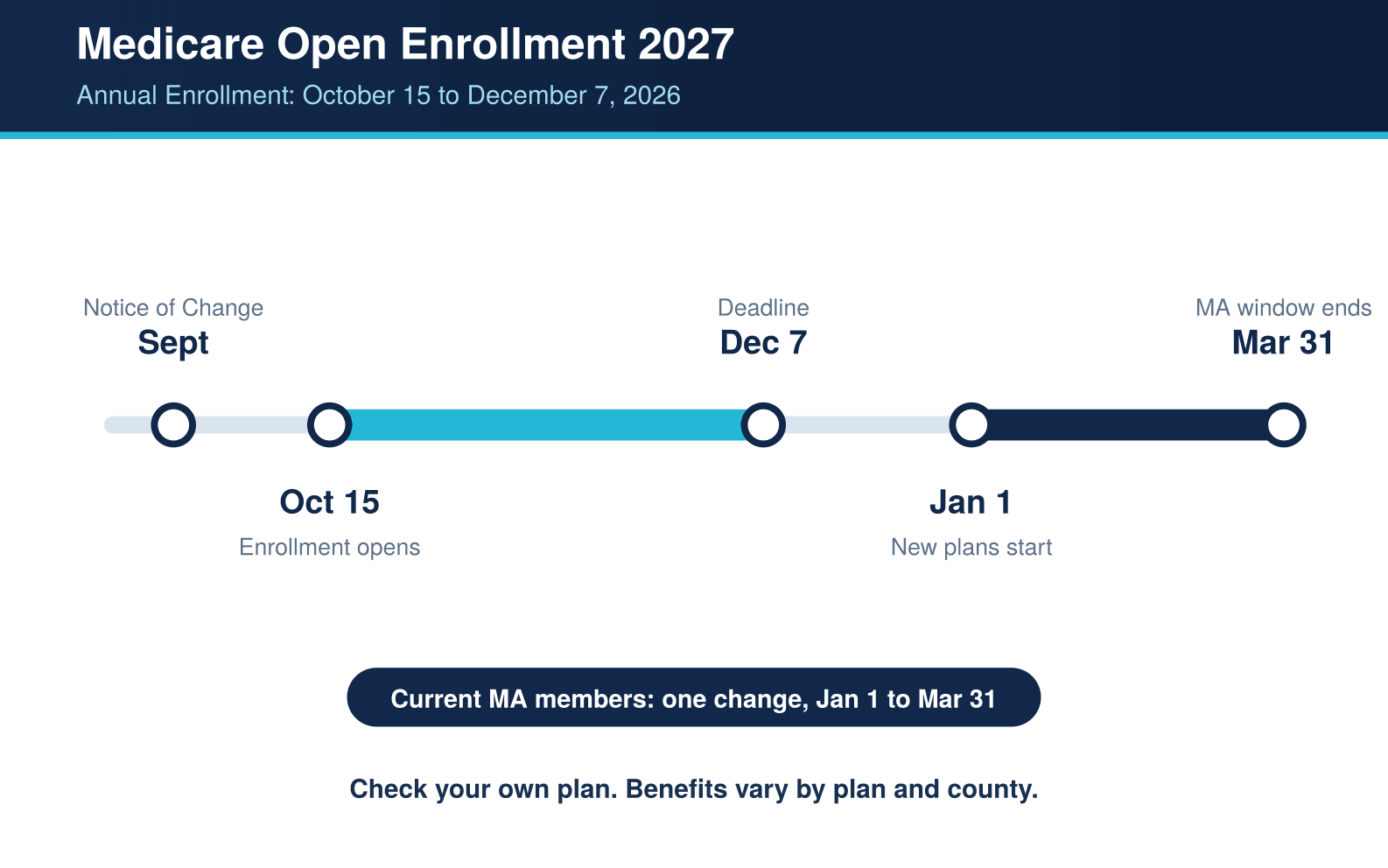
The Annual Enrollment Period runs October 15 to December 7, 2026, with changes starting January 1, 2027. During it you can move to a different Medicare Advantage plan, go between Original Medicare and Medicare Advantage, or alter your Part D drug coverage. From January 1 to March 31, 2027 there is one more window, but only for people already in a Medicare Advantage plan, and it permits a single change. Think of it as a safety net, not a strategy.
Check 1: Find the hearing lines in your notice
Every fall, usually by the end of September, your plan mails the Annual Notice of Change. It spells out what shifts next year in premiums, copays, networks and extra benefits. Turn to the hearing section first and mark any change to the hearing aid allowance, the number of exams or the covered brands. If the wording is unclear or the notice never arrived, phone the number on your plan card.
Check 2: Put four questions to your plan
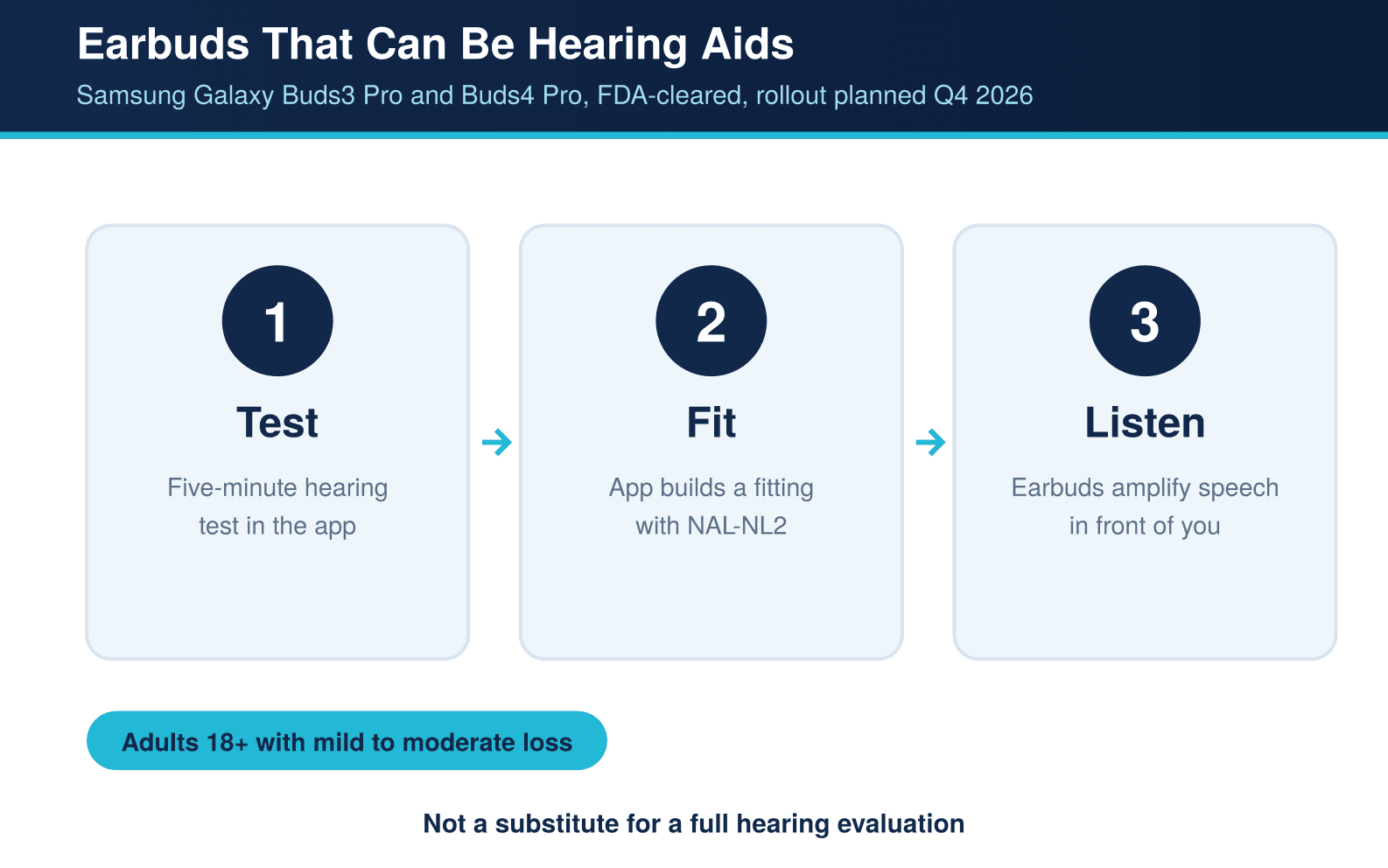
Ask your plan for the size of the allowance, whether it pays for one hearing aid or two, how often it renews, and which brands and models qualify. Some plans run hearing benefits through a separate hearing benefit manager, so find out who runs yours. A big allowance limited to a few devices can be worth less than a modest one that fits the hearing aids you need. Also ask about any spending card or over-the-counter benefit. Can it pay for OTC hearing aids, accessories, or earbuds with a hearing feature, such as the coming Samsung Galaxy Buds update? Rules vary widely, so ask for the answers in writing.
Check 3: Ask us if we are in your network
Whether we are in network changes your bill, and a practice that accepts your plan for one service may sit outside it for hearing aids. Phone (914) 949-0034 with the plan name and your member number. We will tell you if Audiology Associates of Westchester is in network. If we are not, we will say so plainly and go over your options.
Check 4: Clarify exams and referrals
Routine hearing exams fall outside Original Medicare. A diagnostic hearing or balance exam is generally covered when a doctor orders it to plan treatment, and you typically pay a share. Medicare Advantage plans frequently include routine exams, though some ask for a primary care referral or cap the visits. Find out whether you need a referral and how many exams each year the plan allows.
Check 5: Plan around January 1
Plans commonly reset benefits on January 1, and an allowance or exam count that renews yearly generally does not roll over unused 2026 benefits. If a hearing test has been on your to-do list, use 2026 benefits before they expire, then look at what 2027 brings. Thinking of switching? Ask whether the new plan covers service and repairs for the hearing aids you wear now.
What CMS expects nationally
On September 28, 2026, CMS published its 2027 projections. It expects the average Medicare Advantage premium to fall from about $14.37 to about $12 a month, roughly eight in ten members to keep their plan at the same or a lower premium, and extras such as hearing to hold steady. Those are national averages. Networks, allowances and copays can still change, and some plans withdraw from counties each year.
Status and last update
Last updated September 30, 2026. This is the page's first version. We will revise it when CMS publishes final landscape data. For your own plan, rely on your Annual Notice of Change, your plan's member services and Medicare.gov.
Insurance and medical notice
This page offers general information, not insurance, legal or medical advice. Benefits, allowances and networks differ by plan and county, so confirm with your plan or Medicare.gov before you decide.
Common questions
My notice's hearing section is vague. What should I do?
Phone the number on your plan card and ask for a plain explanation of the allowance, the exam count and the covered brands. Request the answers in writing if possible. What governs is your plan's paperwork.
Can I keep my audiologist if I change plans?
Whether we are in your network changes what you pay. Phone us with your plan name and member number and we will confirm. If we are out of network, we will tell you and walk through alternatives.
Do I lose unused hearing benefits on January 1?
Many plans start fresh on January 1, and unused 2026 benefits generally do not carry over. Check your own plan's rules. If a hearing test is overdue, use 2026 benefits first.
Does Medicare cover cochlear implants?
Yes, when Medicare's criteria are met. That is a separate matter from hearing aids, which Original Medicare leaves out. Our cochlear implant page covers the evaluation.
Can a Medicare Advantage plan pay for OTC hearing aids or earbuds?
Some plans give a spending card or an over-the-counter benefit. Ask if it reaches OTC hearing aids, accessories or earbuds with a hearing feature. Rules vary widely, so get the answer in writing.
What if I miss the December 7 deadline?
Members already in Medicare Advantage get another window, January 1 to March 31, 2027, with one change allowed. Consider it a safety net only.