Clinic note
How Loud Is Too Loud? Decibels, Daily Noise, and Hearing Risk
Risk rises with both level and time, which is why 85 dBA is the figure that gets quoted. Here is how that applies to the noise in an ordinary week.
Read time: 3 min read
Medically reviewed by: Dr. Caitlin Dold, Au.D.

Here is how this topic tends to get sorted out during a well-run appointment.
Loudness and duration work together. Neither figure means much on its own.
“If you have to raise your voice to be heard by someone an arm's length away, the room is loud enough to protect against.”
Before the test starts
A strong appointment starts with history: what changed, when it changed, where listening breaks down, and what the patient wants to improve.
What the clinician is sorting
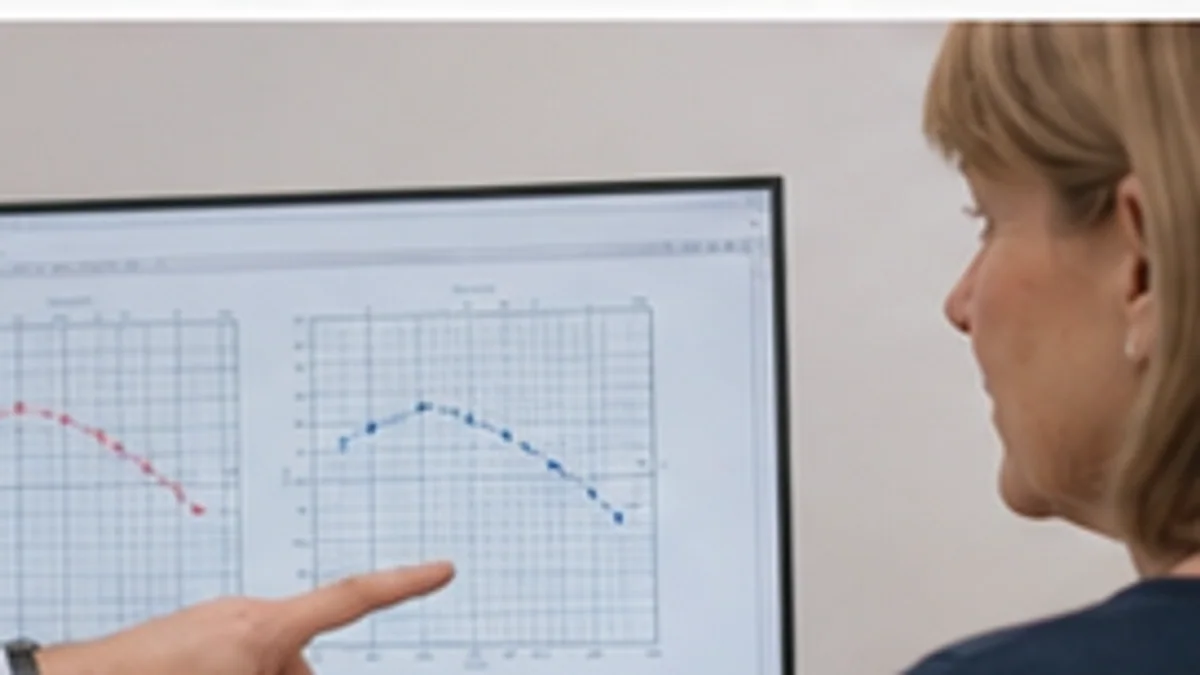
A baseline hearing test records where your hearing sits now, which is the only way to watch noise damage accumulate.
What patients should bring
The most helpful details are noise level, exposure duration, fit and comfort, communication needs, and reusability.
What would change the plan
Seek prompt medical guidance for sudden hearing loss, severe dizziness, new one-sided symptoms, drainage, significant ear pain, facial weakness, head injury, or heartbeat-like tinnitus.
What happens after results
The next step may be reassurance, monitoring, hearing aids, a fitting adjustment, tinnitus support, hearing protection, repair, or referral guidance.
Local care note
For Greenwich, Rye, Scarsdale, White Plains, Mt. Kisco, Somers, Harrison, and nearby Fairfield County families, the most useful plan is one that fits daily routines instead of only looking good on a test report.
Bottom line
The best next step is custom or situational hearing protection matched to the sound environment.
Common questions
How do I tell whether a room is too loud without a meter?
If you have to raise your voice to be heard at arm's length, treat the room as loud. Phone sound-level apps are approximate, and better than a guess.
What symptoms should make me act faster?
Seek prompt medical guidance for sudden hearing loss, severe dizziness, new one-sided symptoms, drainage, significant pain, facial weakness, head injury, or heartbeat-like tinnitus.
What should I bring to a noise-related appointment?
A description of your exposure: the tools, venues or machinery, how many hours, and whether your ears ring or feel dull afterwards.