
Real-life scenario
Ear Fullness but No Pain: Could It Be Hearing Loss?
A blocked, full ear with no pain is often wax or fluid behind the eardrum, but it can be hearing change. Here is how it gets sorted out safely.
Read time: 3 min read
Medically reviewed by: Dr. Caitlin Dold, Au.D.
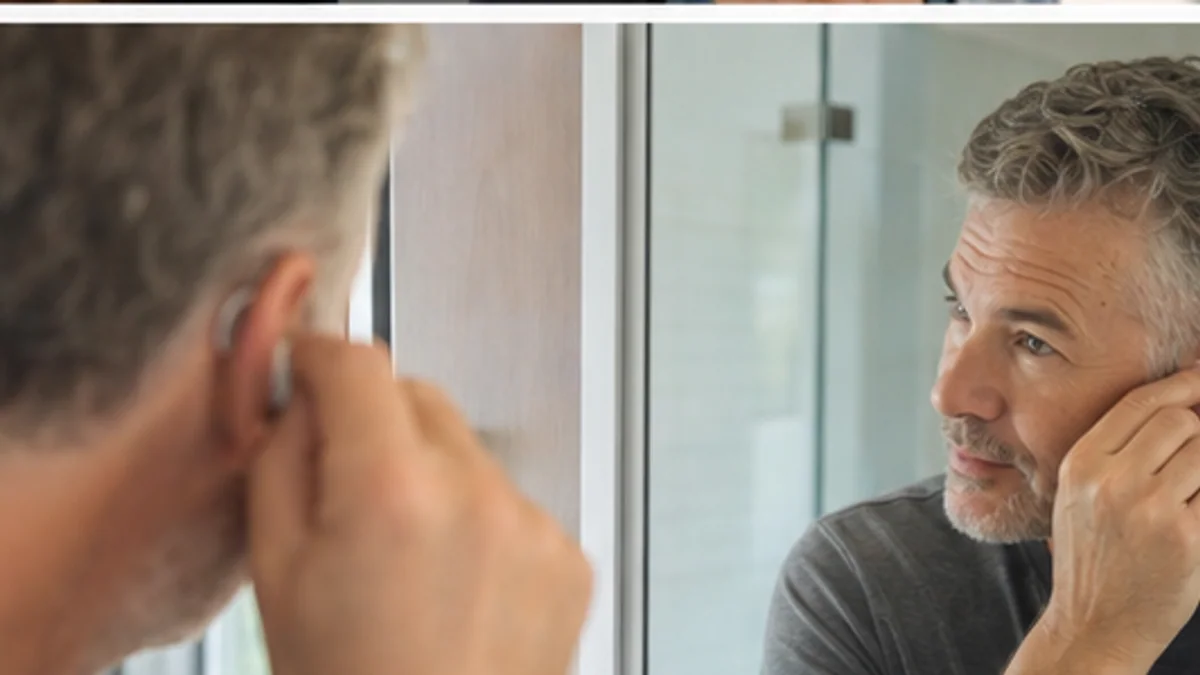
Imagine the moment this concern usually shows up in real life.
Fullness without pain is common, and it still deserves a look.
“Nothing you put down your own ear canal will tell you whether the fullness is wax or fluid behind the drum. A light and a look will.”
A common version of this story
Picture a bathroom mirror moment after water, wax, or pressure becomes hard to ignore. The first instinct is often to search, wait, or try one quick fix. That is understandable, but the pattern underneath the symptom is what matters.
What the patient notices
Someone worried about blocked ears, wax, infection-like symptoms, or safe at-home ear care may describe missed words, louder volume, ringing, plugged ears, device frustration, listening fatigue, or avoiding noisy places. Those details are clinically useful because hearing concerns rarely show up the same way in every room.
What is worth writing down
The most helpful details are wax history, cotton swab use, pain or drainage, hearing aid dome or filter changes, and recurring blockage.
What the appointment is meant to answer
An ear exam shows whether wax is the cause. Tympanometry shows whether there is fluid sitting behind the eardrum. The point is not to make the concern sound bigger than it is; it is to stop guessing.
When the story changes
Seek prompt medical guidance for sudden hearing loss, severe dizziness, new one-sided symptoms, drainage, significant ear pain, facial weakness, head injury, or heartbeat-like tinnitus.
A practical next step
The best next step is safe ear-care guidance and referral when symptoms suggest medical evaluation.
Why local follow-up helps
For Greenwich, Rye, Scarsdale, White Plains, Mt. Kisco, Somers, Harrison, and nearby Fairfield County families, the most useful plan is one that fits daily routines instead of only looking good on a test report.
Common questions
It does not hurt. Can I leave it a few weeks?
Fullness that clears on its own within a few days is usually fine to watch. Fullness that persists, or that comes with a hearing drop, is worth an ear examination.
What symptoms should make me act faster?
Seek prompt medical guidance for sudden hearing loss, severe dizziness, new one-sided symptoms, drainage, significant pain, facial weakness, head injury, or heartbeat-like tinnitus.
What should I mention when I book the ear check?
How long the ear has felt full, whether it is one side, whether hearing has dropped, and whether you have used swabs, drops or headphones heavily.