
Clinical lens
Do I Need a Hearing Test or Just Earwax Removal?
Muffled hearing can be wax, a middle-ear problem, or hearing loss in the inner ear. Here is how an ear exam and a hearing test tell those three apart.
Read time: 3 min read
Medically reviewed by: Dr. Caitlin Dold, Au.D.
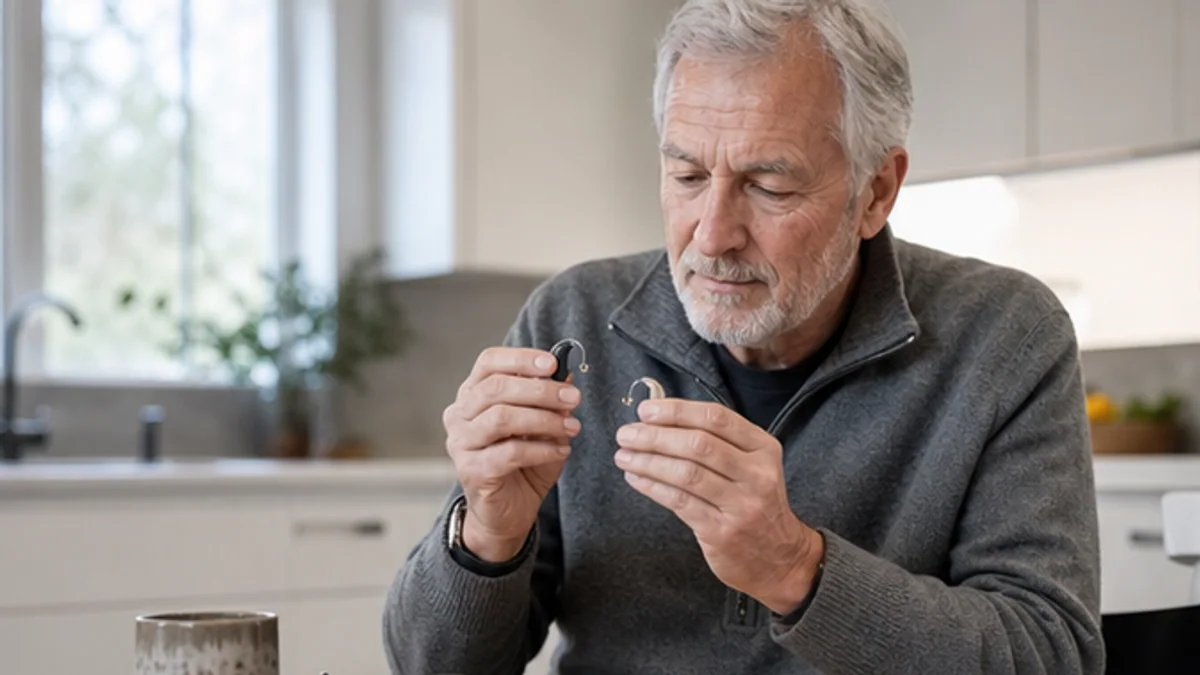
In clinic, this question usually starts with a story rather than a test result.
Wax and hearing loss can feel identical from the inside. They are told apart by looking, not by guessing.
“Wax you can see. Hearing loss you cannot. That is why the ear exam comes before the hearing test.”
What I listen for first
When someone asks this question, the first clue is usually not the symptom name. It is the timeline: when it started, whether it changed suddenly, and whether one ear behaves differently than the other.
The pattern matters more than the label
A patient trying to decide whether a symptom is routine, device-related, wax-related, or urgent may describe missed words, louder volume, ringing, plugged ears, device frustration, listening fatigue, or avoiding noisy places. Those details are clinically useful because hearing concerns rarely show up the same way in every room.
What testing can clarify
An ear exam and a hearing test settle whether the muffling is wax sitting against the eardrum, a middle-ear problem, or a change in the inner ear. A good evaluation turns a vague worry into a set of findings you can act on.
When I would not wait
Seek prompt medical guidance for sudden hearing loss, severe dizziness, new one-sided symptoms, drainage, significant ear pain, facial weakness, head injury, or heartbeat-like tinnitus.
How to make the visit more useful
The most helpful details are when the symptom started, whether one ear or both ears are involved, pain, pressure, dizziness, drainage, or sudden change, and how much the symptom interrupts conversation or safety.
Local care note
At Audiology Associates of Westchester, those details help the team connect testing, counseling, fitting, repair, and referral guidance to the way you actually live.
Bottom line
The best next step is a hearing evaluation, ear check, device check, or medical referral when the pattern suggests something beyond routine audiology troubleshooting.
Common questions
Can I book earwax removal and skip the hearing test?
You can book the ear check first. If the canal turns out to be clear, the muffling has another cause, and a hearing test is the next thing to do.
What symptoms should make me act faster?
Seek prompt medical guidance for sudden hearing loss, severe dizziness, new one-sided symptoms, drainage, significant pain, facial weakness, head injury, or heartbeat-like tinnitus.
What should I have ready when I call?
How long the ear has felt blocked, whether it is one ear or both, any pain, drainage or dizziness, and whether you have used drops or swabs recently.