Research explained
Precision Hearing Care Is Coming: Why Your Audiogram Matters More Than Ever in 2026
A 2026 study found audiograms capture hearing loss risk better than diagnosis codes. See what that means and when to book a baseline test.
Read time: 6 min read
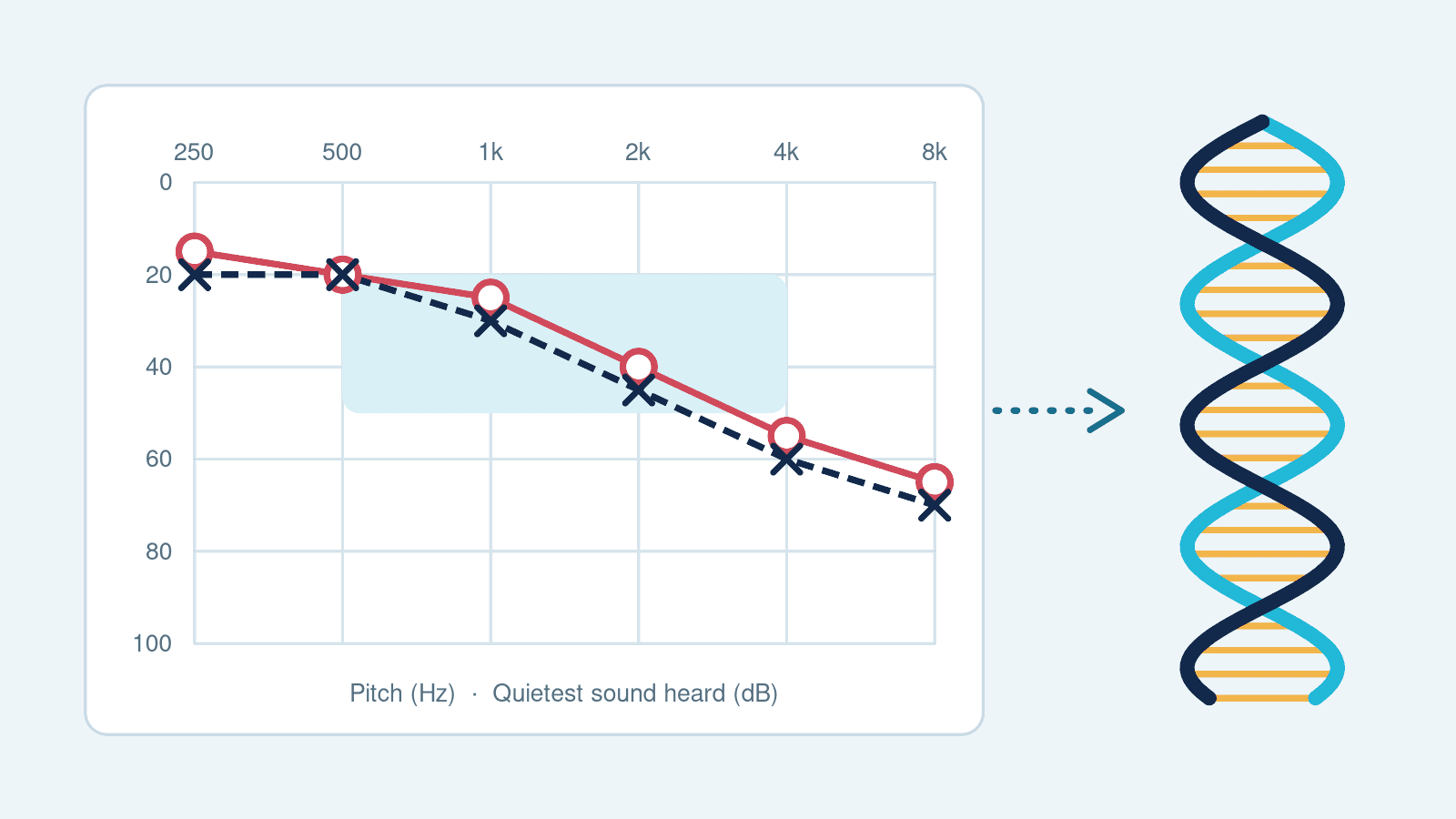
Neuroscience News reported on October 8, 2026 on a new hearing genetics study from Vanderbilt University Medical Center, published in JAMA Otolaryngology–Head & Neck Surgery. The team ran two genetic searches on the same biobank. The search built on diagnosis codes found nothing. The search built on audiogram measurements found three regions of the genome that map to four genes: EML6, SPTBN1, ARHGEF28 and EYA4.
It is a quiet result, and it is about something our audiologists do every day. A hearing test is not only a way to decide whether you need hearing aids. It is measured data about how your auditory system works, and this study suggests that kind of data is what precision medicine will lean on. We think about hearing the same way at Audiology Associates of Westchester: as part of how your brain gets information from the world, not a box to tick. This page explains what the study found, what it does not show, and why a baseline audiogram is worth having on file. Our sister practice in California covers the same paper from the genetics side in its own explainer.
“A diagnosis code says someone has hearing loss. An audiogram shows how much, and at which pitches. In this study, only the second one found genes.”
What the Vanderbilt team did
The researchers used whole-genome sequencing data from a Vanderbilt biobank of people of European ancestry. They ran two genome-wide association studies, which scan the genome for small DNA differences that travel with a trait. The first defined hearing loss mainly by diagnosis codes in medical records, with 10,164 cases and 51,305 controls. The second used a number from the audiogram instead: the pure-tone average, which is the average of the quietest tones a person hears at three test pitches, taken from the better ear. That analysis included 16,057 people with audiogram data.
Why a number beat a label
Only the audiogram search found anything: three genome-wide significant regions, mapped to four genes. The diagnosis-code search found none. The team also estimated how much of the variation in hearing could be tied to common DNA differences. Audiogram data put that share at 11.78 percent. Diagnosis codes put it at 2.90 percent. Lead author Andrea DeFreese, AuD, described the trouble with codes this way: they leave 'a kind of gray area in which we're not able to accurately define who has hearing loss and who doesn't.' A code says someone has hearing loss. An audiogram shows how much, and at which pitches. The precision lives in that detail.
| Diagnosis codes | Audiogram (pure-tone average) | |
|---|---|---|
| How hearing loss was defined | Mainly diagnosis codes in medical records | Pure-tone average from the better ear, treated as a number |
| People analyzed | 10,164 cases and 51,305 controls | 16,057 people with audiogram data |
| Genome-wide significant regions | None | Three, mapped to four genes |
| Genes named | None | EML6, SPTBN1, ARHGEF28, EYA4 |
| Variation tied to common DNA differences | 2.90 percent | 11.78 percent |
| Risk score checked against self-reported deafness in All of Us | No significant association (odds ratio 1.00) | Significant association (odds ratio 1.09) |
What the study does not show
In a separate check against the NIH All of Us cohort, people with a higher audiogram-based risk score were somewhat more likely to report deafness (odds ratio 1.09, 95 percent confidence interval 1.07 to 1.12). The same check using diagnosis codes showed no link (odds ratio 1.00). A 1.09 is a small nudge, not a forecast. The study has other limits: one medical center, people of European ancestry, and a check against self-reported deafness rather than a hearing test. The four genes are associated regions, not 'the hearing loss genes.' This is research. We do not offer genetic testing for these genes, and nothing in the study says a score can forecast your own hearing.
The mammogram of hearing, and where the idea breaks
We like to call a baseline audiogram the mammogram of hearing. That is our analogy, not a medical guideline, and it breaks in places. A mammogram screens for a disease. A baseline audiogram does something quieter: it records where your hearing sits today, so later changes show up against your own history instead of a population average. Hearing often shifts slowly enough that people adapt without noticing. A result on file from your 50s, or earlier if noise or family history worry you, turns 'I think it is worse' into a comparison you can measure. If you have never had a full test, read what happens during a comprehensive hearing evaluation and how often adults should get their hearing checked.
Where the brain comes in
Our approach starts from a simple idea: hearing is something the brain does with help from the ears. When sound arrives incomplete, the brain spends effort filling the gaps, which is one reason a restaurant can feel exhausting. An audiogram cannot measure that effort, and a hearing test is not a cognitive test, so we keep the two apart. Cognitive screening is its own service, and our guide to hearing tests and cognitive screening explains how they fit together. The evidence is modest and specific. In the ACHIEVE randomized trial, hearing treatment did not change three-year cognitive decline across the whole study group, but it did slow decline in a higher-risk subgroup. Read more about listening effort and fatigue. A carefully measured audiogram is where that kind of care begins.
Precision care you can use today
The measurements that power this research also guide a good fitting right now. Your audiologist programs hearing aids to the shape of your audiogram instead of an average, then uses real-ear measurement to check what the devices deliver at your eardrum, and live speech mapping to show the benefit as it happens. That is why we treat hearing aid fitting as a precision service, and why we explain why real-ear verification matters. If you are weighing this fall's new devices, our roundup of the five new AI hearing aids shows why the fitting matters as much as the chip. Precision hearing care is not waiting for genetics. It starts with a careful test and a result you understand.
Planning a baseline test in Westchester
If you live or work around Harrison, Rye, Scarsdale, White Plains or Greenwich, our Harrison office is the closest. For northern Westchester and Putnam County, look at our Somers office. Bring any old audiograms, a list of medications, and a short note about where listening feels hard. To learn the price first, see what a hearing test costs in Westchester. Sudden hearing loss, hearing that is clearly worse in one ear, ringing in one ear, dizziness or ear pain should not wait for a routine baseline. See a clinician promptly.
Status and last update
Last updated October 8, 2026. Change note: this is the first version, written the day the study was reported. We will update this page if the full paper, replication studies or clinical guidance change the picture. We could not open the full JAMA article, which sits behind a verification page, so the study figures here come from the Neuroscience News summary of it. Sources are listed at the end of this page.
Medical information notice
This page is for information only and is not medical advice. A hearing test shows how well you hear. It does not diagnose the cause of a hearing loss or predict your future hearing. Talk to your physician about whether genetic testing is right for you.
Common questions
What is an audiogram, in plain words?
An audiogram is a chart of the quietest sounds you can hear at different pitches, usually for each ear. It shows how much hearing you have at low, middle and high pitches. Your audiologist uses it to explain your loss and to program hearing aids if you need them.
Is a baseline hearing test worth it if I hear fine?
It can be. A baseline records your hearing while it is still good, so later changes show up against your own history. It also catches slow changes that people often adapt to without noticing.
At what age should I get a baseline hearing test?
We know of no single rule that fits everyone. We suggest considering one in your 50s, or sooner if you have noise exposure, a family history of hearing loss or ringing in the ears. Our guide on how often adults should get their hearing checked goes through the factors.
Does this study mean hearing loss is inherited?
It shows that common DNA differences account for some of the variation in hearing, about 11.78 percent in this analysis, and that four genes sit near the signals it found. Age, noise exposure and health conditions also matter. The study does not say any one person will or will not lose hearing.
Can I get a genetic hearing test at Audiology Associates of Westchester?
No. We do not offer genetic testing for these genes, and the study is research, not a clinical test. If hearing loss runs in your family or began in childhood, talk to your physician about whether genetic counseling makes sense.
Does a normal audiogram mean I am in the clear?
Not always. A normal test shows your hearing at the time of the test. Trouble understanding speech in noise, ringing or sudden change still deserve a conversation with an audiologist, and a repeat test over time is how slow change shows up.
Get one email if the research moves.
We will send one email if the full paper, a replication study or new guidance changes what this page says.
Sources and further reading
- Neuroscience News: Can we predict hearing loss long before symptoms ever start?
- JAMA Otolaryngology–Head & Neck Surgery: Precision Phenotyping With Audiometric Data and Gene Discovery for Sensorineural Hearing Loss (DOI)
- JAMA Network: Audiology and hearing collection
- National Institute on Aging: Hearing aids and cognitive decline (ACHIEVE)
- California Hearing Center: Your hearing test may reveal genetic risk for hearing loss