Hearing protection guide
Custom Musician Earplugs: A Buyer's Guide for Westchester Players and Listeners
How to choose musician earplugs: filters, custom vs universal, safe listening times and in-ear monitors. Westchester guide. Book an earplug fitting.
Read time: 6 min read
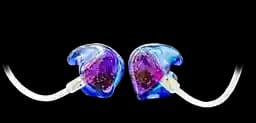
A 2026 study led by McCray found that hearing problems are common in people who work in music. It was a survey, so the figures rely on what people reported. Still, the message is clear for anyone who plays, sings, mixes or loves loud concerts: protect your hearing before you notice a problem, because noise damage builds up and does not reverse.
Musician earplugs differ from foam plugs. They lower the level of sound but try to keep it even across pitch, so music still sounds like music. This guide helps you choose between them.
“Protect your hearing before you notice a problem, because noise damage builds up and does not reverse.”
What do the numbers say?
In the McCray survey of music professionals, about 63 percent reported hearing difficulty, and the study reported higher rates of tinnitus and sound sensitivity than in the general population. Self-report can overstate or understate real loss, so treat the figures as a signal and not a diagnosis. The only way to know your own status is a hearing test.
How long is safe?
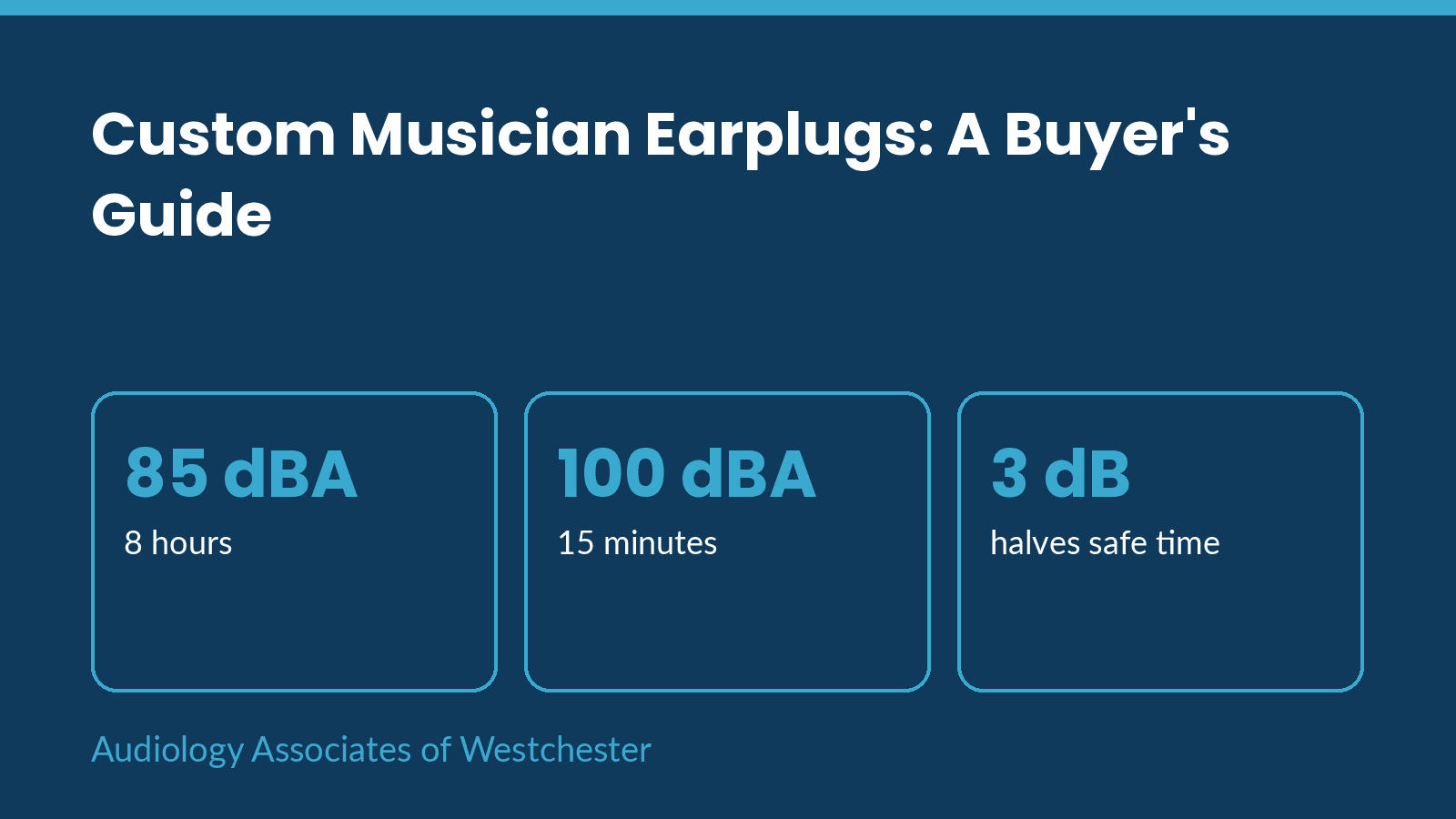
NIOSH sets a recommended limit of 85 dBA for 8 hours. Every 3 dB increase halves the safe time. That gives about 4 hours at 88 dBA, 2 hours at 91, 1 hour at 94, 30 minutes at 97 and 15 minutes at 100. A loud rehearsal room or club can sit in the upper rows of that list.
The three types of plug
The table compares the common choices. We list no prices because they vary by maker and by fit, and we do not quote other clinics.
| Item | Foam | Universal musician | Custom musician |
|---|---|---|---|
| Sound quality | Muffles high pitches | Even across pitch | Even across pitch |
| Fit | Varies with insertion | One shape for many ears | Made from your ear impression |
| Seal and comfort | Depends on technique | Can be hard to seat | Most reliable |
| Filters | None | Often fixed | Often swappable |
| Best for | Occasional loud noise | Casual concertgoers | Regular players and listeners |
Which filter strength?
Filters are often sold in about 9, 15 and 25 dB strengths. A lower number keeps more sound and suits quieter settings or players who need to hear their own instrument. A higher number suits very loud shows. If you are unsure, ask for a set with swappable filters.
Why custom fit matters
A custom plug is made from an impression of your ear. It seals more reliably, which matters because a poor seal changes the sound and lets noise leak in. It also stays comfortable through a long set. Universal plugs cost less and work for many people, but they are harder to seat well.
What about in-ear monitors?
In-ear monitors can lower stage volume, but they can also tempt players to turn the mix up. Keep the level as low as you can still work with, and ask us about custom monitors made from the same ear impression.
Book a fitting
Book a hearing test and an earplug fitting at our Harrison or Somers office, or call (914) 949-0034. Read about our custom earplugs and our hearing aids for musicians.
Status and last update
Last updated November 2, 2026. Change note: this is the first version. Sources are listed at the end of this page.
Medical information notice
This page is for general education and is not medical advice. Ringing, muffled hearing or pain after loud sound needs a hearing test. Sudden hearing loss needs urgent medical care. Call (914) 949-0034 to book.
Common questions
Do musician earplugs make music sound dull?
Good musician plugs lower the level evenly across pitch, so music keeps its balance. Foam plugs cut high pitches more, which makes sound muffled.
Should I choose custom or universal plugs?
Custom plugs seal more reliably and stay comfortable for longer. Universal plugs cost less and work for many people. A fitting can show which suits you.
How loud is too loud?
NIOSH recommends 85 dBA for 8 hours, and the safe time halves for every 3 dB increase. At 100 dBA the limit is about 15 minutes.
Which filter strength do I need?
Filters often come in about 9, 15 and 25 dB. Use a lower number when you need to hear your own instrument and a higher number for very loud shows.
Can plugs prevent tinnitus?
They lower your noise exposure, which helps protect your hearing. They cannot guarantee that tinnitus will not occur.
How often should musicians test their hearing?
A yearly test gives you a baseline and can catch change early. Test sooner after any ringing or muffled hearing that lasts.