
Clinic note
What to Expect During a Hearing Aid Fitting Appointment
A fitting covers physical fit, real-ear verification, streaming setup, and how to insert and clean the devices. Here is how the appointment runs.
Read time: 3 min read
Medically reviewed by: Dr. Julia Rivera, Au.D.
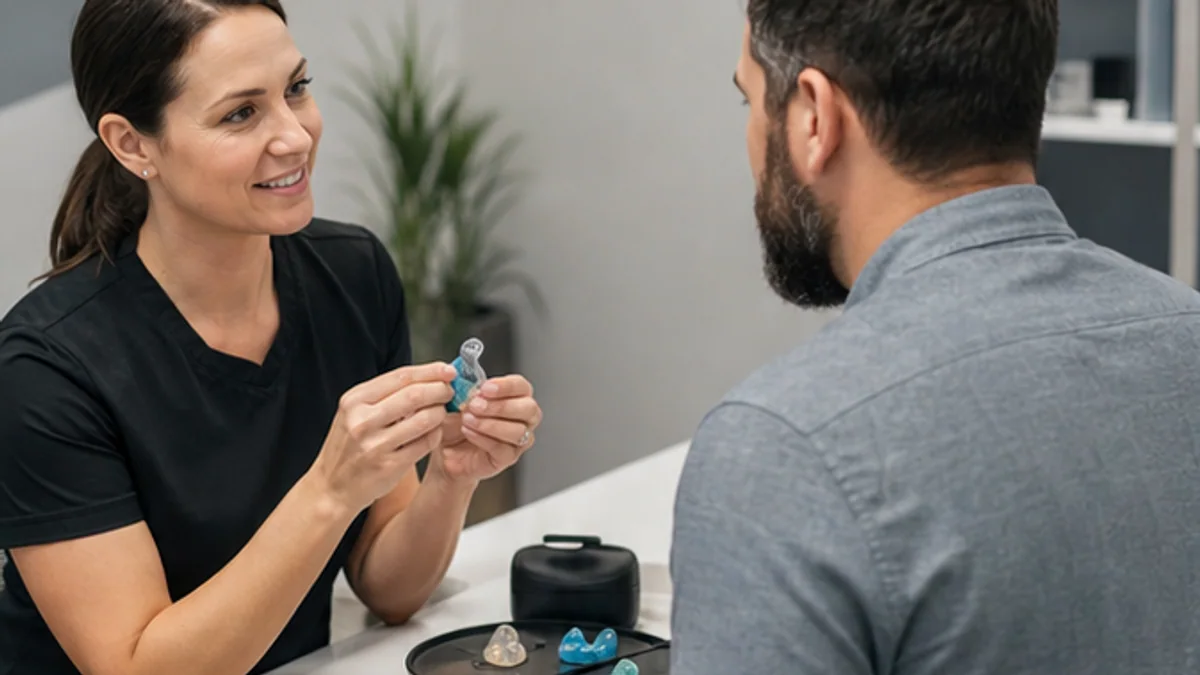
Here is how this topic tends to get sorted out during a well-run appointment.
The fitting is a working appointment. Expect to practise things.
“You will put the hearing aids in and take them out yourself before you leave. That part matters more than it sounds.”
Before the test starts
A strong appointment starts with history: what changed, when it changed, where listening breaks down, and what the patient wants to improve.
What the clinician is sorting
Real-ear measurement at the fitting settles whether what reaches your eardrum matches the prescription your hearing test produced.
What patients should bring
The most helpful details are physical fit, feedback, speech clarity, own-voice comfort, and follow-up adjustments.
What would change the plan
Seek prompt medical guidance for sudden hearing loss, severe dizziness, new one-sided symptoms, drainage, significant ear pain, facial weakness, head injury, or heartbeat-like tinnitus.
What happens after results
The next step may be reassurance, monitoring, hearing aids, a fitting adjustment, tinnitus support, hearing protection, repair, or referral guidance.
Local care note
Local follow-up is valuable because the first appointment answers the big question, while later adjustments refine comfort, clarity, and confidence.
Bottom line
The best next step is a fitting and verification process that improves comfort and performance over time.
Common questions
Will I hear normally as soon as they are fitted?
No. The first day is about comfort, insertion and a verified starting setting. Speech in a loud restaurant is a later appointment, not a first-day result.
What symptoms should make me act faster?
Seek prompt medical guidance for sudden hearing loss, severe dizziness, new one-sided symptoms, drainage, significant pain, facial weakness, head injury, or heartbeat-like tinnitus.
What should I bring to the fitting?
Your phone and its passcode, and someone whose voice you want to hear clearly. Allow more time than you think the appointment will take.