Paying for care
FSA and HSA Money for Hearing Aids: A Year-End Guide for Westchester
Spend FSA or HSA funds on hearing tests, hearing aids and repairs before year end. What qualifies and what to ask your plan. Call our Westchester offices.
Read time: 5 min read
Employers across Westchester and Fairfield County offer flexible spending accounts. Many of those accounts reset on December 31, and unused money can disappear.
This guide shows how to turn year-end FSA or HSA funds into hearing care that helps. It is general information, not tax advice. Your plan administrator sets the final rules.
“Ask one question first: what is my deadline?”
Start with the rule that sets the clock
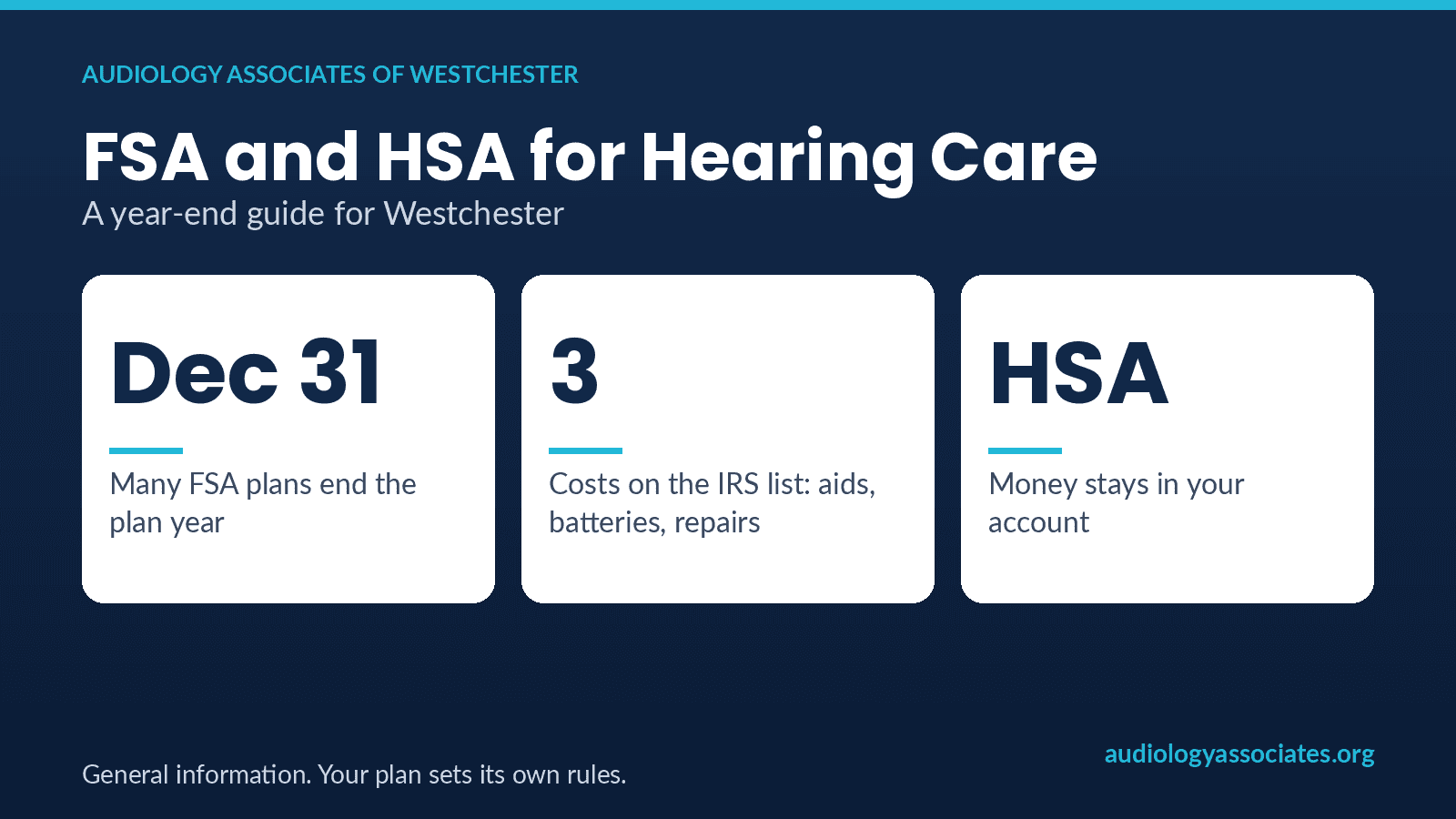
FSA funds usually belong to a plan year, and many plans end on December 31. Some plans give a grace period or let you carry a set amount into the new year. An HSA works differently, because the money stays in your account. So ask one question first: what is my deadline? Your plan portal or administrator can answer in minutes.
What the IRS list includes
UCSF's hearing health guidance says the IRS lists hearing aids as a medical expense, together with the batteries and repairs needed to keep them running. UnitedHealthcare Hearing says parts and accessories, such as wax traps and dry aid kits, can also qualify. OTC aids often qualify too, according to UCSF. Read your own plan's wording, because each plan sets its own rules.
Order of steps that works for most people
Get the hearing test first, so you know what you need. If you already wear hearing aids, a cleaning, a tune-up or a repair may qualify, and a check before January helps your aids work well. If the test shows you need new aids, our cost guide for Westchester shows ranges, and our payment plans page covers other ways to pay. Never buy an aid only to spend a balance.
| Cost | Usually eligible? | Source |
|---|---|---|
| Hearing aids | Yes, a medical expense | UCSF; IRS Publication 502 |
| Batteries and repairs | Yes | UCSF; IRS Publication 502 |
| Parts such as wax traps, dry aid kits | Often | UnitedHealthcare Hearing |
| OTC hearing aids | Often | UCSF |
| Hearing test | Generally medical care; confirm with your plan | Your plan administrator |
When employer or union benefits come first
Some Westchester employers and unions add a hearing benefit. If you have one, use it first, and use FSA or HSA money for what is left. See our page on employer and union hearing aid benefits and our guide to insurance and hearing tests.
Medicare readers
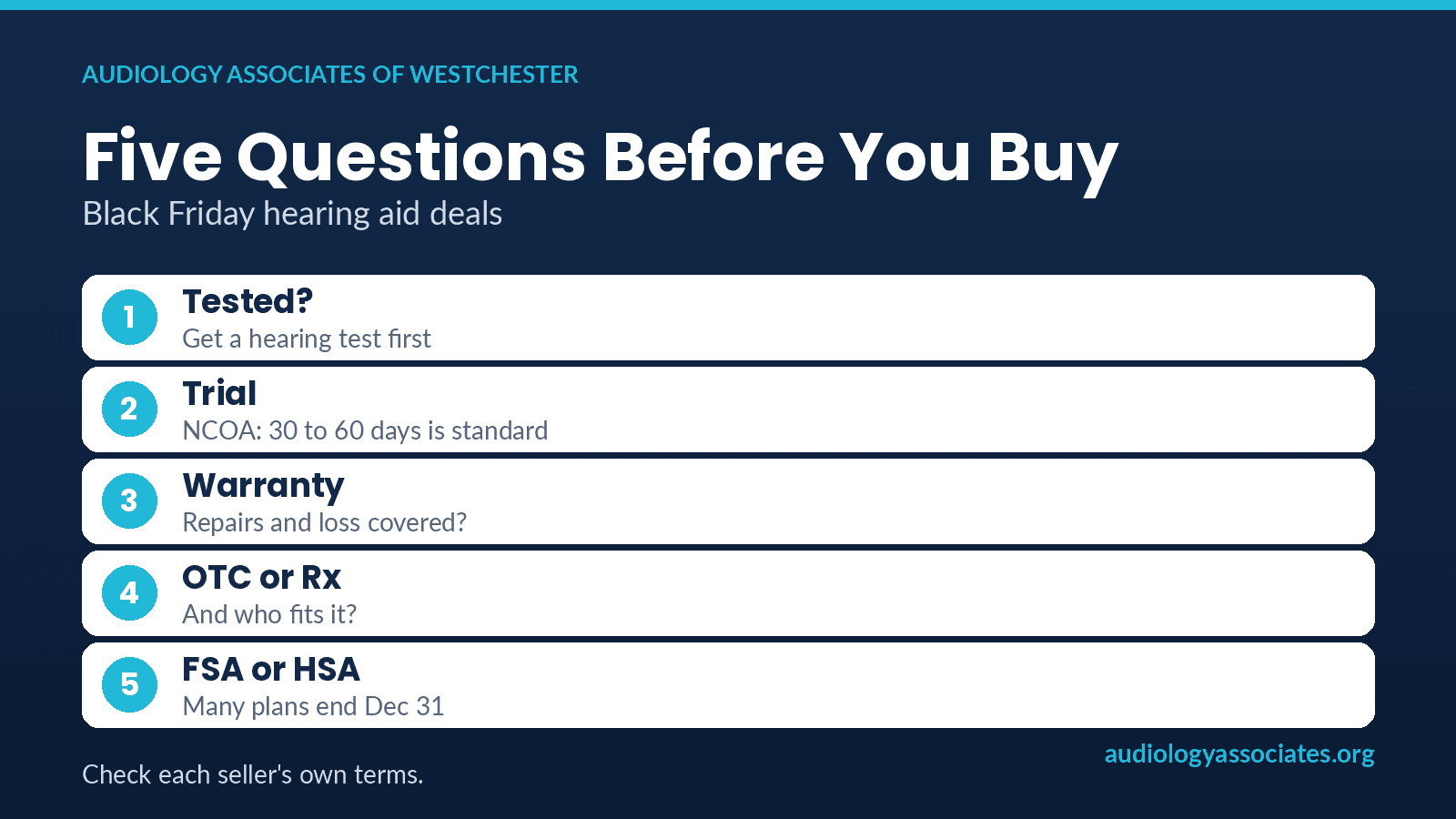
FSAs belong to people with employer plans. If you have Medicare, read Medicare open enrollment and hearing benefits, because that window ends December 7. Our Black Friday guide has five questions to ask about any sale.
Last updated and sources
Last updated November 24, 2026. What changed: this is the first version. We will update this page when new evidence or rules change the picture. Sources are listed at the end of the article. This page offers general information. It is not a diagnosis or treatment plan.
Common questions
Does my FSA reset on December 31?
Many do. Some give a grace period or a carryover, so check your plan portal.
Can I use HSA money for hearing aid repairs?
Repairs are on the IRS list of medical expenses, according to UCSF. Keep your receipt.
Do you accept FSA, HSA and CareCredit?
Yes. Both our Harrison and Somers offices accept all three.
Is an OTC hearing aid FSA eligible?
Often. UCSF notes that OTC aids qualify in many cases. Check the label and your plan.
Can I book before the year ends?
Yes. Call the office closest to you to ask for the next open visit.